True Trip Costs: Bahrain
before you go
- DoChoose dinars at every terminal
- CarryCard for most of it, small notes for the souq
- ExpectA small-looking number is not a small amount
- ExpectThe bill answers the tipping question more clearly here
- ExpectYou pay: As a visitor, at listed fees
- ExpectVisa: Required, and not free
That's the short version. Below: every fee we checked, what it all adds up to, and the traps we help you dodge.
No match. See all guides.
Money in Bahrain, sorted.
A calm, current plan for the money side of your trip: why the decimal matters more here than anywhere else in the Gulf, what a hotel bill really adds, and which apps actually work.
What you can refuse to pay here
The room rate isn't the bill, and the sticker rate isn't the price. In Bahrain, dynamic currency conversion alone can quietly cost a typical traveler about $76 to $203, and it's one of several fees you can refuse.
Money scorecard
Bahrain
- Ease of payingEasy
- Cash dependenceLight cash use
- Daily costPricier
- Getting aroundHonest taxis
- CurrencyStable
Every rating is our own judgment from the Bahrain guide, not a score.
See the full Bahrain guideThe US State Department currently rates Bahrain Level 3, Reconsider Travel. The advisory cites the hostilities between the United States and Iran that began on February 28, 2026, an ongoing threat of drone and missile attacks, and significant disruption to commercial flights. That is the US government's assessment, published on the page linked below, and what to do with it is your call.
Bahrain's ordered departure was dated March 2, 2026, and the FAA has issued a Special Federal Aviation Regulation and a NOTAM covering civil aviation in and near Bahrain, which is the concrete reason flights into Bahrain have been disrupted rather than a general caution.
It changes the money side whether or not it changes your plans. Travel insurance bought after an advisory is already public will generally not pay out for cancelling because of that advisory, so the cover that actually helps here is a refundable rate, the airline's own rebooking policy, or a cancel for any reason upgrade if your policy sells one. Gulf airports are open but have closed at short notice, and US carriers have suspended some nonstop routes into the region. Confirm your flight is still operating before you pay for anything non-refundable, and keep the booking flexible if you can.
The three things people ask
Will my card work? Do I need cash? Are ATMs easy?
The quick read for a first trip.
Your card
Works nearly everywhere
Visa and Mastercard cover hotels, malls, restaurants, supermarkets and fuel across Manama, with contactless standard. Amex is thinner outside the bigger hotels, so do not rely on it alone.
Check yours →Cash
A modest float is enough
BD 20 to 40 in small notes covers Manama Souq, independent cafes and tips. Remember a BD 20 note is about 53 dollars, so break the big ones at a supermarket.
How much to carry →ATMs
Everywhere, card-friendly
Airport, malls and bank branches throughout Manama, and foreign cards work normally. Withdraw a sensible amount at once, and decline the offer to be billed in dollars.
See ATMs in Bahrain →(opens in a new tab)Cash or card
About as cashless as Qatar, with the souq as the exception.
A rough feel for everyday spending rather than a measured figure. Bahrain is a finance economy and card acceptance runs deep across Manama, Seef and Juffair, with contactless standard and both major ride-hailing apps taking cards in-app. Manama Souq and Bab Al Bahrain are where notes still matter, along with tipping, which cash always does better.
See what the trip really costs →Your money plan
Four steps and you're set.
Before you go
- Check your passport has six months left from your arrival date. Bahrain is stricter than Qatar on this.
- Decide your visa route: on arrival for up to 14 days, or an eVisa from the NPRA portal for longer. Both carry a fee.
- Uber and Careem both work here, so whichever you already have is fine. This is the only country in the cluster where that is true.
Landing
- The app is usually cheaper than the meter: roughly BD 3 to 6 by app against BD 6 to 12 metered into central Manama.
- Pull BD 20 to 40 from a bank ATM, and decline the dollar conversion on the screen.
- Remember 999, not 112. Unlike Oman and Qatar, 112 is not an official emergency number in Bahrain.
Day to day
- Tap for most things. Keep notes for Manama Souq and tips.
- Read prices twice. The dinar splits into 1,000 fils, so 4.500 is about twelve dollars.
- A 10% service charge on a bill is standard here, and it is the property's, not a tax.
Checking out
- Expect roughly 25% plus BD 3 a night: 10% VAT, a 5% government levy, a 10% service charge and the per-night tourist tax.
- Ask whether the rate you booked was all-in. Quoted rates here frequently are not.
- Pay in dinars, never dollars. The peg means dollar pricing only adds a markup.
Staying connected
Will my phone work here? And what will it cost?
Yes, and it is easy. Batelco, stc and Zain all give strong coverage, and Bahrain is small enough, around 30 miles end to end, that dead spots barely exist. 5G is normal across Manama. Before you buy anything: check whether your US plan already includes Bahrain, because several do, and the airport has free wifi, so you can decide once you have landed rather than at a counter in arrivals. The cost is where people get caught out, and on most US plans it lands in one of two buckets.
Your plan may already include it
Often, do nothing
Some US plans include slow data abroad at no extra cost. If that is you, the honest move is to leave it alone.
we earn nothing
Or it charges quietly, after the fact
The bill lands later
On pay-per-use plans the cost runs in the background while you travel, and the charge can show up weeks after you are home. Forgetting to switch off data roaming is the classic one. For a week or more, an eSIM is usually cheaper and keeps you in control.
Check what your own carrier charges before the trip, not after.
If an eSIM is the cheaper call, Nomad covers Bahrain.
Get your Nomad eSIM→(opens in a new tab)we may earn a commissionMedical cover
The one cost with no price tag.
Every other number on this page has a price you can look up. This one does not, and it can be the largest of them all. Most US health plans cover little or nothing once you leave the country, and Medicare covers essentially none of it abroad. A serious illness or injury is paid up front, and a medical evacuation runs from tens of thousands of dollars to past $100,000 if you are remote or an ocean from home.
First, you may not need to buy anything.
A cheap, refundable trip close to home does not need this. And if you are healthy, headed somewhere with good care, and one of the premium cards on the shortlist above already includes emergency medical and evacuation, you may be covered already. Check your card's benefits guide before you buy. Saying that costs us the commission, and it is still the right call.
How much cover matters here
Care in the main cities is good, but costs add up and reaching top care from a remote spot takes time, so it is worth a real look for a trip here.
If you do want cover, this is what it is for: the evacuation and the up-front hospital bill, the part no card limit is meant to absorb.
Enough for most trips
Faye, or a comparable whole-trip policy
Bundles trip protection with emergency medical, which is enough cover for most travelers on a typical trip.
The deeper end
A dedicated travel-medical plan built for serious care and evacuation abroad
Stronger on medical care and evacuation, for a remote or higher-risk trip where that is the real exposure.
If it happens
Call it first, then call your insurer's 24/7 assistance line, which is what confirms payment and arranges an evacuation. 999 covers ambulance, civil defence and police rescue on one number, free from any phone. Traffic accidents have their own line, 199. Note that 112 is NOT an official emergency number in Bahrain, unlike Oman and Qatar, so dial 999. Visitors are charged for medical treatment here, with only a partial government subsidy, so insurance matters more than in some neighbours.
TrueTripCosts explains the gap and points to options. It does not set your coverage amounts or act as your insurance advisor, and every policy carries its own exclusions, so read them before you buy. Emergency number checked Aug 2026. Confirm the current number before you travel, as local lines can change.
Currency basics
The dinar, in plain terms.
Quick conversion
The dinar is fixed at 0.376 dinars to the dollar and has been since 1980, so it does not move against you. Multiply dinar prices by roughly 2.66 for dollars: BD 10 is about 27 dollars, BD 100 about 266.
The three decimal places
The dinar splits into 1,000 fils, not 100, so prices read like 4.500. That is four and a half dinars, about twelve dollars. This is the single most common money mistake visitors make in Bahrain, and it is an expensive one to make in a souq.
Notes are worth a lot
Notes run half a dinar and BD 1 up through 5, 10 and 20. A BD 20 note is about 53 dollars, which almost nobody at a stall wants to break, so change large notes at a supermarket and keep 500 fils and BD 1 notes for taxis and tips.
The heaviest bill in the Gulf bar Saudi
Hotels stack 10% VAT, a 5% government levy, a 10% service charge and a BD 3 per night tourist tax. Roughly a quarter on top of the room rate plus about 8 dollars a night, and quoted rates often exclude all of it.
Real exchange rate
What your money is really worth here.
This is the mid-market rate, the one the banks trade at and the yardstick every other rate is measured against. Your card lands a little below it, and if a screen ever offers to bill you in dollars, that is worse again. So this is the number to expect, and how you spot a bad one.
1 US dollar is about 0.38 BHD
Taxes and refunds
A 10% VAT, and no refund desk to count on.
Bahrain's VAT is 10%, doubled from 5% on 1 January 2022, which makes it the second highest in the Gulf behind Saudi Arabia at 15% and well above the UAE and Oman at 5%. Qatar, next door, has none at all. On hotel stays that 10% sits alongside a 5% government levy, a 10% service charge and a flat BD 3 per room per night tourist tax introduced in 2024. On refunds, be realistic. At this check we could not confirm an operating tourist VAT refund scheme of the kind the UAE runs with staffed airport desks and a minimum spend. Budget as though the 10% is simply part of the price, and if a retailer offers you a refund route, treat it as a bonus rather than a plan. One to watch: the 2025-26 budget raised the possibility of a further VAT increase, with no rate or date announced.
That covers what a government adds. What you can still change is what the room itself costs, and that comes down to the booking moment: see how to pay less on hotels.
Fees and taxes to double-check
The numbers most likely to change.
These are the fees and taxes that move on political timelines, so we track each one on its own. Every line shows the amount, whether it is in effect yet, the date we last checked it, and a primary source where a clean one exists.
Bahrain visitor visa (US citizens)
Required and not free. Two routes: a visa on arrival at Bahrain International Airport, single entry, for stays of up to 14 days, or an eVisa in advance through the NPRA portal, which reaches 90 days a visit on multiple-entry versions. We publish no amount because the portal is the only current source for it
Before you book: passports, the six-month rule and whether you need a visa. Not a US citizen, or connecting through Europe? The rules can differ, and even a layover can need its own visa. See our passports and visas guide →
Watch out for
The small traps that catch first-timers.
Tipping
Optional, because the service charge is already there.
Bahrain answers the tipping question more clearly than its neighbours, because a 10% service charge is standard on hotel and restaurant bills, sitting alongside the 10% VAT and a 5% government levy. Where that service charge appears, you have paid for service and anything further is genuinely optional. Where it does not, rounding up or leaving a small amount is welcome and there is no percentage you are meant to hit. Taxi drivers do not expect a tip. The thing to keep in mind is what the notes are worth: a dinar is about 2.66 dollars, so a single BD 1 note is already a real tip and a BD 5 is a substantial one. Keep 500 fils and BD 1 notes back, and tip in cash, because on a bill that already carries a service charge, cash is the only part that clearly reaches a person.
Common questions
Quick answers.
How much is a Bahraini dinar worth in dollars?
About 2.66 dollars. The dinar is pegged at 0.376 to the US dollar, effectively unchanged since 1980, which makes it one of the highest-valued currency units in the world.
Why do Bahraini prices have three decimal places?
Because the dinar divides into 1,000 fils rather than 100. A price written 4.500 is four and a half dinars, about twelve dollars. Misreading it is the most common money mistake visitors make here.
Do I need cash in Bahrain?
Only a modest amount. Cards cover hotels, malls, restaurants, supermarkets and fuel across Manama, and both ride-hailing apps take cards. Keep BD 20 to 40 in small notes for Manama Souq and tips.
Does Bahrain have VAT?
Yes, 10%, doubled from 5% on 1 January 2022. That is the second highest in the Gulf behind Saudi Arabia's 15%, and well above the UAE and Oman at 5%. Qatar has none. We could not confirm an operating tourist refund scheme, so budget as if you cannot reclaim it.
What does a Bahrain hotel add to the room rate?
Commonly 10% VAT, a 5% government levy, a 10% service charge and a flat BD 3 per room per night tourist tax. Roughly a quarter on top in percentages plus about 8 dollars a night, and quoted rates often exclude all of it.
Do US citizens need a visa for Bahrain?
Yes. A visa on arrival is available at the airport for stays up to 14 days, or you can apply for an eVisa in advance through the NPRA portal for longer or multiple entry. Both carry a fee, and your passport needs six months validity.
Do Uber and Careem work in Bahrain?
Both do, which is unusual in the region: Qatar lost Careem in 2023 and Oman has no Uber. Both collect from a dedicated point at the airport arrivals curbside, and the app is usually cheaper than the metered taxi.
What is the emergency number in Bahrain?
999, covering ambulance, civil defence and police rescue, free from any phone. Traffic accidents have a separate line on 199. Note that 112 is not an official emergency number in Bahrain, so dial 999.
What will your trip really cost?
Name where you are going. We will show you what nobody quotes.
For instance, right now
 ColombiaHotels charge 19% IVA, but as a foreign tourist you are exempt, and about half try to add it anyway.
 JapanThe world's most high-tech country is still cash-first, and most bank ATMs refuse US cards.
 CzechiaCzech law gives you three hours to cancel a bad currency exchange and get your money back, on amounts up to 1,000 EUR.
 GreeceGreece's climate fee charges an Airbnb-style rental about 8 EUR a night against 2 for a budget hotel.
 El SalvadorThe country that made Bitcoin legal tender?
 CambodiaThe US dollar is Cambodia's everyday currency, and ATMs hand you crisp $100 bills nobody can break.
 TurkeyUS citizens need no visa and no e-visa for Turkey, scrapped in 2023.
 ItalyMost Italian restaurants add a coperto, a per-person cover charge of commonly 2 to 3 euros, before you have ordered anything.
The one thing most people get wrong about Bahrain
Guide checked Aug 2026You book the room at the rate you were quoted.
Bahrain adds more to a hotel bill than any Gulf state except Saudi Arabia, and it arrives in four separate parts: 10% VAT, a 5% government levy, a 10% property service charge and a flat BD 3 per room per night. Expect roughly a quarter on top of the rate.
What to doAsk whether the rate is all-in when you book, because it frequently is not.
Everything we checked
What Bahrain actually charges you, in one place.
5 things we verified for Bahrain, grouped by the kind of thing they are. The numbers are below; this is the shape of them.
fees nobody quotes
traps to dodge
timing
The number
What you'll really spend in Bahrain.
Your flights if you want them counted, your room, your on-the-ground spending, the two fees most US cards add without telling you, and Bahrain's tourist tax. One number, nothing waiting on the statement. No bank to pick, no sign-up, nothing saved.
Optional. Enter your round trip fare per traveler to fold flights into the total.
Total trip realistically somewhere between $0 and $0.
Getting thereflights, and what the border costs
Watch out for
Prepare ahead
These carry no dollar figure by design: each is named because it is real, and there is nothing honest to price here.
Departure tax is not a separate line here. Where a country charges one it is collected inside your airfare, so it is already in the flight figure, and adding it again would count it twice.
On the ground detailyour room, your days, and how much of it is cash
Whether at an ATM or a card terminal in a shop or restaurant, always choose to be charged in the local currency, not dollars. Paying in dollars (called dynamic currency conversion) lets the machine set its own, worse, exchange rate on top of any fee.
Fees nobody quotes youthe part that lands on the statement weeks later
What you'll pay
Plus the one-off entry charge, which sits in Getting there above with the flights, because it is per person rather than per night.
What you can refuse, and what the lookalike sites charge, is set out under Costs nobody tells you about below, with the two figures kept apart from these ones.
Costs nobody tells you about
Most of it you can keep. Here is every dollar of it.
Every one of them, and how to avoid it4 items
Two of these are money you hand over by default; the rest is money you keep by knowing. Each is its own line.
What you'll pay unless you act
- Your own bank's foreign feeswhat the fees above come toMost US cards add a percentage on what you buy and on the cash you pull, plus a few dollars per ATM withdrawal. Nothing about that is a cost of the trip; it is a cost of the card you happened to bring.A no-foreign-fee card takes both fee lines above to zero.The cards that do not charge it
- Paying in dollars at the terminalabout 3 to 8%on what you cardDynamic currency conversion lets the machine set its own rate on top of any fee, and it runs about 3 to 8 percent on whatever you put on the card. It is the single easiest charge on this page to refuse, and it costs nothing to say no.Choose BHD every time, at a till and at an ATM.How to decline it
- The airport or hotel exchange deskExchange counters make their money on the spread rather than on a stated fee, which is why we publish no percentage for it: it moves by counter, by hour and by note. The rule is what is reliable, not the number.Withdraw from a bank ATM instead, and never change cash at the airport.Getting cash here
What we'll help you dodge
- Tipping on top of a service chargeA service charge is usually added to the bill in Bahrain, so a tip on top of it is paying for service twice. We put no figure on this one, because what you would have added is up to you.Read the bill first. Where the charge is on it, that is the tip.How tipping works here
Where these numbers come fromevery assumption, and its limitssources
These are the assumptions behind the number. Change the room price, nights, travelers, or travel style above, and every line here moves with them.
- Hotel
- Daily spending
- Flights
- Cash vs card
- ATM withdrawals
- Foreign fee
- The range
- Tourist tax
Rough guide, not a quote. The percentage here is a blended stand-in for a typical US card's foreign fee, not your exact rate. The real number moves with the card you carry: one no-foreign-fee card can cover both sides, while a plain rewards credit card only removes the fee on what you buy, and cash still costs a little unless that card also waives ATM and foreign-cash fees. A debit card, or accepting the "pay in dollars" (dynamic currency conversion) offer at a till or ATM, can push it higher. Rates checked Jun 2026 and rounded.
How we check and date every figureBahrain, TTC-ed
truetripcosts.comWhat this assumes
Tips are already inside the daily spending figure, never added on top.
Not sure which card to bring? See my pick for Bahrain.
Already carry a card with no foreign transaction fee? Then you are set for Bahrain, and can skip this. There is nothing to buy.
If you are getting a card for Bahrain, this is the pairing I would pick: a no-foreign-fee credit card for spending, and a fee-free ATM debit card for cash. We earn nothing on these today. Always confirm the current fee with the issuer before you apply. Checked Jun 2026.
Capital One charges no foreign transaction fee on any of its cards.
No foreign transaction fee
Fee-free ATM cash worldwide

Want one account that holds and spends in the local currency? A different job from the three above, and the one I reach for abroad. It is free to open; you can create a virtual card in the app and add it to your phone wallet in minutes, without waiting for the physical card; and you can convert US dollars into the local currency inside the account before you travel, then spend from that balance. Wise uses the mid-market rate plus a small conversion fee (around 0.4% and up), with no flat foreign fee.
The three picks above pay us nothing, and their tags say so. Wise is the only option here that can earn us a commission, and its tag says that too. Paid or not, the pick is still the pick.
Before you fly
At least 14 countries now make you file a form online before you fly. 13 of them are free. One really does charge, and it is not the one you would guess.
Bahrain does not ask for one, so this is not a job for this trip. It is worth knowing anyway, because the list keeps growing and the pattern is always the same: the filing is new, obscure and mandatory, and the paid lookalikes outrank the government site because the real ones do not buy ads.
See every form we can source, with the official address for eachWhen to go
Cheaper and busier months in Bahrain.
The month you pick moves the budget as much as the country does. Here is the shape of Bahrain's year, with no price attached to it, because an honest one does not exist.
- Busy and pricey
- In between
- Cheaper and quieter
- Cheaper and quieter
- Jun to Sep
- What drives the peak
- Mild, dry winter weather, the Formula One Grand Prix, and the Christmas and New Year window
Travelers, not touristsA few words of Arabic go a long way
A few words of Arabic go a long way
Arabic is the language and English is spoken almost everywhere in Manama, so you will never be stuck. Bahrain is the most relaxed of the Gulf states about most things, and a greeting in Arabic is still noticed and appreciated.
Say a few words
Tip: The local sweet is halwa Bahraini, a dense amber jelly of cornflour, sugar, saffron and rose water studded with nuts, sold in brass bowls and eaten in very small quantities with a tiny spoon. It goes with gahwa, cardamom coffee, or karak tea from a hatch for a few hundred fils.
Know a story
The pearls that built the island
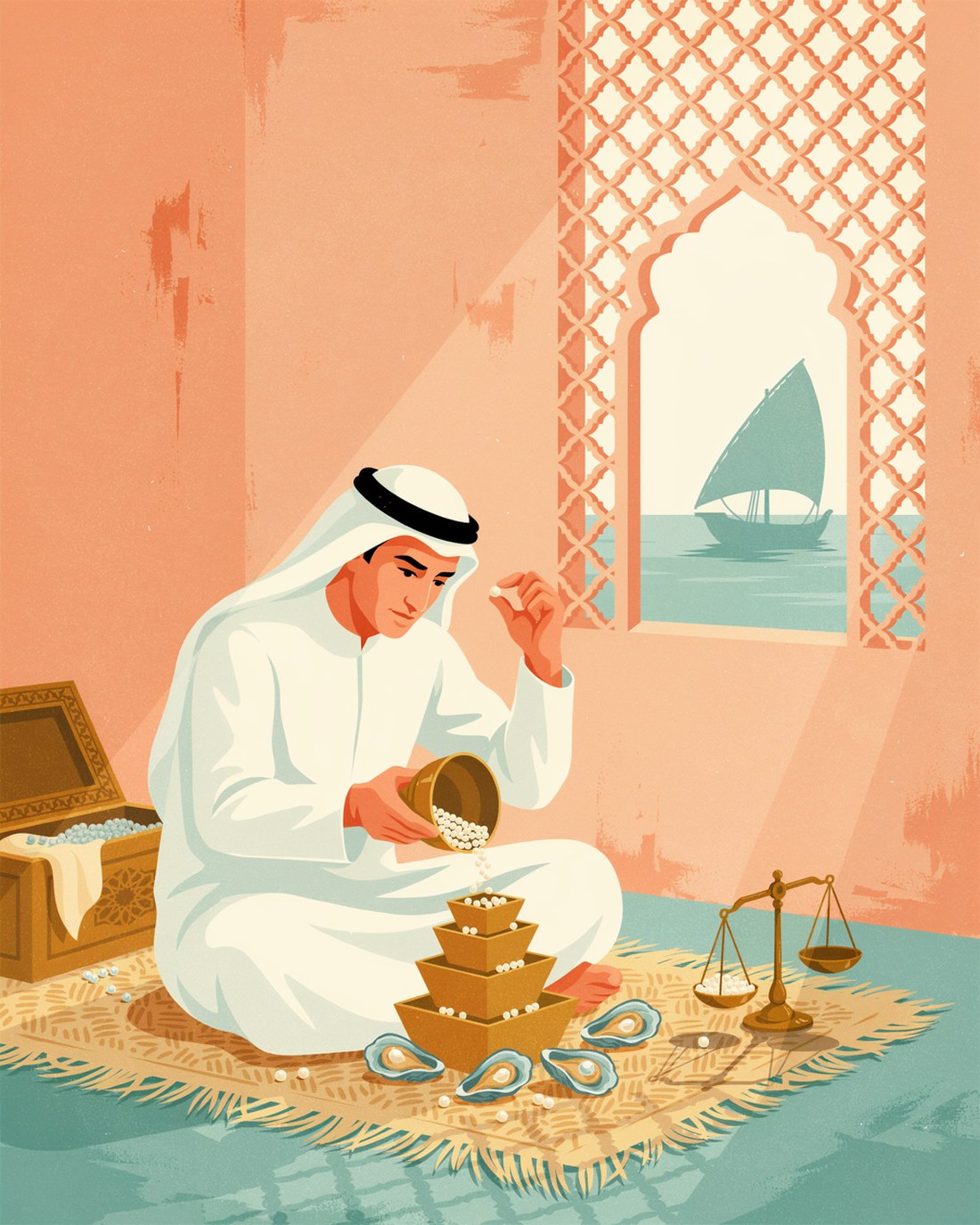
For centuries Bahrain's wealth came from the oyster beds offshore, and its pearls were reckoned the finest in the world, graded by hand through nested brass sieves and weighed against seed pearls. Then Japanese cultured pearls arrived in the 1930s and the trade collapsed almost overnight. Bahrain's response was to protect what it had: the island became known for dealing only in natural pearls, and it still runs a gemological institute that certifies them.
If you are buying, ask for certification rather than taking a word for it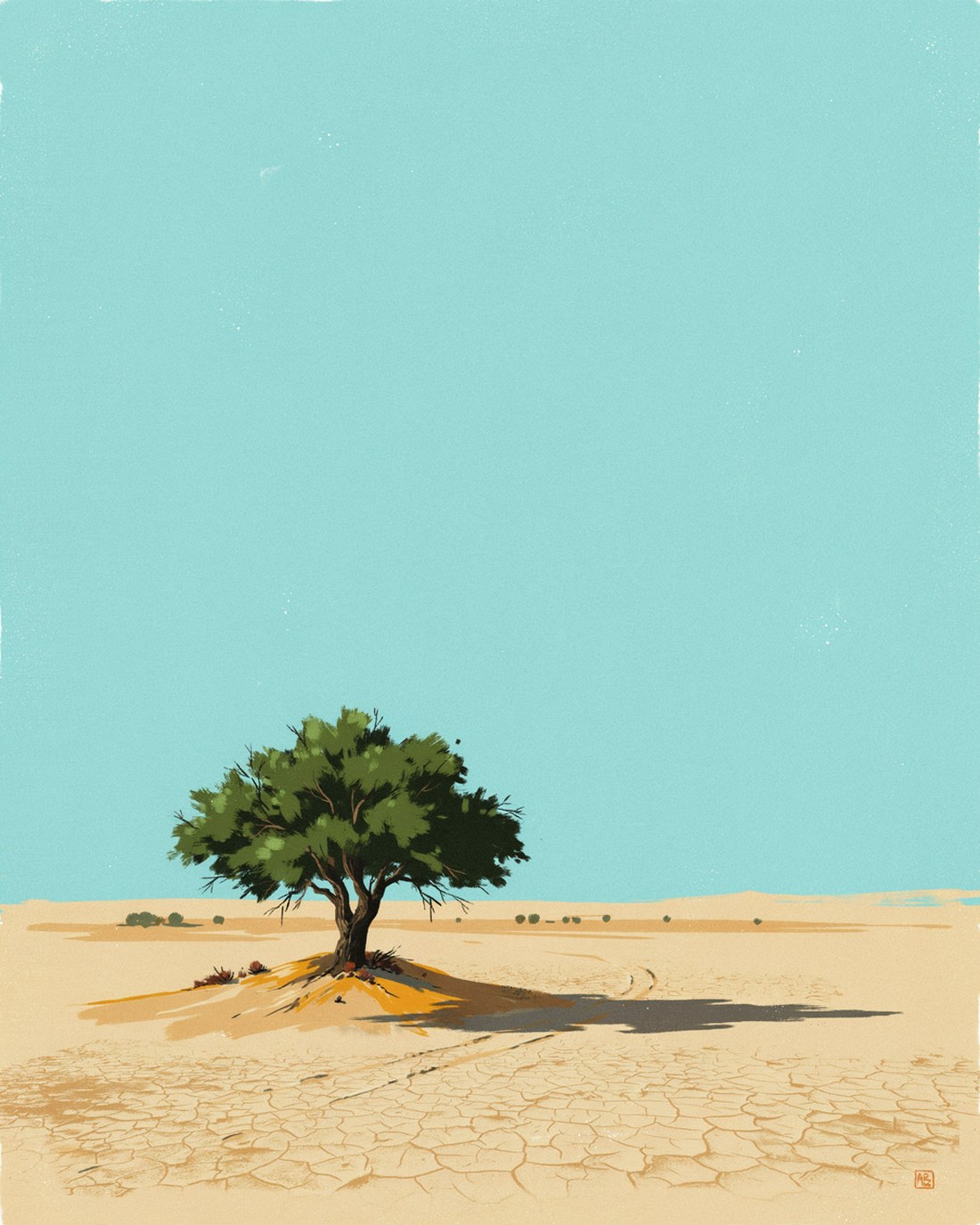
One tree, no water, four centuries
Out in the southern desert stands a single mesquite tree, alone, with no visible water source and nothing else growing for a considerable distance in any direction. It is thought to be several hundred years old. Nobody has settled exactly how it survives, whether a very deep taproot reaching an aquifer or something about the way it draws moisture from the air. It is called the Tree of Life, and it is the least crowded landmark in the Gulf.
Good to know: it is a 40 minute drive from Manama and there is no shade at the site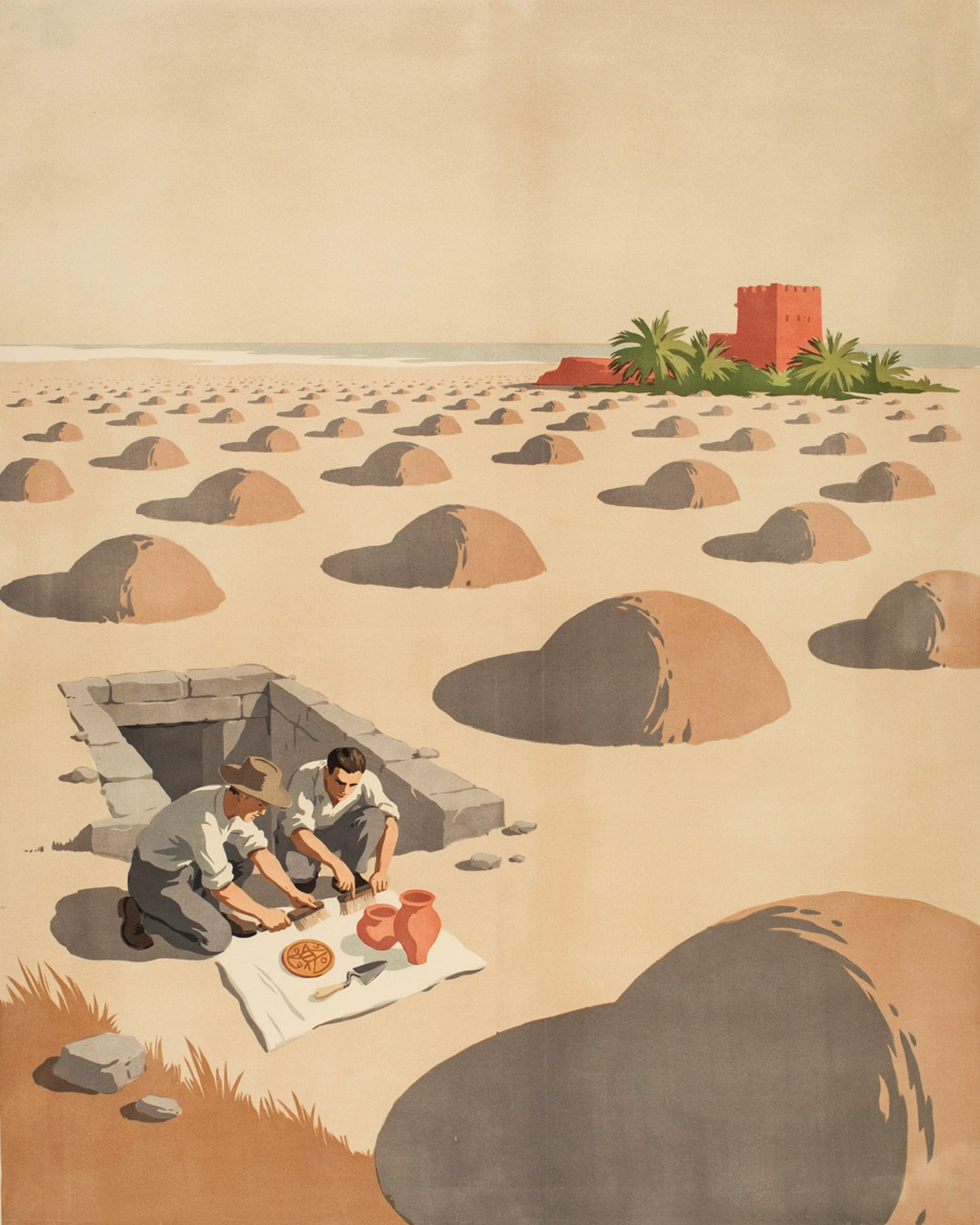
The land the Sumerians called paradise
Bahrain was Dilmun, a trading power that linked Mesopotamia to the Indus valley more than four thousand years ago, and Sumerian texts describe it as a blessed land of sweet water. What it left behind is extraordinary: tens of thousands of burial mounds, one of the largest prehistoric cemeteries anywhere, along with the fort and settlement layers at Qal'at al-Bahrain.
Say it: DIL-mun, and the sweet water came from freshwater springs under the seaNo links here, nothing to buy. This part is just to help you travel well.
Sources, and how this guide was checked
Last reviewedAug 2026, 9 of 9 dated items inside their review window
Not yet individually datedWe date this guide and the fees most likely to move, but the 2 per-place tourist tax rates on this page do not carry a check date yet. They are reviewed with the guide rather than on their own schedule, and putting each of them on one is work in progress.
What the last check foundFirst published August 2026. Verified at this check: the dinar's peg at 0.376 to the dollar, effectively unchanged since 1980, against the Central Bank of Bahrain; the 10% VAT rate in force since 1 January 2022 against Bahrain's National Portal and the National Bureau for Revenue; 999 as the single emergency number, and the fact that 112 is not officially designated in Bahrain, against the National Portal's emergency hotline directory; and the metered BD 2 plus BD 2 airport taxi structure, with both Uber and Careem licensed to collect, against Bahrain International Airport's own page. Also recorded: the US State Department has Bahrain at Level 3, Reconsider Travel, following the February 2026 hostilities between the United States and Iran, with an ordered departure of non-emergency US government personnel dated March 2, 2026, and the FAA has issued a Special Federal Aviation Regulation and a NOTAM covering civil aviation in and near Bahrain.
- Central Bank of Bahrainmonetary policy and the 0.376 dollar peg
- Bahrain National PortalVAT at 10% in the Kingdom of Bahrain
- Bahrain NPRA eVisa portalentry rules, eligibility and current fees
- Bahrain International Airporttaxi operators, meter structure and ride-hailing pickup
- US Embassy in Bahrainthe current Level 3 travel advisory
Our own judgmentThe peg, the VAT rate, the emergency numbers, the airport taxi structure and the entry rules are official and linked above. Three things are deliberately imprecise. The full hotel charge stack, specifically the 5% government levy, the 10% service charge and the BD 3 per night tourist tax, rests on reputable Gulf business reporting rather than a government page we could open, so the roughly 25% figure is a working estimate and your own bill is the authority. Airport taxi fares into Manama vary from about BD 6 to BD 16 across current sources, so we give the range rather than a number. And no visa fee appears anywhere, because the published figures we found were secondary and undated while the NPRA portal carries the live one. The daily cash share, the suggested float and the tipping norms are our own read from experience.
How we checkHow every guide is researched, checked and dated
More money guides in the Middle East
If you are also weighing up nearby destinations, each guide covers cards, cash, ATMs and the fees to expect.


Going deeper on Bahrain
The money questions people ask on the ground.
Short, focused answers to the specific things that catch first-timers out in Bahrain.
- Do US citizens need a visa for Bahrain?Yes, and this is where Bahrain differs from its neighbours. Qatar stamps you in free for 90 days and Oman waives it entirely for two weeks. Bahrain charges.
- Cash or card in Bahrain?Bahrain is easy on cards and hard on arithmetic. The dinar is worth more than two and a half dollars and divides into a thousand, which is where visitors come unstuck.
- Do you tip in Bahrain?Bahrain is the clearest case in the Gulf: a 10% service charge is standard on hotel and restaurant bills, so the tipping question is usually already answered before you reach for your wallet.
- Taxis and ride-hailing in BahrainBahrain is the easy one for apps. Both Uber and Careem operate, both collect at the airport, and here the app is usually cheaper than the meter rather than dearer.
- Bahrain hotel taxes and fees, in four partsShort answer: the rate you were quoted is probably missing four separate charges. Bahrain adds more to a hotel bill than any Gulf state except Saudi Arabia, and it is the only one in the region that charges a flat nightly tax on top of the percentages. Here is exactly what stacks on.
- Staying connected in Bahrain.Bahrain is an island you can drive across in an hour, comprehensively covered, with lighter internet restrictions than its larger neighbours. There is not much of a story here, which is the honest thing to report.
- What does getting sick in Bahrain cost a visitor?Bahrain is the rare country on this page's map that publishes the answer. Visitors are charged for treatment, with only a partial government subsidy at public facilities, and the Ministry of Health posts its price lists for non-Bahraini patients, starting with the consultation fee itself.
This is how Bahrain stands today.
Money rules move. We can let you know for free if that changes.