True Trip Costs: South Africa
before you go
- DoSIM registration: RICA: passport and an address
- DoAirport pickup: A designated e-hailing bay
- CarryKeep a pocket of small rand
- WithdrawATM security guards: Not allowed to help you
- ExpectReal risk: A safari far from the city
- ExpectTipping: 10 to 15%, expected
That's the short version. Below: every fee we checked, what it all adds up to, and the traps we help you dodge.
No match. See all guides.
Money in South Africa, sorted.
A calm, current plan for the money side of your trip: why your card covers almost everything, the cash worth keeping for tips and petrol attendants, how to use ATMs safely, the VAT you can claim back on shopping, and the entry rules to check before you fly.

What you can refuse to pay here
The room rate isn't the bill, and the sticker rate isn't the price. In South Africa, dynamic currency conversion alone can quietly cost a typical traveler about $55 to $148, and it's one of several fees you can refuse.
Money scorecard
South Africa
- Ease of payingEasy
- Cash dependenceLight cash use
- Daily costModerate
- Getting aroundSome caution
- CurrencyStable
Every rating is our own judgment from the South Africa guide, not a score.
See the full South Africa guideTwo things are worth a fresh check this year. South Africa's Electronic Travel Authorisation (ETA) is now live for nationals of China, India, Indonesia and Mexico, but it is not required for US visitors, who still get a free 90-day stamp on arrival. The system may eventually expand, so confirm on the official Home Affairs site before you fly. And after years of rolling blackouts, load-shedding has now been suspended for over a year, so card machines and ATMs are far more reliable, though a little backup cash is still smart.
The three things people ask
Will my card work? Do I need cash? Are ATMs easy?
The quick read for a first trip.
Your card
Works almost everywhere
Contactless is everywhere, so Visa and Mastercard tap for almost everything, from restaurants and shops to fuel stations and supermarkets, with Amex less widely taken. Always choose rand, not US dollars, on the terminal. Cards are your default; the main thing to keep cash for is tipping.
Check yours →Cash
For tips and small stuff
Keep some rand for the things cards do not cover: tipping petrol attendants and car guards, markets, craft stalls and township tours, and a small backup in case a power outage briefly knocks out card machines. You will not need a lot, but a supply of small notes is handy.
How much to bring →ATMs
Fine, but be ATM-smart
Bank ATMs are widely available, ideally the ones inside shopping malls. Some add a fee for foreign cards, so choose rand, not dollars. Card skimming and distraction scams happen, so never accept a stranger's help, cover the keypad, be discreet, and do not count cash in the open.
See ATMs in South Africa →(opens in a new tab)Cash or card
Card-friendly, with cash kept back for tips.
A rough feel for everyday spending. Cards and phones cover most things, from restaurants and shops to fuel and supermarkets. Cash is mainly for tips (petrol attendants, car guards, restaurants), markets and township tours, plus a small backup in case a power outage takes a card machine offline.
See what the trip really costs →Your money plan
Four steps and you're set.
Before you go
- Bring a no-foreign-fee Visa or Mastercard, plus a backup from a different bank. Amex is less widely accepted here.
- You will get 90 days visa-free as a US visitor (a free stamp on arrival), but a new Electronic Travel Authorisation is rolling out, so check the official Home Affairs site before you fly.
- Set up an eSIM. A local SIM needs RICA registration with your passport, which an eSIM skips.
- Know the shape of it: cards work almost everywhere, and you keep cash mainly for tips.
At the airport
- Withdraw rand from a bank ATM in arrivals, and decline 'convert to dollars,' always choose rand.
- Take out enough for tips and your first day, in smaller notes where you can.
- Skip the exchange counters, their rates are weak.
- If you shopped duty-free, keep receipts, and remember the VAT refund desk for goods you are taking home.
Day to day
- Tap your card or phone for most things, and choose rand every time.
- Keep small notes for tips: the petrol attendant (R5 to R10), the car guard (about R5), and around 10 to 15% at restaurants.
- Use mall or bank ATMs, be discreet, and never let a stranger 'help' you at the machine.
- Ask for a tax invoice on bigger purchases so you can reclaim the VAT at the airport.
A golden rule
- Always pay in rand, never in US dollars. Choosing your home currency (dynamic currency conversion) quietly adds a few percent on card terminals and ATMs.
- Keep a little backup cash. Load-shedding has been suspended for over a year, but localized outages still happen and can briefly take a card machine or ATM offline.
Staying connected
Will my phone work here? And what will it cost?
Excellent across the cities, towns and along the main tourist routes, with strong 4G and growing 5G, and patchy inside remote game reserves, the Drakensberg and quiet rural stretches. The carriers are Vodacom, MTN, Cell C and Telkom. A local prepaid SIM requires RICA registration (bring your passport), so for most visitors an eSIM from Airalo, Nomad or a similar provider is the simpler route. You do not need mobile data to pay by card, but you will want it for maps and ride apps. The cost is where people get caught out, and on most US plans it lands in one of two buckets.
Your plan may already include it
Often, do nothing
Some US plans include slow data abroad at no extra cost. If that is you, the honest move is to leave it alone.
we earn nothing
Or it charges quietly, after the fact
The bill lands later
On pay-per-use plans the cost runs in the background while you travel, and the charge can show up weeks after you are home. Forgetting to switch off data roaming is the classic one. For a week or more, an eSIM is usually cheaper and keeps you in control.
Check what your own carrier charges before the trip, not after.
If an eSIM is the cheaper call, Nomad covers South Africa.
Get your Nomad eSIM→(opens in a new tab)we may earn a commissionMedical cover
The one cost with no price tag.
This is the one cost with no price tag, and it can be the largest on the page. Most US health plans and Medicare cover little or nothing abroad, so a serious illness or evacuation is paid up front. How medical costs work abroad, country by country →
First, you may not need to buy anything.
A cheap trip close to home, or a premium card that already includes emergency medical and evacuation, may mean you need nothing here. Check your card first. Saying that costs us the commission, and it is still the right call.
How much cover matters here
Strong care can sit a long way from where you are traveling and an evacuation is a genuine possibility, so this is one to weigh seriously for a trip here.
If you do want cover, this is what it is for: the evacuation and the up-front hospital bill, the part no card limit is meant to absorb.
Enough for most trips
Faye, or a comparable whole-trip policy
Bundles trip protection with emergency medical, which is enough cover for most travelers on a typical trip.
The deeper end
A dedicated travel-medical plan built for serious care and evacuation abroad
Stronger on medical care and evacuation, for a remote or higher-risk trip where that is the real exposure.
If it happens
Call it first, then call your insurer's 24/7 assistance line, which is what confirms payment and arranges an evacuation. 112 from any mobile phone is free (even with no SIM or airtime) and routes you to police, ambulance and fire. 10111 is the police line and 10177 is the ambulance and fire line from a landline. The US number 911 does not work here. Private ambulance services such as ER24 (084 124) and Netcare 911 (082 911) can be faster in the cities.
TrueTripCosts explains the gap and points to options. It does not set your coverage amounts or act as your insurance advisor, and every policy carries its own exclusions, so read them before you buy. Emergency number checked Jul 2026. Confirm the current number before you travel, as local lines can change.
Renting a car
Where the rental desk makes its money.
Renting is often the best way to see South Africa, and the cover is where the counter earns its margin. The rental comes with basic collision cover, but it leaves you owing the excess, the first slice of any damage or theft bill, often several hundred to a couple of thousand dollars, held on your card until the car is back. The desk will offer to erase that excess. It is a real product, just priced at the counter for far more than the same cover costs if you arrange it before you go.
You may not need to buy anything at all. Some US credit cards include rental collision cover when you pay with the card and decline the counter's version, so check what your own card covers on rentals before you add anything extra. We cannot read your policy for you, and flagging this can cost us the sale below, but it is the honest first step.
If your card does not cover it, or you would rather have cover built for this, a standalone policy bought ahead is the cheaper way to handle it. It covers the damage and theft the rental leaves you liable for, often including parts the counter cover leaves out like tires, glass and the underbody, and mechanical faults stay the rental company's problem. RentalCover covers rentals in South Africa. Read what the policy includes before you buy.
Cover your rental with RentalCover→(opens in a new tab)we may earn a commissionCurrency basics
The South African rand, in plain terms.
Quick conversion
South Africa uses the rand, written R or ZAR. At about 16.4 to the US dollar in mid-2026, ZAR 100 is roughly US$6 and ZAR 200 about US$12. Notes come in 10, 20, 50, 100 and 200 rand, with coins up to 5 rand. Prices already include the 15% VAT.
Tap almost everywhere
South Africa is very card-friendly, and contactless is the norm. Visa and Mastercard work almost everywhere, including fuel stations and supermarkets, with Amex less widely taken. Just remember to choose rand, not dollars, and to tip the petrol attendant in cash.
Keep some for tips
You do not need much cash, but keep a supply of small notes for tipping petrol attendants and car guards, for markets and craft stalls, and as a backup if a power outage briefly knocks out a card machine or ATM.
Tipping is expected
Plan for roughly 10 to 15% at restaurants (check whether a service charge was added for a large group), R5 to R10 for the petrol attendant who fills up and cleans your windscreen, about R5 for a car guard, and R10 to R20 a bag for a porter.
Real exchange rate
What your money is really worth here.
This is the mid-market rate, the one the banks trade at and the yardstick every other rate is measured against. Your card lands a little below it, and if a screen ever offers to bill you in dollars, that is worse again. So this is the number to expect, and how you spot a bad one.
1 US dollar is about 16.38 ZAR
Taxes and refunds
A 15% VAT you can claim back on goods you take home.
South Africa keeps tax straightforward, and in your favor as a shopper. There is no nightly tourist tax at checkout, and the 15% VAT is already included in the price. The win worth acting on: as a foreign visitor you can reclaim the VAT on goods you take out of the country, as long as the total on your invoices is more than R250. When you buy, tell the shop you are a foreign tourist and ask for a tax invoice showing the VAT. On departure you claim at the VAT Refund Administrator desks at OR Tambo (Johannesburg), Cape Town and King Shaka (Durban) international airports, and at major land borders and harbours: present your passport, the tax invoices and the goods (items in checked luggage must be inspected and stamped before you check in), within 90 days of buying them. The refund is paid onto a card or by bank transfer, minus a small commission. Services, such as hotels, tours and car hire, do not qualify, only physical goods you carry out.
That covers what a government adds. What you can still change is what the room itself costs, and that comes down to the booking moment: see how to pay less on hotels.
Fees and taxes to double-check
The numbers most likely to change.
These are the fees and taxes that move on political timelines, so we track each one on its own. Every line shows the amount, whether it is in effect yet, the date we last checked it, and a primary source where a clean one exists.
Tourist VAT refund
The 15% VAT is refundable to foreign visitors on goods over R250 taken out of the country; ask for a tax invoice and claim at the airport with your passport and the goods
Electronic Travel Authorisation (ETA)
Live for nationals of China, India, Indonesia and Mexico but not required for US visitors, who still get a free 90-day stamp on arrival; confirm on the official Home Affairs site before you fly
Before you book: passports, the six-month rule and whether you need a visa. Not a US citizen, or connecting through Europe? The rules can differ, and even a layover can need its own visa. See our passports and visas guide →
Watch out for
The small traps that catch first-timers.
Tipping
Tipping is expected here.
South Africa has a real tipping culture, and a few situations are unique to the country, so keep small notes handy. At restaurants, tip around 10 to 15%, checking first whether a service charge was added (some places add about 10% automatically for a table of eight or more). Fuel is full-service, so tip the petrol attendant who fills up and cleans your windscreen R5 to R10. Almost everywhere you park, a car guard in a numbered vest will watch your car, and a tip of about R5 (a little more overnight) is the norm. A porter gets R10 to R20 a bag, a taxi or ride-hail a rounded-up fare, and on safari it is customary to tip your guide and tracker at the end of your stay. These are small amounts, but they are genuinely expected.
Common questions
Quick answers.
Should I use cash or card in South Africa?
Mostly card. South Africa is very card-friendly, and you can tap almost everywhere, including fuel stations and supermarkets. Keep some cash for tips (petrol attendants, car guards, restaurants), markets and township tours, plus a small backup in case a power outage briefly takes a card machine offline.
Should I pay in rand or US dollars?
Always rand. If a card terminal or ATM offers to charge you in US dollars, decline; that dynamic currency conversion adds a few percent. Choosing rand lets your card's network handle the exchange at a fair rate.
Do I tip in South Africa, and how much?
Yes, tipping is expected. Around 10 to 15% at restaurants (check whether a service charge was added for a large group), R5 to R10 for the petrol attendant, about R5 for a car guard, R10 to R20 a bag for a porter, and a per-day tip for a safari guide and tracker. Keep small notes for these.
Is it safe to use ATMs in South Africa?
Yes, with common sense. Use ATMs inside shopping malls or banks rather than isolated street machines, cover the keypad, and be discreet. Card skimming and distraction scams do happen, so never accept a stranger's offer of help at the machine, and do not count cash in the open.
Do I need a visa or an ETA for South Africa?
As a US visitor you do not need a visa or an ETA for stays up to 90 days; you get a free stamp on arrival. South Africa's ETA is now live for nationals of China, India, Indonesia and Mexico, but it is not required for Americans. Because the rollout may expand, check the official Department of Home Affairs site a week or so before you fly.
Can I claim the VAT back on shopping in South Africa?
Yes, on goods you take home. The 15% VAT is refundable to foreign visitors when your invoices total more than R250. Ask each shop for a tax invoice, then claim at the VAT Refund desks at the main airports (Johannesburg, Cape Town, Durban) or major land and sea borders, showing your passport and the goods, within 90 days. Services like hotels and tours do not qualify.
Is load-shedding still a problem for travelers?
Much less than it was. After years of rolling blackouts, load-shedding has been suspended for over a year, so card machines, ATMs and Wi-Fi are far more reliable. Localized outages still happen in some areas, so keeping a little backup cash and choosing accommodation with a generator or inverter is still sensible, but you are unlikely to hit scheduled cuts.
How much cash should I bring for a week in South Africa?
Not much, since cards work almost everywhere. Enough small notes for a week of tips, markets and the odd cash-only stop is plenty, refreshed from a mall ATM as needed. Everything else can go on a tapped card.
What will your trip really cost?
Name where you are going. We will show you what nobody quotes.
For instance, right now
 ColombiaHotels charge 19% IVA, but as a foreign tourist you are exempt, and about half try to add it anyway.
 JapanThe world's most high-tech country is still cash-first, and most bank ATMs refuse US cards.
 CzechiaCzech law gives you three hours to cancel a bad currency exchange and get your money back, on amounts up to 1,000 EUR.
 GreeceGreece's climate fee charges an Airbnb-style rental about 8 EUR a night against 2 for a budget hotel.
 El SalvadorThe country that made Bitcoin legal tender?
 CambodiaThe US dollar is Cambodia's everyday currency, and ATMs hand you crisp $100 bills nobody can break.
 TurkeyUS citizens need no visa and no e-visa for Turkey, scrapped in 2023.
 ItalyMost Italian restaurants add a coperto, a per-person cover charge of commonly 2 to 3 euros, before you have ordered anything.
The one thing most people get wrong about South Africa
Guide checked Jul 2026You know the tipping rules: restaurants, bars, maybe a porter.
South Africa tips people Americans have never tipped. The petrol attendant who fills your tank, checks your oil and cleans your windscreen expects R5 to R10, and the car guard who watched your parked car expects about R5. Fuel is full service and there is no self-serve option to opt into.
What to doKeep a pocket of small rand specifically for this. It is a few dollars a day and it is not optional in practice.
Everything we checked
What South Africa actually charges you, in one place.
5 things we verified for South Africa, grouped by the kind of thing they are. The numbers are below; this is the shape of them.
money you keep
traps to dodge
timing
The number
What you'll really spend in South Africa.
Your flights if you want them counted, your room, your on-the-ground spending, the two fees most US cards add without telling you, and South Africa's tourist tax. One number, nothing waiting on the statement. No bank to pick, no sign-up, nothing saved.
Optional. Enter your round trip fare per traveler to fold flights into the total.
Total trip realistically somewhere between $0 and $0.
Getting thereflights, and what the border costs
Watch out for
Prepare ahead
These carry no dollar figure by design: each is named because it is real, and there is nothing honest to price here.
Departure tax is not a separate line here. Where a country charges one it is collected inside your airfare, so it is already in the flight figure, and adding it again would count it twice.
On the ground detailyour room, your days, and how much of it is cash
Whether at an ATM or a card terminal in a shop or restaurant, always choose to be charged in the local currency, not dollars. Paying in dollars (called dynamic currency conversion) lets the machine set its own, worse, exchange rate on top of any fee.
Fees nobody quotes youthe part that lands on the statement weeks later
What you'll pay
What you can refuse, and what the lookalike sites charge, is set out under Costs nobody tells you about below, with the two figures kept apart from these ones.
Costs nobody tells you about
Most of it you can keep. Here is every dollar of it.
Every one of them, and how to avoid it7 items
Two of these are money you hand over by default; the rest is money you keep by knowing. Each is its own line.
What you'll pay unless you act
- Your own bank's foreign feeswhat the fees above come toMost US cards add a percentage on what you buy and on the cash you pull, plus a few dollars per ATM withdrawal. Nothing about that is a cost of the trip; it is a cost of the card you happened to bring.A no-foreign-fee card takes both fee lines above to zero.The cards that do not charge it
- Paying in dollars at the terminalabout 3 to 8%on what you cardDynamic currency conversion lets the machine set its own rate on top of any fee, and it runs about 3 to 8 percent on whatever you put on the card. It is the single easiest charge on this page to refuse, and it costs nothing to say no.Choose ZAR every time, at a till and at an ATM.How to decline it
- The airport or hotel exchange deskExchange counters make their money on the spread rather than on a stated fee, which is why we publish no percentage for it: it moves by counter, by hour and by note. The rule is what is reliable, not the number.Withdraw from a bank ATM instead, and never change cash at the airport.Getting cash here
What we'll help you dodge
- The sales tax you can claim backThe 15% VAT is refundable to foreign visitors on goods over R250 taken out of the country; ask for a tax invoice and claim at the airport with your passport and the goods Most travelers never claim it. We put no dollar figure on it, because it depends on what you buy.Ask for the tax-free form at the till, keep the goods unused, and claim on the way out.The rate and the minimum spend
- The ATM card swapA stranger offers to assist at an ATM, presses cancel so the machine ejects your card, and swaps it for another before you notice.Refuse all help at a cash machine, including from security guards or anyone presenting as a bank official; go inside the branch instead.The full scam guide
- The card that leaves your sight at a till or pumpSkimming devices can be fitted to any card reader, including till points at restaurants and full-service filling stations.Never let your card leave your sight; if a machine is elsewhere, walk with the staff member or ask them to bring the machine to you.The full scam guide
- The unofficial ride offered inside the terminalUber and Bolt do not pick up at the arrivals door, and anyone offering a ride inside the terminal is outside that system.Never accept an unsolicited ride from someone who approaches you inside the terminal; use the official metered-taxi rank or the app's e-hailing bay.How taxis work here
Where these numbers come fromevery assumption, and its limitssources
These are the assumptions behind the number. Change the room price, nights, travelers, or travel style above, and every line here moves with them.
- Hotel
- Daily spending
- Flights
- Cash vs card
- ATM withdrawals
- Foreign fee
- The range
- Tourist tax
Rough guide, not a quote. The percentage here is a blended stand-in for a typical US card's foreign fee, not your exact rate. The real number moves with the card you carry: one no-foreign-fee card can cover both sides, while a plain rewards credit card only removes the fee on what you buy, and cash still costs a little unless that card also waives ATM and foreign-cash fees. A debit card, or accepting the "pay in dollars" (dynamic currency conversion) offer at a till or ATM, can push it higher. Rates checked Jun 2026 and rounded.
How we check and date every figureSouth Africa, TTC-ed
truetripcosts.comWhat this assumes
Tips are already inside the daily spending figure, never added on top.
Not sure which card to bring? See my pick for South Africa.
Already carry a card with no foreign transaction fee? Then you are set for South Africa, and can skip this. There is nothing to buy.
If you are getting a card for South Africa, this is the pairing I would pick: a no-foreign-fee credit card for spending, and a fee-free ATM debit card for cash. We earn nothing on these today. Always confirm the current fee with the issuer before you apply. Checked Jun 2026.
Capital One charges no foreign transaction fee on any of its cards.
No foreign transaction fee
Fee-free ATM cash worldwide

Want one account that holds and spends in the local currency? A different job from the three above, and the one I reach for abroad. It is free to open; you can create a virtual card in the app and add it to your phone wallet in minutes, without waiting for the physical card; and you can convert US dollars into the local currency inside the account before you travel, then spend from that balance. Wise uses the mid-market rate plus a small conversion fee (around 0.4% and up), with no flat foreign fee.
The three picks above pay us nothing, and their tags say so. Wise is the only option here that can earn us a commission, and its tag says that too. Paid or not, the pick is still the pick.
Before you fly
At least 14 countries now make you file a form online before you fly. 13 of them are free. One really does charge, and it is not the one you would guess.
South Africa does not ask for one, so this is not a job for this trip. It is worth knowing anyway, because the list keeps growing and the pattern is always the same: the filing is new, obscure and mandatory, and the paid lookalikes outrank the government site because the real ones do not buy ads.
See every form we can source, with the official address for eachWhen to go
Cheaper and busier months in South Africa.
The month you pick moves the budget as much as the country does. Here is the shape of South Africa's year, with no price attached to it, because an honest one does not exist.
- Busy and pricey
- In between
- Cheaper and quieter
- Cheaper and quieter
- May, and the Cape winter from Jun to Aug
- What drives the peak
- South African summer school holidays around Christmas, the Cape Town summer season, and the dry winter months when Kruger wildlife concentrates at water
Travelers, not touristsA warm welcome and many languages
A warm welcome and many languages
South Africa is diverse, sociable and warm, often called the rainbow nation, with 12 official languages and a strong sense of community captured in the word ubuntu. English is widely spoken and understood everywhere, so you do not need another language, but a friendly greeting and a relaxed manner go a long way, and an invitation to a braai is a real welcome.
Say a few words
Tip: Howzit is the universal hello, and a big one to learn is timing: just now means later rather than immediately, while now now means sooner. If someone invites you to a braai, that is a genuinely warm gesture, and the spirit of ubuntu, I am because we are, runs through everyday life.
Know a story
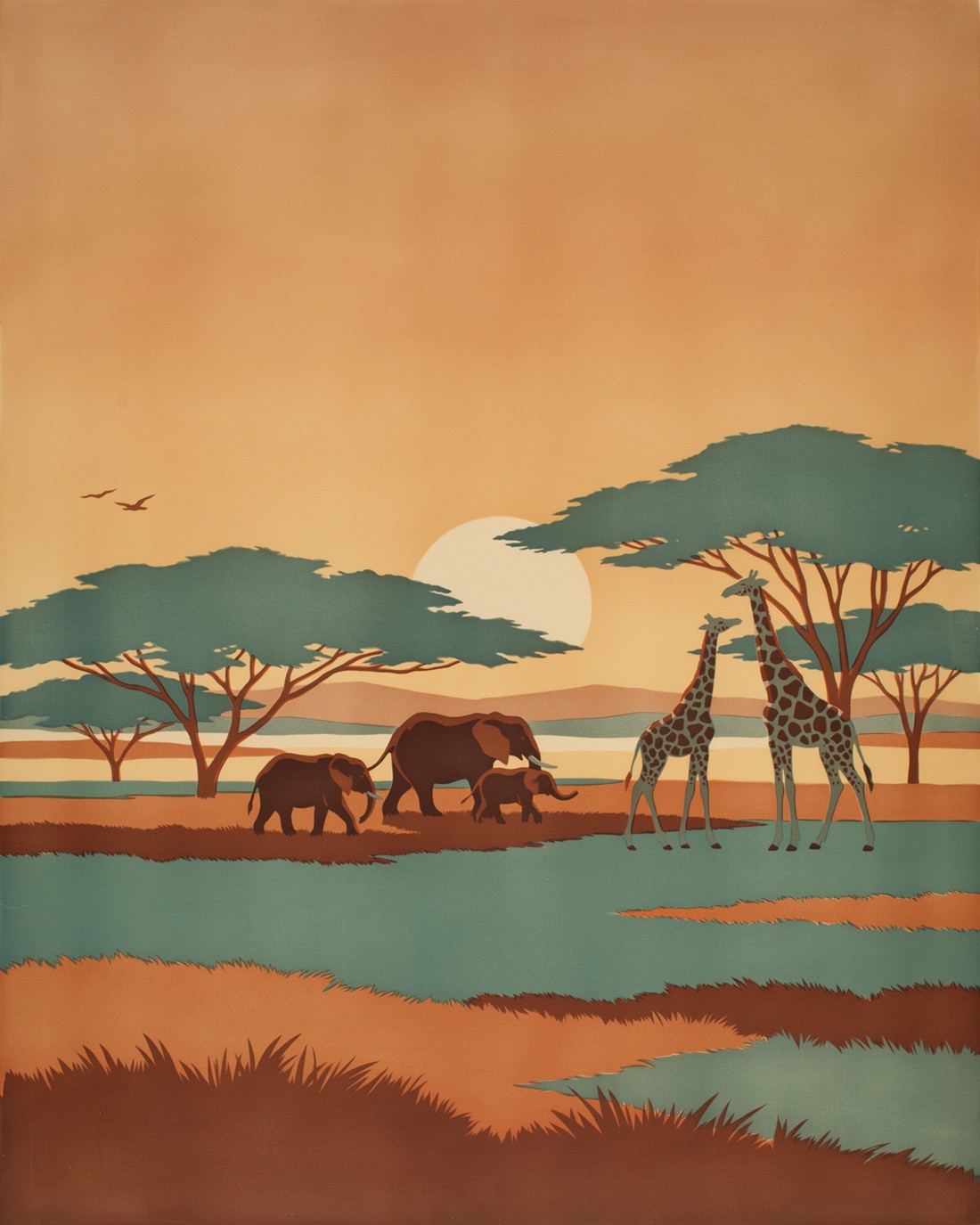
The bushveld and the Big Five
The safari is the heart of a South African trip, from the vast Kruger National Park to private reserves, where dawn and dusk game drives are the best time to see the Big Five. It is customary to tip your guide and tracker at the end of your stay, and many lodges suggest an amount, so set aside some rand for it before you head into the bush.
Good to know: tip your guide and tracker at the end of a safari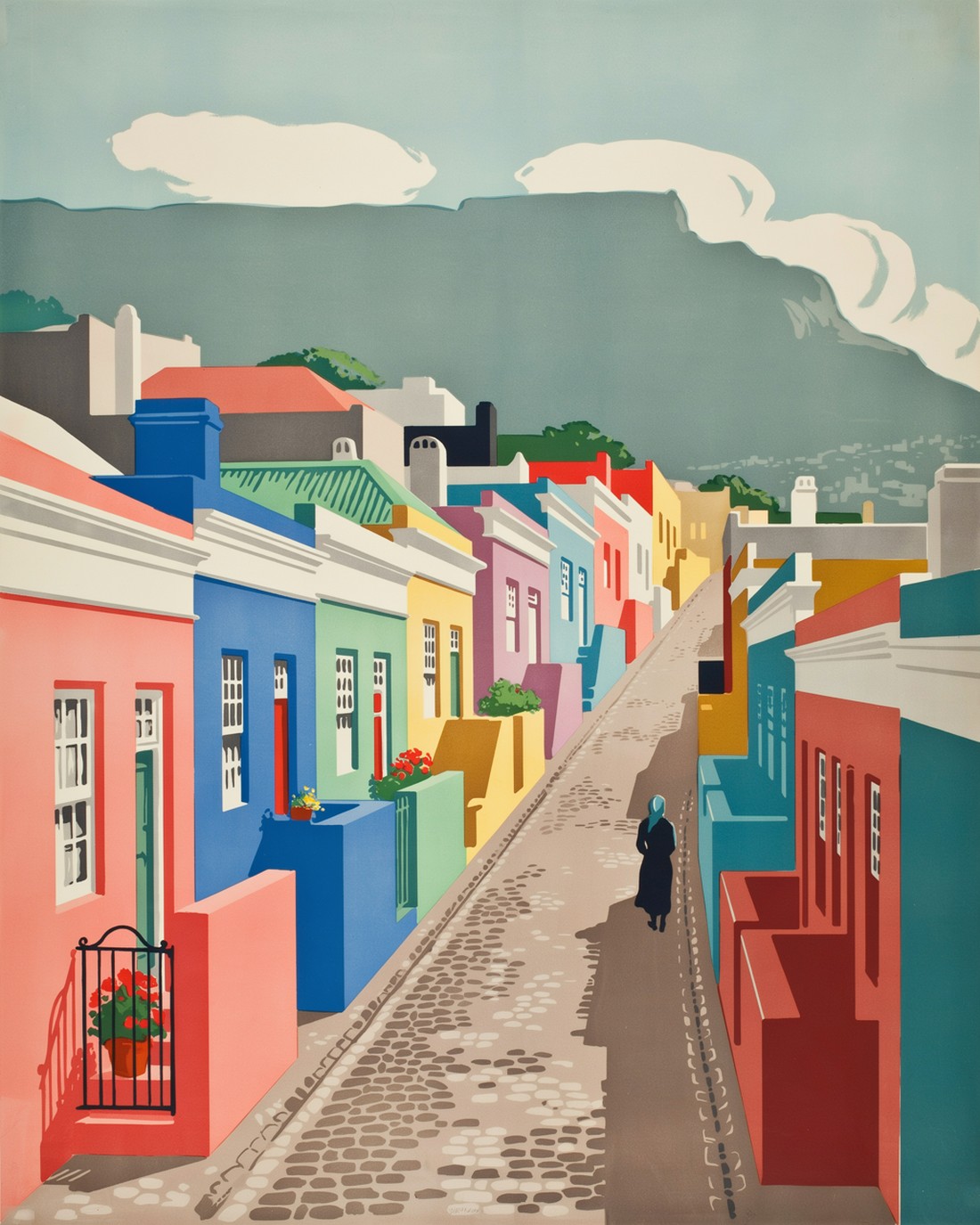
Cape Town and the Bo-Kaap
Cape Town sits beneath the flat crown of Table Mountain, and its most photographed street is the Bo-Kaap, the historically Cape Malay quarter of vividly painted houses and cobbled lanes. The Cape's layered history shows up in its food, its wine country just outside the city, and a walkability that makes cards and contactless the easy way to pay.
Say it: Bo-Kaap (boh-KAAP), the painted Cape Malay quarter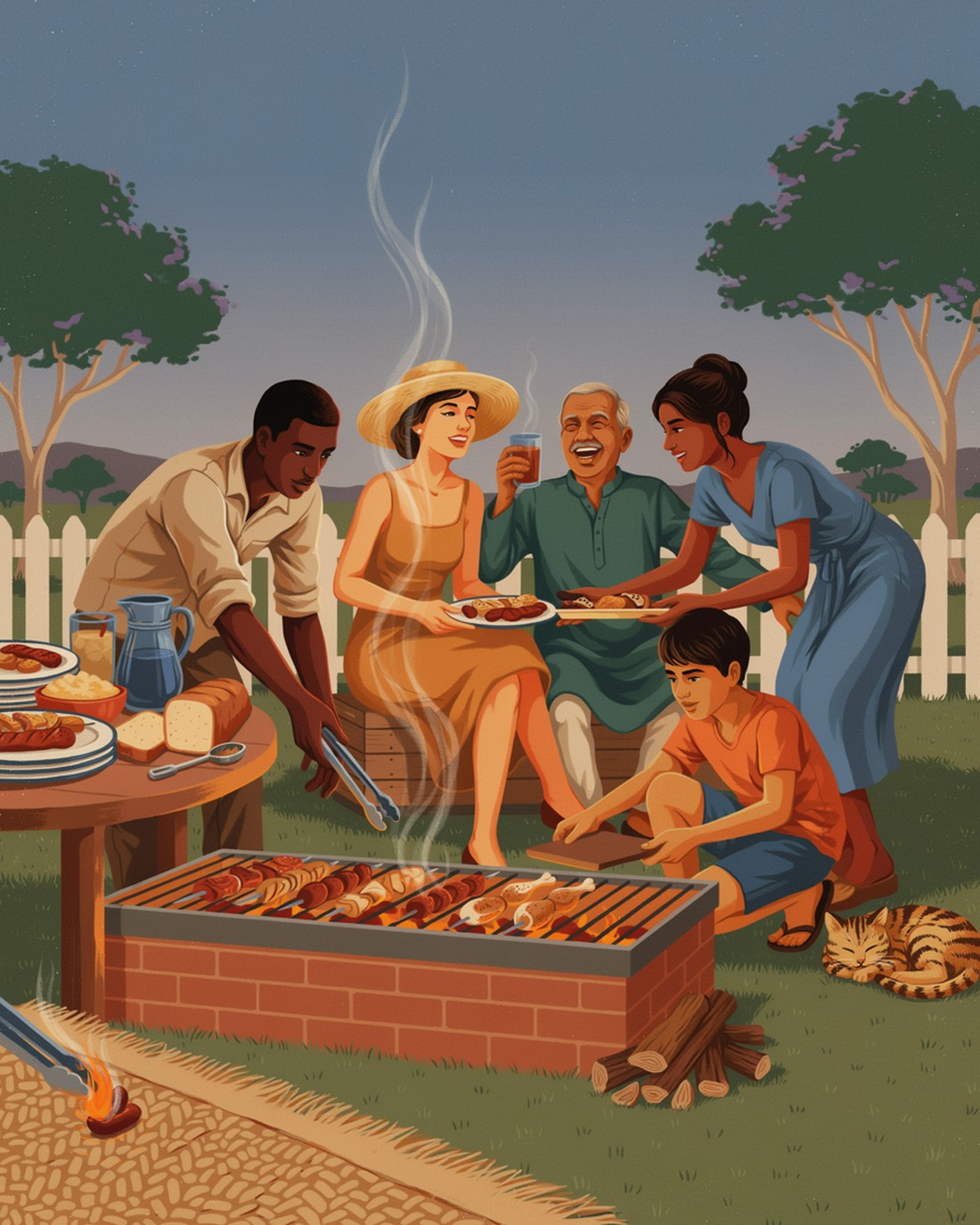
The braai and the rainbow nation
The braai, a wood or charcoal barbecue, is South Africa's great social institution, cutting across every community and often the warmest welcome a visitor can get. Gathering around the fire to share boerewors, steak and stories is the everyday expression of ubuntu, the sense that people are made whole through others. If you are invited, go.
Good to know: a braai invitation is a genuine welcomeSouth Africa is proud of its diversity and its languages, its extraordinary landscapes and wildlife, and a warm, sociable spirit. Meet it with openness and a bit of curiosity, and it gives a lot back.
No links here, nothing to buy. This part is just to help you travel well.
Sources, and how this guide was checked
Last reviewedJul 2026, 9 of 9 dated items inside their review window
What the last check foundRe-checked July 2026. The Electronic Travel Authorisation is now live for nationals of China, India, Indonesia and Mexico but is still not required for US citizens, who continue to get a free 90-day stamp on arrival. Load-shedding, VAT refund and tipping unchanged.
- South African Revenue Service (SARS)the tourist VAT refund, the 15% rate, the R250 minimum, the 90-day export window and the refund offices at the main airports
- US Embassy South Africaemergency numbers, 10111 for police and 112 from a cell phone, 10177 for an ambulance
- South African EmbassyUS passport holders do not need a visa for visits of 90 days or less for tourism or business
Our own judgmentThe daily cash share and the tipping amounts are our own estimate from experience and consistent traveler reports, not an official figure. The Electronic Travel Authorisation is rolling out in phases, so check the official Home Affairs site before you fly.
How we checkHow every guide is researched, checked and dated
More money guides in Africa
If you are also weighing up nearby destinations, each guide covers cards, cash, ATMs and the fees to expect.
Going deeper on South Africa
The money questions people ask on the ground.
Short, focused answers to the specific things that catch first-timers out in South Africa.
- Do I need cash in South Africa, or can I use cards?Short answer: a card for most of the day, and rand cash for markets, car guards, petrol attendants and tips. Use ATMs in secure spots and mind the skimming scams. Here is how to handle it.
- Tipping in South AfricaSouth Africa does have a tipping culture, and it is expected: 10 to 15% at restaurants. There are also two local customs to know, tipping car guards and petrol attendants. Here is what you actually owe.
- Taxis in South Africa, and the airport e-hailing baysUber and Bolt make getting around South Africa's cities easy, but the airports have a pickup quirk and there is some turf tension worth understanding. Here is the app to use, where it collects you, and what to avoid.
- Common money scams in South Africa, and what they cost youSouth Africa is a magnificent country to travel in and most visits are trouble free, and the money scams here are unusually well documented, which makes them unusually avoidable. But we are not going to pretend the context is ordinary. The US State Department has South Africa at Level 2 with crime, terrorism, unrest and kidnapping indicators, and it notes that kidnappers target foreign travelers specifically to make them withdraw cash or hand over account passwords. So the advice is partly about the con at the cash machine, and partly about limiting what anyone can take. Read the full advisory for the wider picture; this page covers money.
- Staying connected in South Africa.South Africa has a real price gap hidden in plain sight: an ordinary MTN data bundle and a Vodacom tourist bundle can differ by four times for the same gigabytes. The catch on both is RICA, the registration law, and whether it is worth your first afternoon.
- What does getting sick in South Africa cost a visitor?South Africa has two health systems living in one country. The private one is excellent, and it is where a visitor belongs; the private hospitals where a visitor belongs ask for a substantial deposit or proof of cover at admission. The public one is overstretched, and it is not the plan.
This is how South Africa stands today.
Money rules move. We can let you know for free if that changes.