
True Trip Costs: El Salvador
before you go
- DoSpend dollars exactly as you would at home
- CarryWhat matters: Small bills, ones to tens
- WithdrawATM fee: About $3 to $6, flat
- ExpectThere is nothing to exchange and no crypto to set up
- ExpectReal risk: Evacuation to the US
- ExpectThe real risk: Tipping twice, not too little
That's the short version. Below: every fee we checked, what it all adds up to, and the traps we help you dodge.
No match. See all guides.
What does a trip to El Salvador really cost?
El Salvador is the rare country where the honest answer to most money questions is that it costs you nothing extra. It has used the US dollar since 2001, so there is no conversion, no spread and no prompt to decline. That frees us up to talk about the three things that do cost money here.
What you can refuse to pay here
The room rate isn't the bill, but in El Salvador, it's close. Your card and a bit of care cover it, with little to refuse. See why
Money scorecard
El Salvador
- Ease of payingMixed
- Cash dependenceCash-heavy
- Daily costBudget
- Getting aroundNot rated
- CurrencyStable
Every rating is our own judgment from the El Salvador guide, not a score.
See the full El Salvador guideThe three things people ask
Will my card work? Do I need cash? Are ATMs easy?
The quick read for a first trip.
Your card
Good in the capital and tourist areas
Visa and Mastercard are accepted at hotels, better restaurants, supermarkets, malls and tour operators in San Salvador and the main beach and surf towns. Amex is patchier and Discover is rarely useful. Because El Salvador uses the dollar, a card transaction here is a domestic-currency transaction, so there is no conversion markup to worry about. Some US cards may still apply a foreign transaction fee based on where the merchant is, so a no-fee card is still the safer choice.
Check yours →Cash
Dollars, and the small ones matter
This is the part to plan. Vendors, taxis, market stalls and pupuserias often cannot break a twenty, let alone a fifty or a hundred. Arrive with a working float of ones, fives and tens in good condition, and treat that as the single most useful piece of preparation for the trip. Cash is also the way to tip, since tips on a card rarely reach the person who served you.
How much to carry →ATMs
Flat fee, and it is the whole cost
Machines are easy to find in banks and shopping malls and they dispense dollars. Expect about 3 to 6 dollars per withdrawal on top of anything your own bank charges. The useful quirk of a dollarized country is that with no exchange spread hiding in the transaction, that flat fee is the entire cost, so the arithmetic is simple: withdraw less often and take more each time. Use machines inside banks or malls in daylight rather than street-facing ones.
See ATMs in El Salvador →(opens in a new tab)Cash or card
Cards handle the capital and the beach towns; everything else runs on small bills.
A rough feel for everyday spending. Cards are reliable in San Salvador, in the Zona Rosa, Colonia Escalon and the big malls, in the wealthier suburbs of Santa Tecla and Antiguo Cuscatlan, at international hotel chains and at established surf-town businesses. Outside that, and at markets, comedores, pupuserias, buses and small-town shops, it is cash. Since the currency is the dollar there is nothing to convert either way, so this is purely about where a terminal exists.
See what the trip really costs →Your money plan
Four steps and you're set.
Before you go
- Bring a no-foreign-fee credit or debit card for most spending, plus a backup card on a different network.
- Pack a real float of small US bills, ones, fives and tens, in good condition. This matters more here than almost anywhere, because nothing you buy from a street vendor can be paid with a fifty.
- You need no visa and, since 2025, no entry card fee. Carry 12 dollars in small bills anyway as cheap insurance, because some official pages still list the old charge.
- You do not need to buy any foreign currency, or set up a Bitcoin wallet, or download anything to pay for things. Dollars work.
At the airport
- At San Salvador airport follow signs for Extranjeros. Have your passport and onward ticket ready; there are no forms to fill in.
- Skip the airport currency desk entirely. There is nothing to change.
- If you want data, Tigo, Claro and Movistar sell prepaid SIMs from around 5 dollars, with roughly 5GB for about 10 dollars a month. An eSIM bought before you fly saves queueing.
- Pre-book your ride or use Uber, which operates in the capital. Agree any taxi fare before the door closes.
Day to day
- Read the bill before you tip. Mid-range and better restaurants frequently print a 10% propina or propina sugerida as a line item. Tip again without noticing and you have paid roughly 20%.
- 13% IVA is normally already inside the displayed price, so a menu or shelf price is usually what you pay.
- Keep your small bills topped up. Break notes at supermarkets and chain shops, which can, and save the small ones for stalls and taxis.
- Tip in cash, always, even when you pay the bill by card.
A golden rule
- You are already in dollars, so the rule here is about denominations, not exchange. Ones, fives and tens are what actually spend. A fifty is close to unusable outside a bank or a large supermarket.
- Read the check before you tip. The 10% propina is frequently already printed on it, and adding a second one takes you to roughly 20% without meaning to.
Staying connected
Will my phone work here? And what will it cost?
Well, by regional standards. Claro, Tigo and Movistar all run 4G that reaches most of the country, and coverage along the populated Pacific coast and around San Salvador is good enough for maps, ride-hailing and calls. Prepaid SIMs start around 5 dollars and roughly 5GB runs about 10 dollars a month, so a local SIM is genuinely cheap if you would rather not buy an eSIM. Expect thinner service in the northern mountains and remote stretches of the east. One practical note reported by travelers: the arrivals and customs hall at San Salvador airport can be a dead zone, so having an eSIM already installed and activated before you land saves a frustrating first twenty minutes. The cost is where people get caught out, and on most US plans it lands in one of two buckets.
Your plan may already include it
Often, do nothing
Some US plans include slow data abroad at no extra cost. If that is you, the honest move is to leave it alone.
we earn nothing
Or it charges quietly, after the fact
The bill lands later
On pay-per-use plans the cost runs in the background while you travel, and the charge can show up weeks after you are home. Forgetting to switch off data roaming is the classic one. For a week or more, an eSIM is usually cheaper and keeps you in control.
Check what your own carrier charges before the trip, not after.
If an eSIM is the cheaper call, Nomad covers El Salvador.
Get your Nomad eSIM→(opens in a new tab)we may earn a commissionMedical cover
The one cost with no price tag.
Every other number on this page has a price you can look up. This one does not, and it can be the largest of them all. Most US health plans cover little or nothing once you leave the country, and Medicare covers essentially none of it abroad. A serious illness or injury is paid up front, and a medical evacuation runs from tens of thousands of dollars to past $100,000 if you are remote or an ocean from home.
First, you may not need to buy anything.
A cheap, refundable trip close to home does not need this. And if you are healthy, headed somewhere with good care, and one of the premium cards on the shortlist above already includes emergency medical and evacuation, you may be covered already. Check your card's benefits guide before you buy. Saying that costs us the commission, and it is still the right call.
How much cover matters here
Care in the main cities is good, but costs add up and reaching top care from a remote spot takes time, so it is worth a real look for a trip here.
If you do want cover, this is what it is for: the evacuation and the up-front hospital bill, the part no card limit is meant to absorb.
Enough for most trips
Faye, or a comparable whole-trip policy
Bundles trip protection with emergency medical, which is enough cover for most travelers on a typical trip.
The deeper end
A dedicated travel-medical plan built for serious care and evacuation abroad
Stronger on medical care and evacuation, for a remote or higher-risk trip where that is the real exposure.
If it happens
Call it first, then call your insurer's 24/7 assistance line, which is what confirms payment and arranges an evacuation. 911 reaches police, ambulance and fire, the same number as at home, though operators generally speak Spanish. The fire service can also be reached on 913. POLITUR, the tourist police, patrol 19 tourist areas and are the right people for questions about local conditions.
TrueTripCosts explains the gap and points to options. It does not set your coverage amounts or act as your insurance advisor, and every policy carries its own exclusions, so read them before you buy. Emergency number checked Jul 2026. Confirm the current number before you travel, as local lines can change.
Renting a car
Where the rental desk makes its money.
Renting is often the best way to see El Salvador, and the cover is where the counter earns its margin. The rental comes with basic collision cover, but it leaves you owing the excess, the first slice of any damage or theft bill, often several hundred to a couple of thousand dollars, held on your card until the car is back. The desk will offer to erase that excess. It is a real product, just priced at the counter for far more than the same cover costs if you arrange it before you go.
You may not need to buy anything at all. Some US credit cards include rental collision cover when you pay with the card and decline the counter's version, so check what your own card covers on rentals before you add anything extra. We cannot read your policy for you, and flagging this can cost us the sale below, but it is the honest first step.
If your card does not cover it, or you would rather have cover built for this, a standalone policy bought ahead is the cheaper way to handle it. It covers the damage and theft the rental leaves you liable for, often including parts the counter cover leaves out like tires, glass and the underbody, and mechanical faults stay the rental company's problem. RentalCover covers rentals in El Salvador. Read what the policy includes before you buy.
Cover your rental with RentalCover→(opens in a new tab)we may earn a commissionCurrency basics
There is no local currency to learn.
You are already in dollars
El Salvador adopted the US dollar as legal tender in 2001, replacing the colon, so prices are quoted in dollars and there is nothing to convert. Unlike Ecuador, it does not mint its own coins, so the change you get is ordinary US cents. The practical upshot is that the conversion markup we warn about on almost every other guide simply does not exist here.
Small bills are what actually spend
This is the one to prepare for. A pupuseria, market stall, bus or taxi often cannot break a twenty, and a fifty or hundred is close to unusable outside a bank or large supermarket. Arrive with a real float of ones, fives and tens in good condition, and break bigger notes at supermarkets and chain shops, which can.
Cards in the capital, cash beyond it
Visa and Mastercard are reliable in San Salvador, especially the Zona Rosa, Colonia Escalon and the malls, in Santa Tecla and Antiguo Cuscatlan, at international hotels and at established surf-coast businesses. Amex is patchy and Discover rarely useful. Outside that footprint, assume cash.
The flat ATM fee is your entire cost
Machines in banks and malls dispense dollars and charge about 3 to 6 dollars a withdrawal, plus anything your own bank adds. Because a dollarized country has no exchange spread hiding in the transaction, that flat fee is the whole cost, which makes the maths unusually clear: withdraw less often and take more each time.
The tip may already be on the bill
Mid-range and better restaurants frequently print a 10% propina or propina sugerida line on the check. Miss it and add another 10% and you have paid roughly 20%. Read the check before you sign. IVA of 13% is normally already inside displayed prices, so a menu price is usually what you pay.
Real exchange rate
No need to convert here. This country uses the US dollar, so prices are already in the currency you think in, and on a card terminal or ATM there is nothing to convert.
Taxes, tips and the fee that was abolished
The tax is usually inside the price. The tip may already be on the bill.
Two charges and one absence. IVA at 13% is normally baked into displayed prices, so a menu or shelf price is generally what you pay, which is a pleasant contrast to shopping at home. At mid-range and upscale restaurants a 10% propina, sometimes labelled propina sugerida, is commonly added to the printed check, and this is the single most common way visitors overpay here: they miss the line and add another 10% on top, arriving at roughly 20% without meaning to. Read the check line by line before you sign. The absence is the 12 dollars Tarjeta Migratoria de Ingreso. El Salvador's Legislative Assembly voted in April 2025 to strike every article of the migration law that created it, on the argument that charging visitors to enter the country was indefensible. Entry is now free, though official US pages were slow to reflect it, so carrying the old amount in small bills remains cheap insurance against a booth applying the old rule out of habit.
That covers what a government adds. What you can still change is what the room itself costs, and that comes down to the booking moment: see how to pay less on hotels.
Before you book: passports, the six-month rule and whether you need a visa. Not a US citizen, or connecting through Europe? The rules can differ, and even a layover can need its own visa. See our passports and visas guide →
Watch out for
The small traps that catch first-timers.
Tipping
Tipping, and how not to do it twice.
Tipping in El Salvador is modest, and the main skill is reading the bill. At sit-down restaurants the convention is around 10%, but mid-range and upscale places commonly add that themselves as a propina or propina sugerida line, in which case nothing more is expected unless the service was genuinely special. At comedores and pupuserias no tip is expected at all, and leaving fifty cents or a dollar is generous. Taxi and ride-hailing drivers do not expect a tip, so rounding up a good ride is plenty. Hotel porters run about a dollar a bag and housekeeping a dollar or two a night. Guides are where tipping matters most, because it is a real part of the income: roughly 5 to 10 dollars per person for a half-day guide at a site like Joya de Ceren or on a volcano hike, and surf instructors in the El Tunco area are usually in the same range per session. Tip in cash in every case, even when the bill goes on a card, because a card tip often does not reach the person who served you.
Common questions
Quick answers.
What currency does El Salvador use?
The US dollar, and it has since 2001. There is nothing to exchange, prices are quoted in dollars, ATMs dispense dollars, and the pay-in-dollars-or-local-currency prompt that costs you a few percent elsewhere does not arise. El Salvador does not mint its own coins, so your change is ordinary US cents.
Do I need to pay a tourist card fee to enter El Salvador?
No. The 12 dollars Tarjeta Migratoria de Ingreso was abolished in April 2025, when the Legislative Assembly voted to remove every article of the migration law that created it. Entry is free for US citizens for up to 90 days. Some official pages, including the US Embassy's own travel-requirements page, were still describing the old fee well after the change, so carry 12 dollars in small bills as cheap insurance in case a booth applies the old rule.
Do I need Bitcoin to visit El Salvador?
No, and this is the most widely misunderstood thing about the country. Bitcoin's status was amended in January 2025 as a condition of an IMF programme: acceptance by businesses became voluntary, taxes can no longer be paid in it, and the requirement on the private sector was repealed. In practice the great majority of Salvadorans do not use it for transactions. Dollars and cards cover everything you will need.
How much should I tip in El Salvador?
Around 10% at sit-down restaurants, but read the bill first, because mid-range and better places frequently add that themselves as a propina line. Missing it and tipping again is the most common way visitors overpay here. Nothing is expected at pupuserias or comedores, taxi drivers do not expect a tip, and guides are worth roughly 5 to 10 dollars a person for a half day. Always tip in cash.
Are ATM fees high in El Salvador?
Expect about 3 to 6 dollars per withdrawal plus whatever your own bank adds. The thing worth understanding is that in a dollarized country there is no exchange spread buried in the transaction, so that flat fee is the entire cost. That makes the arithmetic unusually clear: fewer, larger withdrawals are straightforwardly cheaper. Use machines inside banks or malls during daylight.
Is El Salvador safe to visit?
The US State Department currently rates it Level 1, Exercise Normal Precautions, its lowest tier, having raised the rating in 2025 to reflect a large fall in violent crime. That is the same tier as most of western Europe. Two caveats worth knowing: the state of exception introduced in 2022 remains in force, and other governments note a risk of arbitrary enforcement of local laws under it; and US government employees in the country are barred from using public buses and from travelling between cities after dark. Petty theft is the usual risk to visitors. 911 is the emergency number and POLITUR is the tourist police.
What will your trip really cost?
Name where you are going. We will show you what nobody quotes.
For instance, right now
 ColombiaHotels charge 19% IVA, but as a foreign tourist you are exempt, and about half try to add it anyway.
 JapanThe world's most high-tech country is still cash-first, and most bank ATMs refuse US cards.
 CzechiaCzech law gives you three hours to cancel a bad currency exchange and get your money back, on amounts up to 1,000 EUR.
 GreeceGreece's climate fee charges an Airbnb-style rental about 8 EUR a night against 2 for a budget hotel.
 CambodiaThe US dollar is Cambodia's everyday currency, and ATMs hand you crisp $100 bills nobody can break.
 TurkeyUS citizens need no visa and no e-visa for Turkey, scrapped in 2023.
 ItalyMost Italian restaurants add a coperto, a per-person cover charge of commonly 2 to 3 euros, before you have ordered anything.
The one thing most people get wrong about El Salvador
Guide checked Jul 2026You read that El Salvador made Bitcoin legal tender and assume you need a wallet.
The country that made Bitcoin legal tender? You can ignore Bitcoin entirely and just spend US dollars, the official currency.
What to doSpend dollars exactly as you would at home. There is nothing to exchange and no crypto to set up.
Everything we checked
What El Salvador actually charges you, in one place.
4 things we verified for El Salvador, grouped by the kind of thing they are. The numbers are below; this is the shape of them.
money you keep
traps to dodge
timing
The number
What you'll really spend in El Salvador.
Your flights if you want them counted, your room, your on-the-ground spending, the two fees most US cards add without telling you, and El Salvador's tourist tax. One number, nothing waiting on the statement. No bank to pick, no sign-up, nothing saved.
Optional. Enter your round trip fare per traveler to fold flights into the total.
Total trip realistically somewhere between $0 and $0.
Getting thereflights, and what the border costs
Watch out for
Prepare ahead
These carry no dollar figure by design: each is named because it is real, and there is nothing honest to price here.
Departure tax is not a separate line here. Where a country charges one it is collected inside your airfare, so it is already in the flight figure, and adding it again would count it twice.
On the ground detailyour room, your days, and how much of it is cash
Whether at an ATM or a card terminal in a shop or restaurant, always choose to be charged in the local currency, not dollars. Paying in dollars (called dynamic currency conversion) lets the machine set its own, worse, exchange rate on top of any fee.
Fees nobody quotes youthe part that lands on the statement weeks later
What you'll pay
What you can refuse, and what the lookalike sites charge, is set out under Costs nobody tells you about below, with the two figures kept apart from these ones.
Costs nobody tells you about
Most of it you can keep. Here is every dollar of it.
Every one of them, and how to avoid it2 items
Two of these are money you hand over by default; the rest is money you keep by knowing. Each is its own line.
What you'll pay unless you act
- Your own bank's foreign feeswhat the fees above come toMost US cards add a percentage on what you buy and on the cash you pull, plus a few dollars per ATM withdrawal. Nothing about that is a cost of the trip; it is a cost of the card you happened to bring.A no-foreign-fee card takes both fee lines above to zero.The cards that do not charge it
What we'll help you dodge
- The unmetered, no-reference-price street taxiSalvadoran taxis do not generally have meters, so a newly arrived visitor with no reference price is negotiating at a real disadvantage.Use Uber where it operates, since the fare is fixed and shown before you accept, or a hotel-arranged taxi with the fare agreed first; walk away from a high opening quote from anyone who approaches you in the terminal.How taxis work here
Where these numbers come fromevery assumption, and its limitssources
These are the assumptions behind the number. Change the room price, nights, travelers, or travel style above, and every line here moves with them.
- Hotel
- Daily spending
- Flights
- Cash vs card
- ATM withdrawals
- Foreign fee
- The range
- Tourist tax
Rough guide, not a quote. The percentage here is a blended stand-in for a typical US card's foreign fee, not your exact rate. The real number moves with the card you carry: one no-foreign-fee card can cover both sides, while a plain rewards credit card only removes the fee on what you buy, and cash still costs a little unless that card also waives ATM and foreign-cash fees. A debit card, or accepting the "pay in dollars" (dynamic currency conversion) offer at a till or ATM, can push it higher. Rates checked Jun 2026 and rounded.
How we check and date every figureEl Salvador, TTC-ed
truetripcosts.comWhat this assumes
Tips are already inside the daily spending figure, never added on top.
Not sure which card to bring? See my pick for El Salvador.
Already carry a card with no foreign transaction fee? Then you are set for El Salvador, and can skip this. There is nothing to buy.
If you are getting a card for El Salvador, this is the pairing I would pick: a no-foreign-fee credit card for spending, and a fee-free ATM debit card for cash. We earn nothing on these today. Always confirm the current fee with the issuer before you apply. Checked Jun 2026.
Capital One charges no foreign transaction fee on any of its cards.
No foreign transaction fee
Fee-free ATM cash worldwide

Want one account that holds and spends in the local currency? A different job from the three above, and the one I reach for abroad. It is free to open; you can create a virtual card in the app and add it to your phone wallet in minutes, without waiting for the physical card; and you can convert US dollars into the local currency inside the account before you travel, then spend from that balance. Wise uses the mid-market rate plus a small conversion fee (around 0.4% and up), with no flat foreign fee.
The three picks above pay us nothing, and their tags say so. Wise is the only option here that can earn us a commission, and its tag says that too. Paid or not, the pick is still the pick.
Before you fly
At least 14 countries now make you file a form online before you fly. 13 of them are free. One really does charge, and it is not the one you would guess.
El Salvador does not ask for one, so this is not a job for this trip. It is worth knowing anyway, because the list keeps growing and the pattern is always the same: the filing is new, obscure and mandatory, and the paid lookalikes outrank the government site because the real ones do not buy ads.
See every form we can source, with the official address for eachWhen to go
Cheaper and busier months in El Salvador.
The month you pick moves the budget as much as the country does. Here is the shape of El Salvador's year, with no price attached to it, because an honest one does not exist.
- Busy and pricey
- In between
- Cheaper and quieter
- Cheaper and quieter
- Jun to Sep
- What drives the peak
- The dry season, Holy Week, Christmas and New Year, and the Pacific surf calendar
Low confidence. The seasons are clear enough, but the pattern is not documented firmly enough for us to state it plainly, so treat this as a light steer.
See all 59 countries compared on the when to go pageTravelers, not touristsA little Spanish, and three stories
A little Spanish, and three stories
Salvadorans have a reputation across Central America for being warm and direct, and the country sees few enough US visitors that making an effort still registers. A handful of words goes a long way.
Say a few words
Tip: The word to know is chero (CHEH-roh), meaning mate or buddy, which is about as Salvadoran as language gets. You will also hear guanaco, which Salvadorans use affectionately for themselves. And que chivo (keh CHEE-voh) means how cool, used constantly.
Know a story

The lighthouse that was a volcano
Izalco rose out of a field in 1770 on the flank of the Santa Ana volcano and then erupted, on and off, for nearly two centuries. Sailors on the Pacific steered by the red glow at its summit, and it earned the name El Faro del Pacifico, the Lighthouse of the Pacific. It has been quiet since 1966. You can hike it from Cerro Verde National Park, and from the ridge you get it alongside Santa Ana's turquoise crater lake.
Say it: Izalco (ee-SAHL-koh)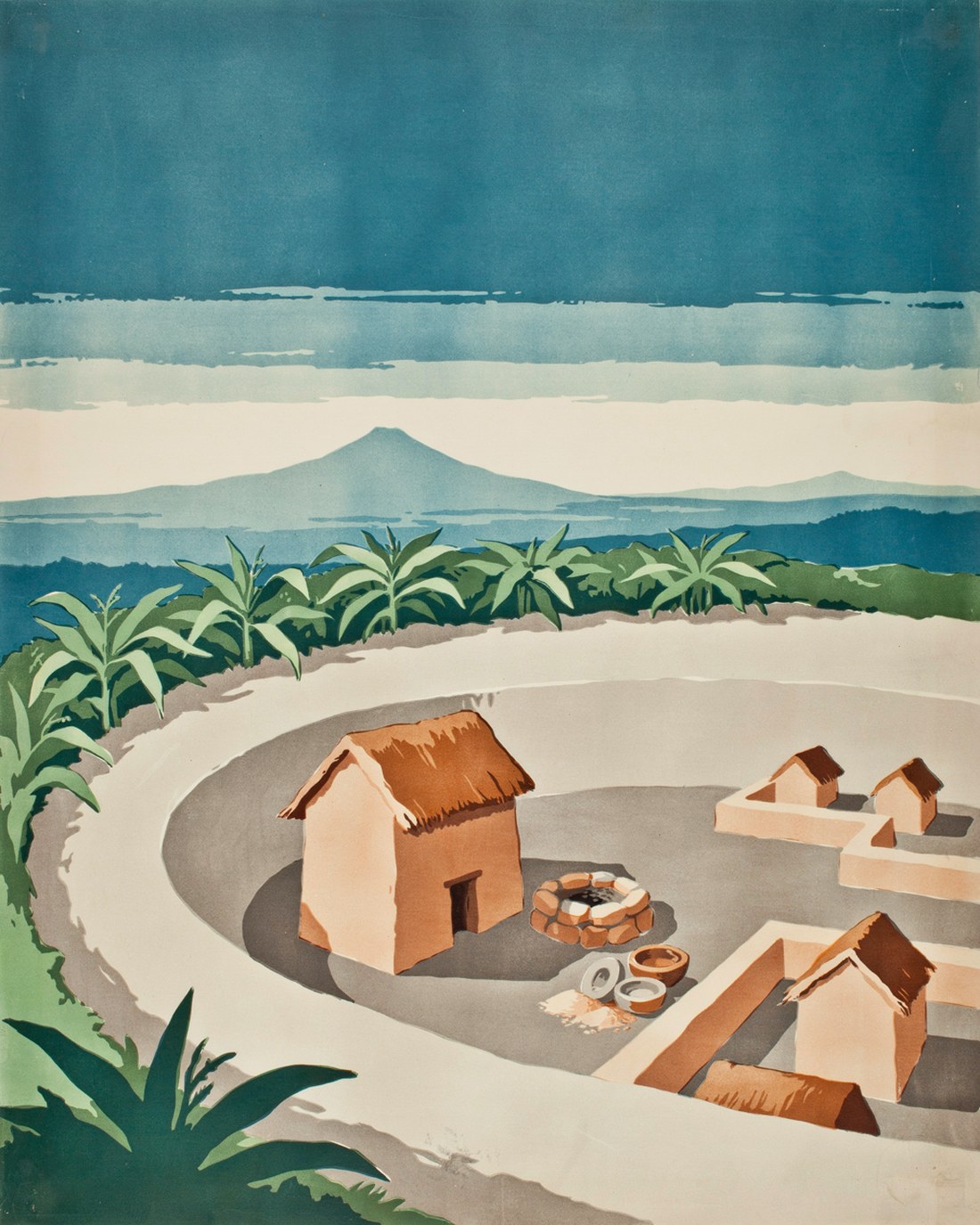
The Pompeii where everybody lived
Around AD 600 the Loma Caldera vent buried a farming village under ash, and because the ash fell cool and fast it preserved the place almost perfectly. Joya de Ceren is El Salvador's only UNESCO World Heritage site, and what makes it rare is that it is not a palace or a pyramid but ordinary life: thatched houses, a communal granary, grinding stones, painted pots, food left in bowls. And unlike Pompeii, no human remains have ever been found there. Everyone got out.
Say it: Joya de Ceren (HOY-ah deh seh-REN)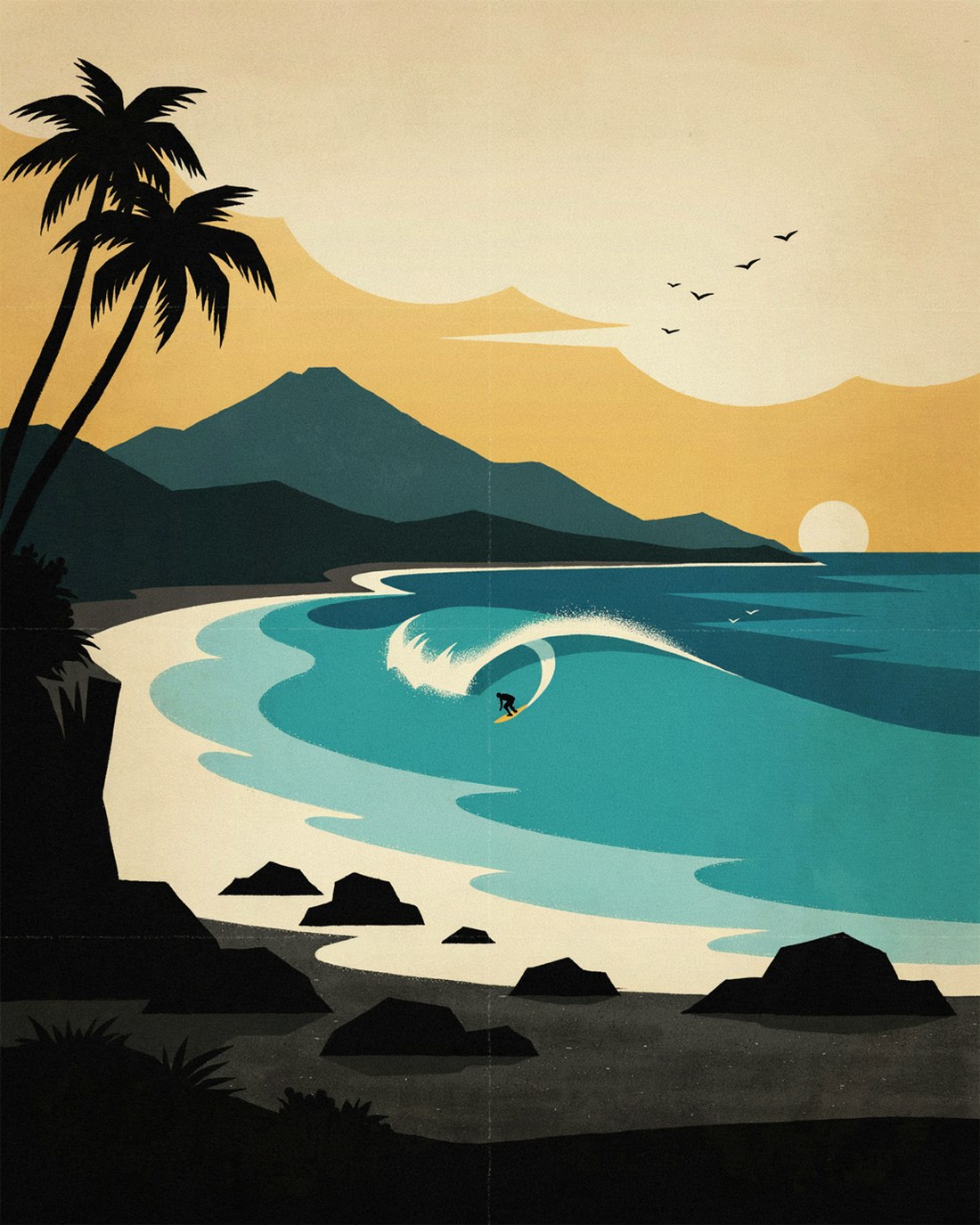
The best waves nobody talked about
El Salvador's Pacific coast has long right-hand point breaks that work with remarkable consistency, and for decades hardly anyone outside the surfing world knew. Punta Roca at La Libertad is the famous one, with El Tunco and El Sunzal as the places people actually stay. The government has leaned into it heavily as Surf City, and the coast is now the most developed part of the country for visitors, which is why it is also where cards work best.
Say it: El Tunco (el TOON-koh)Here is the number that reframes the country: El Salvador is roughly the size of New Jersey, has more than twenty volcanoes, and is the only nation in the Americas with no Caribbean coastline at all. Everything faces the Pacific.
No links here, nothing to buy. This part is just to help you travel well.
Sources, and how this guide was checked
Last reviewedJul 2026, 7 of 7 dated items inside their review window
What the last check foundNew guide, July 2026. Built around two corrections to what is widely published: the 12 dollar entry card was abolished in 2025 although official US pages were slow to say so, and the 10% propina is frequently already on the bill, which makes overtipping the more likely mistake than undertipping.
- Asamblea Legislativa de El Salvadorthe reform that removed the Tarjeta Migratoria de Ingreso and its 12 dollar fee from the migration law
- US State Departmentthe El Salvador travel advisory and its current level
- US Embassy in El Salvadorentry requirements, and the page that still described the abolished entry fee
- PwC Tax SummariesEl Salvador IVA confirmed at 13%
Our own judgmentTwo things here are firmer than what most guides publish, and both are primary-sourced. The <b>entry fee</b> is the bigger one: the Legislative Assembly's own record shows it reformed the Ley Especial de Migracion y de Extranjeria in April 2025 and derogated every article covering the Tarjeta Migratoria de Ingreso, including the 12 dollars charge in article 325, at the request of the director of migration. The US Embassy's travel-requirements page still instructed travelers to pay it months afterward, and several commercial visa sites still do. We therefore say entry is free and also tell you to carry the cash, because the risk is not the money, it is a booth applying the old habit. The 13% IVA rate is confirmed on PwC's tax summary. The advisory level is quoted from the State Department's own page and advisory levels change, so check it before you travel rather than trusting this line. Everything with a dollar sign beyond the tax rate is a market range, not an official figure: the about 3 to 6 dollars ATM fee, the daily spending styles, the guide and porter tipping bands and the SIM prices are current typical figures from operators and from consistent traveler reporting, and they move. The 10% propina is a widespread commercial practice rather than a legal requirement, so it is not on every bill and the amount varies, which is exactly why we tell you to read the check instead of assuming a number. On lodging we could not confirm a primary source for the total tax on a hotel room; the figures in circulation suggest it exceeds 13% because a separate tourism levy applies, so we point you at your reservation total rather than publish a rate we have not verified. On Bitcoin, sources genuinely conflict over whether it remains legal tender after the January 2025 amendment, with the IMF's country report describing the reform as removing the essential features of legal tender while others say the status survives on paper with acceptance made voluntary. For a visitor the distinction is academic, so we answer the practical question instead: nobody has to take it, and you do not need it. Checked July 2026.
How we checkHow every guide is researched, checked and dated
More money guides in the Americas
If you are also weighing up nearby destinations, each guide covers cards, cash, ATMs and the fees to expect.
Going deeper on El Salvador
The money questions people ask on the ground.
Short, focused answers to the specific things that catch first-timers out in El Salvador.
- Do you need a visa or a tourist card for El Salvador?The short answer is no to both, and the second half of that is recent enough that most of the internet, including some official pages, still says otherwise.
- Cash or card in El Salvador?Most of our cash-or-card guides are about avoiding a bad exchange rate. This one cannot be, because there is no exchange rate. What replaces it is a simpler question about where you can tap and what you can break.
- Tipping in El Salvador, and how not to do it twiceMost tipping guides worry you are about to under-tip. In El Salvador the more likely error runs the other way, because the tip is often already on the bill and easy to miss.
- Taxis and ride-hailing in El SalvadorGetting around San Salvador is one of the places where an app is not just cheaper but genuinely simpler, because the alternative involves negotiating every fare from scratch.
- Staying connected in El Salvador.El Salvador is small, increasingly visited, and reasonably well covered where visitors go. Local data is cheap and the gaps are short, which makes this a short page.
- What does getting sick in El Salvador cost?El Salvador has a specific and slightly unusual shape: the doctors in the main private hospitals are frequently well trained, often in the US, while the emergency and ambulance layer around them is thin. That gap is what to plan around.
This is how El Salvador stands today.
Money rules move. We can let you know for free if that changes.