True Trip Costs: Cambodia
before you go
- DoFares: App price or meter, not haggling
- DoAngkor tickets: One official seller only
- CarryAsk for small notes
- ExpectExpect change in riel
- ExpectSerious care: Bangkok or Singapore
- ExpectEveryday money: US dollars
That's the short version. Below: every fee we checked, what it all adds up to, and the traps we help you dodge.
No match. See all guides.
Money in Cambodia, sorted.
A calm, current plan for the money side of your trip: why you pay in dollars, where the riel fits, and the small rules that trip up first-timers.

What you can refuse to pay here
The room rate isn't the bill, but in Cambodia, it's close. Your card and a bit of care cover it, with little to refuse. See why
Money scorecard
Cambodia
- Ease of payingCash-first
- Cash dependenceCash-heavy
- Daily costBudget
- Getting aroundHonest taxis
- CurrencyRiel for change
Every rating is our own judgment from the Cambodia guide, not a score.
See the full Cambodia guideIf you were thinking of reaching Cambodia overland from Thailand, that plan is on hold. The land border crossings have been largely suspended since 2025 after a border dispute, so the old cheap Bangkok to Siem Reap bus is not running and most travelers now fly in, which adds to the trip cost. Flights and travel inside Cambodia are not affected. It is a developing situation, so check the US State Department travel advisory before you book.
The three things people ask
Will my card work? Do I need cash? Are ATMs easy?
The quick read for a first trip.
Your card
Fine in the cities
Visa and Mastercard work at hotels, tour operators and nicer restaurants in Phnom Penh and Siem Reap, and many places take Apple Pay, Google Pay or a KHQR scan through the free Bakong Tourist app. Markets, tuk-tuks, street food and rural areas are cash only. Because charges are processed abroad, your US bank may add a foreign transaction fee even though the bill is in dollars, so a no-fee card still helps.
Check yours →Cash
Yes, in US dollars
Dollars are the everyday currency, so you rarely need to buy local money. Carry clean, newer bills in small denominations (ones, fives, tens and twenties), since torn or old notes are often refused and big notes are hard to break. Your change under a dollar comes back in riel.
How much to bring →ATMs
They give dollars, for a flat fee
Bank ATMs (ABA, ACLEDA) dispense US dollars, and many now give only 100 dollar bills, which are a pain at a market. Expect a flat 4 to 6 dollar fee per withdrawal on top of your bank's, with a limit around 500 dollars. Pull a larger amount at once, and if you want smaller notes try an ACLEDA machine.
See ATMs in Cambodia →(opens in a new tab)Cash or card
Cambodia runs on cash, and that cash is US dollars.
A rough feel for everyday spending. Phnom Penh and Siem Reap increasingly take cards and the KHQR phone system at hotels, malls and nicer restaurants, and you can pay a lot by app. But street food, markets, tuk-tuks and anywhere rural run on cash, which here means US dollar notes with riel for the change. Keep a stack of small bills.
See what the trip really costs →Your money plan
Four steps and you're set.
Before you go
- Get a no-foreign-fee debit card for ATM cash. Charles Schwab refunds ATM fees worldwide, which softens Cambodia's flat fee; Wise and Revolut are low-fee.
- Ask your bank for clean, newer dollar bills in small denominations, and pack a no-fee Visa or Mastercard plus a backup card.
- Sort your e-visa at the official site or plan to get one on arrival, and file the free e-Arrival Card within 7 days of your flight.
- Tell your bank you are traveling so a first-day charge does not get blocked.
At the airport
- Skip the airport exchange counters; you are spending dollars anyway, so there is little to change.
- If you need cash, pull dollars from a bank ATM and decline any offer to convert or lock a rate.
- Grab a few small bills for a tuk-tuk or taxi, and use a ride app or the official taxi desk.
Day to day
- Dollars for almost everything, with riel for change under a dollar.
- Card or a KHQR scan at hotels, malls and nicer restaurants in the cities.
- Keep small, clean notes for markets, tuk-tuks and street food, and check any bills you are handed.
- Turn down any torn or heavily worn dollar note as change; it may not be accepted later.
A golden rule
- Here the usual advice flips: US dollars are the local currency, so pay and withdraw in dollars.
- The trap to refuse is still dynamic currency conversion, any screen offering to lock in its own rate. Say no.
Staying connected
Will my phone work here? And what will it cost?
Yes across Phnom Penh, Siem Reap, Sihanoukville and the main towns and roads, with solid 4G and growing 5G. Signal thins on the islands, in the northeast and in remote countryside. The cost is where people get caught out, and on most US plans it lands in one of two buckets.
Your plan may already include it
Often, do nothing
Some US plans include slow data abroad at no extra cost. If that is you, the honest move is to leave it alone.
we earn nothing
Or it charges quietly, after the fact
The bill lands later
On pay-per-use plans the cost runs in the background while you travel, and the charge can show up weeks after you are home. Forgetting to switch off data roaming is the classic one. For a week or more, an eSIM is usually cheaper and keeps you in control.
Check what your own carrier charges before the trip, not after.
If an eSIM is the cheaper call, Nomad covers Cambodia.
Get your Nomad eSIM→(opens in a new tab)we may earn a commissionMedical cover
The one cost with no price tag.
This is the one cost with no price tag, and it can be the largest on the page. Most US health plans and Medicare cover little or nothing abroad, so a serious illness or evacuation is paid up front. How medical costs work abroad, country by country →
First, you may not need to buy anything.
A cheap trip close to home, or a premium card that already includes emergency medical and evacuation, may mean you need nothing here. Check your card first. Saying that costs us the commission, and it is still the right call.
How much cover matters here
Care in the main cities is good, but costs add up and reaching top care from a remote spot takes time, so it is worth a real look for a trip here.
If you do want cover, this is what it is for: the evacuation and the up-front hospital bill, the part no card limit is meant to absorb.
Enough for most trips
Faye, or a comparable whole-trip policy
Bundles trip protection with emergency medical, which is enough cover for most travelers on a typical trip.
The deeper end
A dedicated travel-medical plan built for serious care and evacuation abroad
Stronger on medical care and evacuation, for a remote or higher-risk trip where that is the real exposure.
If it happens
Call it first, then call your insurer's 24/7 assistance line, which is what confirms payment and arranges an evacuation. 119 is the ambulance line, with 117 for police and 118 for fire. Response can be slow even in the cities, so for anything serious a taxi or tuk-tuk straight to a private hospital is often faster. The US 911 number does not work here.
TrueTripCosts explains the gap and points to options. It does not set your coverage amounts or act as your insurance advisor, and every policy carries its own exclusions, so read them before you buy. Emergency number checked Jul 2026. Confirm the current number before you travel, as local lines can change.
Currency basics
The US dollar, and where the riel fits.
Dollars are the everyday money
Cambodia runs on the US dollar. Prices are quoted in dollars, hotels, tours and most shops are paid in dollars, and there is nothing to convert. You do not need to buy local currency before you travel.
Riel is only for change
The Cambodian riel (KHR) turns up as your change under a dollar, at a fixed 4,000 riel to the dollar that everyone uses, so a 1,000 riel note is about 25 cents. Spend any riel before you fly home, since it is hard to use elsewhere.
ATMs pay out US dollars
Bank machines dispense US dollars, often only in 100 dollar bills, with a flat fee of about 4 to 6 dollars a withdrawal and a limit near 500 dollars. Pull a larger amount at once, and try an ACLEDA machine if you want smaller notes.
Tipping, in dollars
Tipping is not required but is common and appreciated, given the low local wages. A dollar or two for a tuk-tuk, a few dollars a day for housekeeping, and rounding up at a meal all go a long way. See the tipping section below.
Real exchange rate
No need to convert here. This country uses the US dollar, so prices are already in the currency you think in, and on a card terminal or ATM there is nothing to convert.
Taxes and refunds
What is on your bill, and why there is nothing to reclaim.
Two things worth knowing. Cambodia charges a 10% VAT on most goods and services and a small 2% accommodation tax on hotel rooms, and at nicer hotels and restaurants you may see these added on top of a net price, sometimes with a service charge of around 10%, so a room can end up a bit above the headline rate. Ask whether a quoted price is all in if it matters to your budget. Second, there is no tourist VAT refund in Cambodia, so unlike some countries there is nothing to claim back at the airport; the tax is simply part of the price.
That covers what a government adds. What you can still change is what the room itself costs, and that comes down to the booking moment: see how to pay less on hotels.
Fees and taxes to double-check
The numbers most likely to change.
These are the fees and taxes that move on political timelines, so we track each one on its own. Every line shows the amount, whether it is in effect yet, the date we last checked it, and a primary source where a clean one exists.
Cambodia tourist visa (30 days, US citizens)
About $36 on the official e-visa site (a $30 visa plus a $6 processing fee), or $30 as a visa on arrival at the airport, with clean US dollars and a passport photo. A free e-Arrival Card is also required within 7 days of arrival.
Before you book: passports, the six-month rule and whether you need a visa. Not a US citizen, or connecting through Europe? The rules can differ, and even a layover can need its own visa. See our passports and visas guide →
Watch out for
The small traps that catch first-timers.
Tipping
Tip a little, in dollars.
Tipping is not a strict custom in Cambodia, but wages are low and a little goes a long way, so it is genuinely appreciated. At local eateries just round up; at a sit-down restaurant, 5 to 10% is generous when no service charge is on the bill, so check first. A dollar or two for a tuk-tuk driver, a few dollars a day for housekeeping, and a similar amount for a helpful guide are all normal. Tip in US dollars, and hand it over directly rather than leaving it on a table.
Common questions
Quick answers.
Do I need to bring US dollars to Cambodia?
Yes. The US dollar is the everyday currency, so bring clean, newer dollar bills in small denominations. You do not need to buy Cambodian riel before you travel; it will come to you as change under a dollar.
Why did I get riel as change?
Because riel is Cambodia's stand-in for coins, for amounts under a dollar. If something costs $3.50 and you pay $5, you may get $1 back plus 2,000 riel, both counted at the standard 4,000 riel to the dollar. Keep the riel for small buys and spend it before you leave.
Will my dollar bills really be refused if they are old?
They can be. Cambodia is strict about the condition of US notes, and torn, taped or heavily worn bills are often turned away, even at banks. A 2025 directive eased this for lightly marked notes, but bring clean ones and inspect your change.
How much are ATM fees in Cambodia?
Most bank ATMs charge a flat fee of about 4 to 6 dollars per withdrawal, on top of anything your own bank adds, with a limit around 500 dollars. They dispense US dollars, often only in 100 dollar bills, so withdraw a larger amount at once and try an ACLEDA machine for smaller notes.
Should I pay in dollars or riel in Cambodia?
Pay in US dollars; that is the working currency, and prices are set in dollars. The only thing to decline is a card terminal or ATM offering to convert to your home currency at its own rate, which is worse than paying in dollars directly.
Can I use cards in Cambodia?
In Phnom Penh and Siem Reap, yes, at hotels, tour operators and nicer restaurants, and many places take Apple Pay, Google Pay or a KHQR scan through the free Bakong Tourist app. Markets, tuk-tuks, street food and rural areas are cash only.
Do US citizens need a visa for Cambodia?
Yes. You can get an e-visa in advance at the official site for about 36 dollars, or a visa on arrival at the airport for 30 dollars, both for a 30-day stay. Every air arrival also files a free e-Arrival Card within 7 days of the flight, which is separate from the visa.
Can I travel overland between Thailand and Cambodia right now?
Not reliably. The land border crossings have been largely suspended since 2025 after a territorial dispute, so the once-popular overland route from Bangkok to Siem Reap or Phnom Penh is not a dependable option and most travelers fly in. Flights and travel within Cambodia are not affected. Because this can change, check the US State Department travel advisory before you book.
How much cash should I bring for a week in Cambodia?
For two mid-range travelers, very roughly 300 to 450 US dollars in day-to-day cash across a week beyond your hotel, pulled in a couple of ATM visits or brought as clean small bills. Adjust for your style and how much you put on a card.
What will your trip really cost?
Name where you are going. We will show you what nobody quotes.
For instance, right now
 ColombiaHotels charge 19% IVA, but as a foreign tourist you are exempt, and about half try to add it anyway.
 JapanThe world's most high-tech country is still cash-first, and most bank ATMs refuse US cards.
 CzechiaCzech law gives you three hours to cancel a bad currency exchange and get your money back, on amounts up to 1,000 EUR.
 GreeceGreece's climate fee charges an Airbnb-style rental about 8 EUR a night against 2 for a budget hotel.
 El SalvadorThe country that made Bitcoin legal tender?
 TurkeyUS citizens need no visa and no e-visa for Turkey, scrapped in 2023.
 ItalyMost Italian restaurants add a coperto, a per-person cover charge of commonly 2 to 3 euros, before you have ordered anything.
The one thing most people get wrong about Cambodia
Guide checked Jul 2026You expect to need riel, and to get it from an ATM like anywhere else.
The US dollar is Cambodia's everyday currency, and ATMs hand you crisp $100 bills nobody can break.
What to doAsk for small notes, and expect change in riel.
Everything we checked
What Cambodia actually charges you, in one place.
6 things we verified for Cambodia, grouped by the kind of thing they are. The numbers are below; this is the shape of them.
fees nobody quotes
money you keep
traps to dodge
timing
The number
What you'll really spend in Cambodia.
Your flights if you want them counted, your room, your on-the-ground spending, the two fees most US cards add without telling you, and Cambodia's tourist tax. One number, nothing waiting on the statement. No bank to pick, no sign-up, nothing saved.

Optional. Enter your round trip fare per traveler to fold flights into the total.
Total trip realistically somewhere between $0 and $0.
Getting thereflights, and what the border costs
Watch out for
Prepare ahead
These carry no dollar figure by design: each is named because it is real, and there is nothing honest to price here.
Departure tax is not a separate line here. Where a country charges one it is collected inside your airfare, so it is already in the flight figure, and adding it again would count it twice.
On the ground detailyour room, your days, and how much of it is cash
Whether at an ATM or a card terminal in a shop or restaurant, always choose to be charged in the local currency, not dollars. Paying in dollars (called dynamic currency conversion) lets the machine set its own, worse, exchange rate on top of any fee.
Fees nobody quotes youthe part that lands on the statement weeks later
What you'll pay
Plus the one-off entry charge, which sits in Getting there above with the flights, because it is per person rather than per night.
What you can refuse, and what the lookalike sites charge, is set out under Costs nobody tells you about below, with the two figures kept apart from these ones.
Costs nobody tells you about
Most of it you can keep. Here is every dollar of it.
Every one of them, and how to avoid it8 items
Two of these are money you hand over by default; the rest is money you keep by knowing. Each is its own line.
What you'll pay unless you act
- Your own bank's foreign feeswhat the fees above come toMost US cards add a percentage on what you buy and on the cash you pull, plus a few dollars per ATM withdrawal. Nothing about that is a cost of the trip; it is a cost of the card you happened to bring.A no-foreign-fee card takes both fee lines above to zero.The cards that do not charge it
What we'll help you dodge
- Paying for the e-Arrival (CeA)freeon the official siteIt is free on the official government site, and it is mandatory, which is exactly why lookalike sites buy the search terms. We publish no figure for what they charge because none is sourced for Cambodia, but anything above nothing is too much.File it yourself at arrival.gov.kh. It takes minutes.Every form, and its real site
- Reseller markup on the entry chargeThe charge itself is unavoidable. Paying an agent on top of it is not, and the sites that rank above the official one are agents. We publish no figure for the markup because it varies by reseller.Apply on the official government portal, linked in Getting there above.The official source for this charge
- The fake dollar bill in your changeCambodia runs on US dollars, and travelers report being handed fake bills as change in shops and clubs.Check that notes handed to you are genuine and not torn or heavily worn.The full scam guide
- The Angkor pass sold by anyone but Angkor EnterpriseThe Angkor pass has one price and one official seller; anything else offered by a driver or shop is a markup or a dud.Buy Angkor passes only from Angkor Enterprise (its official site or the Road 60 ticket centre); a discounted pass from a driver is either a markup or a counterfeit that will not scan.The full scam guide
- The inflated visa fee at a land borderAt land crossings, officials and tour operators can ask for unofficial fees or inflate the published visa price.Know the official visa fee before you travel (about $36 for the e-visa, about $30 on arrival); if quoted more at a land border, the published fee is the answer.The full scam guide
- The tuk-tuk driver's commission routingA friendly driver mentions your guesthouse has closed or moved and knows a "better" shop or tour, paid on commission.Verify any claimed closure yourself with a phone call, and agree the fare and the stops before you set off, or use PassApp or Grab so the price is fixed in advance.How taxis work here
- The passport held as a scooter depositA shop holding your passport controls whatever repair or late figure it decides to name.Never hand over your passport as a guarantee for returning a motorcycle or scooter; offer a cash deposit instead.The full scam guide
Where these numbers come fromevery assumption, and its limitssources
These are the assumptions behind the number. Change the room price, nights, travelers, or travel style above, and every line here moves with them.
- Hotel
- Daily spending
- Flights
- Cash vs card
- ATM withdrawals
- Foreign fee
- The range
- Tourist tax
Rough guide, not a quote. The percentage here is a blended stand-in for a typical US card's foreign fee, not your exact rate. The real number moves with the card you carry: one no-foreign-fee card can cover both sides, while a plain rewards credit card only removes the fee on what you buy, and cash still costs a little unless that card also waives ATM and foreign-cash fees. A debit card, or accepting the "pay in dollars" (dynamic currency conversion) offer at a till or ATM, can push it higher. Rates checked Jun 2026 and rounded.
How we check and date every figureCambodia, TTC-ed
truetripcosts.comWhat this assumes
Tips are already inside the daily spending figure, never added on top.
Not sure which card to bring? See my pick for Cambodia.
Already carry a card with no foreign transaction fee? Then you are set for Cambodia, and can skip this. There is nothing to buy.
If you are getting a card for Cambodia, this is the pairing I would pick: a no-foreign-fee credit card for spending, and a fee-free ATM debit card for cash. We earn nothing on these today. Always confirm the current fee with the issuer before you apply. Checked Jun 2026.
Capital One charges no foreign transaction fee on any of its cards.
No foreign transaction fee
Fee-free ATM cash worldwide

Want one account that holds and spends in the local currency? A different job from the three above, and the one I reach for abroad. It is free to open; you can create a virtual card in the app and add it to your phone wallet in minutes, without waiting for the physical card; and you can convert US dollars into the local currency inside the account before you travel, then spend from that balance. Wise uses the mid-market rate plus a small conversion fee (around 0.4% and up), with no flat foreign fee.
The three picks above pay us nothing, and their tags say so. Wise is the only option here that can earn us a commission, and its tag says that too. Paid or not, the pick is still the pick.
Before you fly
At least 14 countries now make you file a form online before you fly. 13 of them are free. One really does charge, and it is not the one you would guess.
That includes Cambodia, where the e-Arrival (CeA) is one of them. The filings are new, obscure and mandatory, which is exactly the combination a scam needs: search for any of them and the paid lookalikes come up before the government site does, because the real ones do not buy ads.
See every form we can source, with the official address for eachWhen to go
Cheaper and busier months in Cambodia.
The month you pick moves the budget as much as the country does. Here is the shape of Cambodia's year, with no price attached to it, because an honest one does not exist.
- Busy and pricey
- In between
- Cheaper and quieter
- Cheaper and quieter
- May to Sep
- What drives the peak
- The cool dry season, Christmas and New Year, Chinese New Year in late Jan or Feb, and Khmer New Year in mid-Apr
Travelers, not touristsA few words of Khmer open doors
A few words of Khmer open doors
Khmer is written in its own flowing script, among the longest alphabets in the world, and no one expects you to read it, but a warm Suostei with a little smile and a story or two mark you as a guest rather than a tourist. Cambodians are gentle and welcoming, and a small effort is met with real warmth.
Say a few words
Tip: Cambodians greet each other with the sampeah, palms pressed together at the chest with a small bow, much like the Thai wai; returning it is polite and appreciated. As in much of the region, the head is sacred and the feet are lowest, so avoid touching people on the head and never point your feet at a person or a Buddha image. Dress modestly at temples, covering shoulders and knees, and always speak of the monarchy and the Buddha with respect.
Know a story
The heart of a civilization
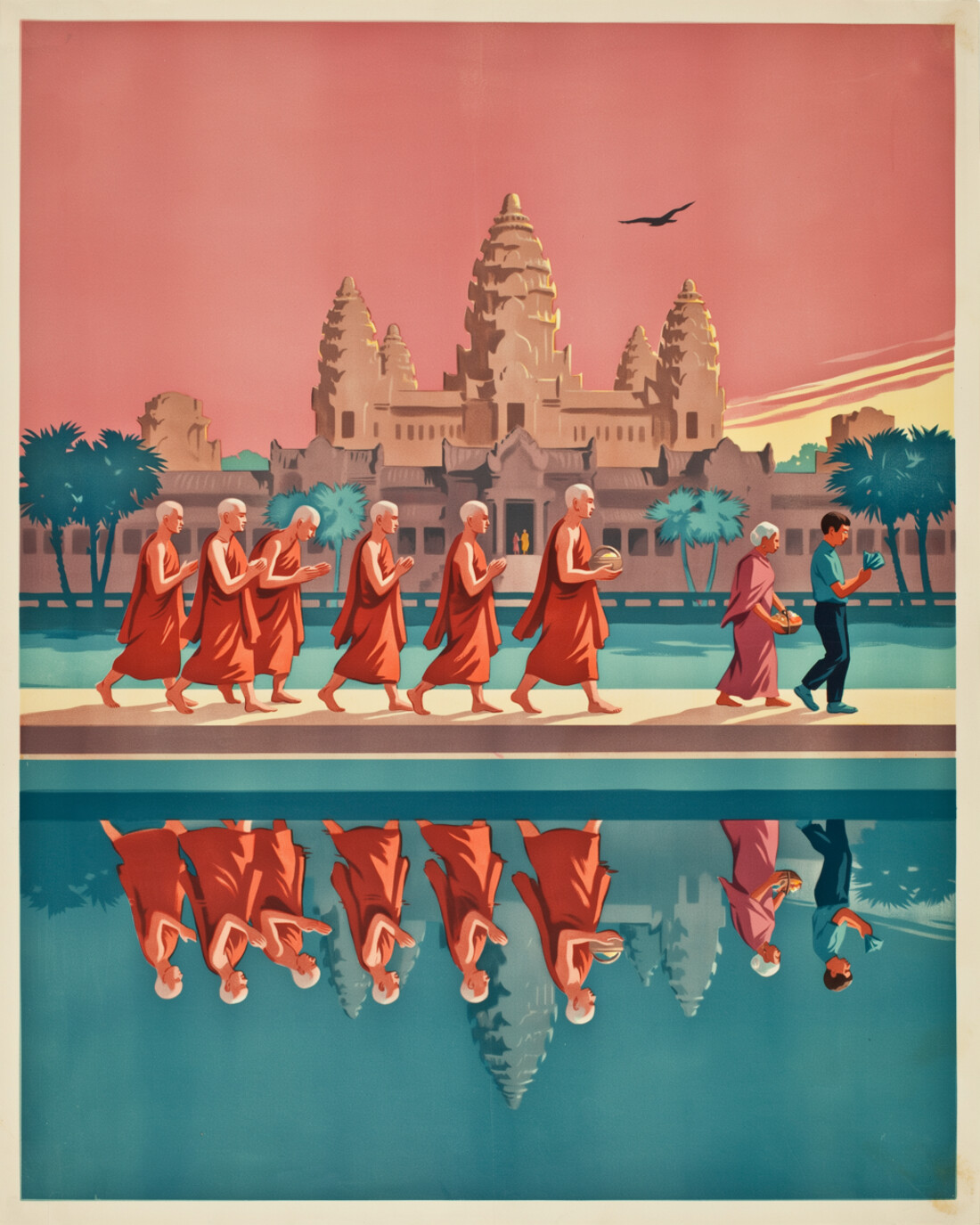
Angkor Wat is the largest religious monument on earth, built in the twelfth century as the crown of the mighty Khmer Empire and still the soul of the nation, its five towers stamped on the flag. At dawn the towers glow above the reflecting pools while monks and pilgrims move quietly through the stone. To stand there at sunrise is to feel Cambodia's deep pride in what its ancestors built.
Good to know: Angkor Wat's towers appear on the national flag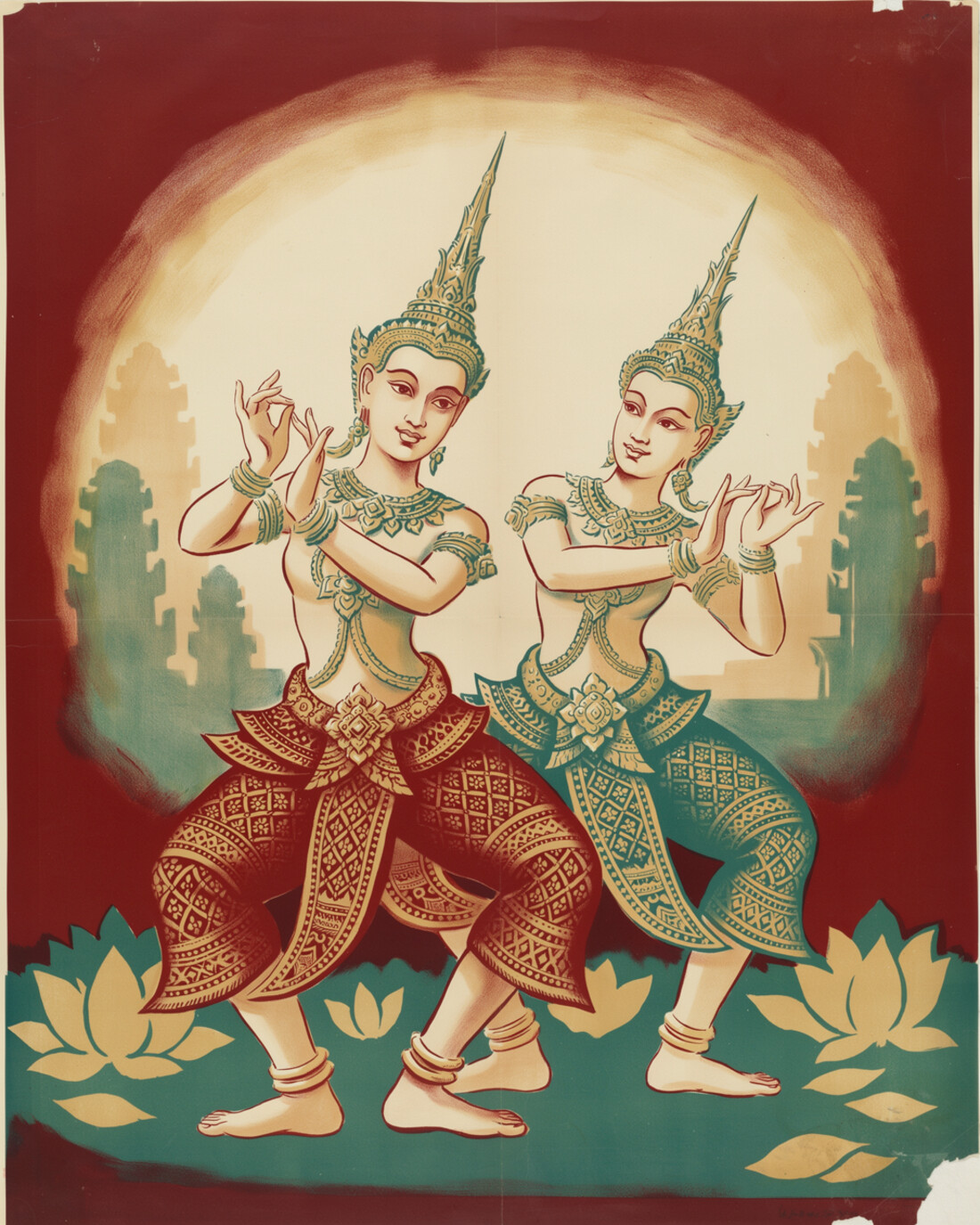
The dance of the heavenly maidens
Cambodia's classical Apsara dance, all slow grace and impossibly curved fingers, was nearly lost under the Khmer Rouge and lovingly revived, and it is now honored by UNESCO. The dancers, in golden headdresses and silk, bring to life the celestial maidens carved in their thousands into the walls of Angkor. It is Khmer beauty and resilience in a single art form.
Good to know: the Apsara are the celestial dancers carved at Angkor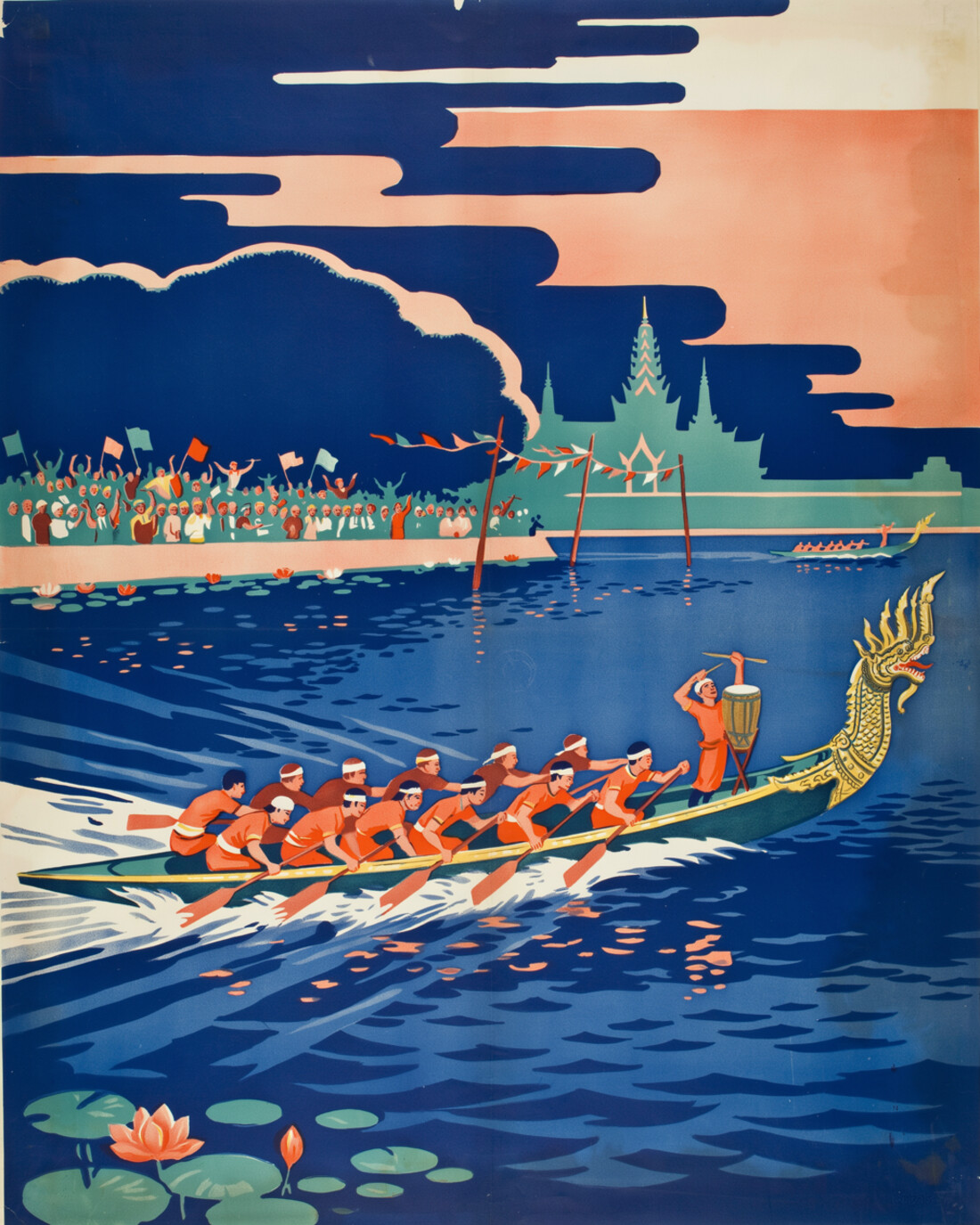
When the river runs backward
Each November, Bon Om Touk, the Water Festival, marks the rare moment when the Tonle Sap river reverses its flow, and Cambodia celebrates with days of long-boat races, music and light on the water in Phnom Penh. Teams of paddlers drive ornate dragon boats past roaring crowds. It is the country's biggest and most joyful gathering.
Good to know: the festival celebrates the Tonle Sap reversing its flowCambodians carry themselves with warmth and a quiet strength, proud of Angkor and of a culture that endured its darkest years and came back. Greet people with a sampeah, show respect at the temples, and the welcome you get in return is genuine and generous.
No links here, nothing to buy. This part is just to help you travel well.
Sources, and how this guide was checked
Last reviewedJul 2026, 9 of 9 dated items inside their review window
What the last check foundSources added on first publish. Confirmed with PwC's tax summary that Cambodia charges a 10% VAT and a 2% accommodation tax, and that there is no visitor VAT refund. Verified the tourist visa on the official Ministry of Foreign Affairs e-visa portal, with the separate, free e-Arrival Card required for air arrivals. The US dollar's role as the everyday currency, with the riel used as change near 4,000 to the dollar, is long standing and widely reported. Note that overland travel from Thailand is largely suspended, so most travelers fly in; see the US Embassy advisory.
- PwC Worldwide Tax SummariesCambodia's 10% VAT and 2% accommodation tax, and no visitor refund
- Cambodia e-Visa (official government portal, Ministry of Foreign Affairs)the tourist e-visa and fee
- US Embassy in Cambodiathe current Cambodia to Thailand land border travel advisory
- Cambodianesshow the US dollar and the riel work side by side, with the riel near 4,000 to the dollar
Our own judgmentThe daily cash share, the tipping norms, and the ATM fee and withdrawal ranges are our own read from recent traveler and bank reports, not a single official table. Treat them as a planning guide and confirm anything critical before you travel.
How we checkHow every guide is researched, checked and dated
More money guides in Asia
If you are also weighing up nearby destinations, each guide covers cards, cash, ATMs and the fees to expect.




Going deeper on Cambodia
The money questions people ask on the ground.
Short, focused answers to the specific things that catch first-timers out in Cambodia.
- Do I need cash in Cambodia, or can I use cards?Cash, mostly, and here is the unusual part: the everyday cash is the US dollar. That makes Cambodia one of the simplest countries anywhere for an American to handle, with one condition about the state of your banknotes.
- Tipping in CambodiaNothing here is obligatory, and a small tip goes a long way. Because you are already spending US dollars, tipping is simpler than almost anywhere: a dollar or two, handed over, in the currency you are carrying.
- Taxis, tuk-tuks and ride apps in CambodiaThe tuk-tuk is how you get around here, and the apps have taken the negotiation out of it. Install one before you land and the fare stops being something you argue about on a hot street corner.
- Common money scams in Cambodia, and what they cost youCambodia is safe for the great majority of visitors and almost none of this is dramatic. Because the country runs on US dollars, its money traps are unusually simple: a fake note in your change, a fee somebody padded, a ticket sold by the wrong person. They cost a few dollars at a time, and a handful of habits defuse nearly all of them. Here is each one, what it costs, and how to sidestep it.
- Do US citizens need a visa for Cambodia?Yes, and Cambodia breaks the usual rule. Almost everywhere, applying online in advance is the cheaper route. Here it is the dearer one, and the cheaper route wants clean cash and a photo. Here is what each actually costs, and the official place to get it.
- Staying connected in Cambodia.Cambodian mobile data is among the cheapest in the world. A few dollars buys more gigabytes than most travelers use in a month, which makes the decision here easy and makes our commission argument weak.
- What does getting sick in Cambodia cost?The everyday side is manageable: Phnom Penh and Siem Reap have clinics used to foreign patients, and you walk in and pay. The part worth planning for is that Cambodia stabilises serious cases rather than treating them, so the real bill is the flight to Bangkok.
This is how Cambodia stands today.
Money rules move. We can let you know for free if that changes.