True Trip Costs: Netherlands
before you go
- DoSay euros when the screen offers you dollars
- DoRound up, do not work out a percentage
- DoFrom Schiphol: The train is fast and cheap
- CarryCarry a debit card, not only a credit card
- ExpectYour room costs more than the rate you booked
- ExpectYou pay: As an uninsured patient
That's the short version. Below: every fee we checked, what it all adds up to, and the traps we help you dodge.
No match. See all guides.
Money in the Netherlands, sorted.
A calm, current plan for the money side of your trip: why this is one of the most cashless countries in Europe, the one card quirk that catches US travelers out, and the tax change that just made Amsterdam hotel rooms noticeably pricier.
What you can refuse to pay here
The room rate isn't the bill, and the sticker rate isn't the price. In Netherlands, dynamic currency conversion alone can quietly cost a typical traveler about $79 to $212, and it's one of several fees you can refuse.
Money scorecard
Netherlands
- Ease of payingEasy
- Cash dependenceLight cash use
- Daily costPricier
- Getting aroundSome caution
- CurrencyStable
Every rating is our own judgment from the Netherlands guide, not a score.
See the full Netherlands guideHotel VAT tripled overnight. As of January 1, 2026, Dutch VAT on hotel and short-term rental accommodation rose from 9% to 21%, the same rate charged on most other goods and services. Combined with Amsterdam's existing 12.5% tourist tax, a room booked in the city can carry a combined tax load of roughly 33.5%. Some bookings made before the change, and some booking sites slow to update, may still show the old 9% rate, so double-check your total at checkout rather than trusting an older quote.
Since April 2026 the EU's Entry/Exit System (EES) has been live at Schengen borders. Instead of a passport stamp you give a quick fingerprint and photo on arrival, and the system then tracks your 90 days automatically. There is no fee, no form and nothing to apply for.
The catch is time, not money: several major airports have run peak queues of two to five hours through the summer, and some countries are using EU-permitted pauses to ease them. Build in a buffer on arrival, especially on a tight connection.
ETIAS, the separate online authorization, is not running and has no launch date. The EU removed its late-2026 target in July 2026 and says it will announce a real date several months ahead, so any site selling you an ETIAS today is selling something that does not exist yet. For now a US passport is all you need.
Full detail, and the official EU pages, on passports and visas.
The three things people ask
Will my card work? Do I need cash? Are ATMs easy?
The quick read for a first trip.
Your card
Debit beats credit here
Dutch terminals are built around debit cards (Maestro, V Pay, and now Visa/Mastercard debit). A foreign credit card sometimes gets rejected at supermarkets like Albert Heijn or budget shops like Hema, even though it works fine at restaurants and hotels. Apple Pay or Google Pay often succeeds when the physical card fails.
Check yours →Cash
Barely needed
You can go days without touching cash. Keep 20 to 30 euros for the odd old-school snack bar, a market stall, or a public toilet attendant who still wants coins, but it is genuinely a backup, not a plan.
How much to bring →ATMs
Easy, but getting scarcer
Geldmaat, the unified yellow ATM network shared by Dutch banks, is reliable and reasonably priced. Avoid standalone Euronet-style machines in tourist shops, which charge more. ATMs are slowly thinning out nationwide as card use grows, so don't wait until you're nearly out of cash to find one.
See ATMs in Netherlands →(opens in a new tab)Cash or card
Barely any cash changes hands here, cards and phones do almost everything.
A rough feel for everyday spending. Roughly 80% of in-person payments in the Netherlands are by debit card, with cash down near 15 to 20% and falling. Museums, public transport, and even some public toilets have gone fully cashless. The exception is the rare small business or market stall that still wants cash for a small amount.
See what the trip really costs →Your money plan
Four steps and you're set.
Before you go
- Bring a no-foreign-fee debit card as your main card here, plus a no-fee credit card as backup.
- Add your cards to Apple Pay or Google Pay before you fly. It can succeed at a terminal that rejects the physical card.
- If you plan to use public transport with a bank card, a contactless debit or credit card works directly at the gates, no OV-chipkaart required.
At the airport
- Skip the airport exchange counters, the rates are poor, and you will rarely need much cash anyway.
- If you want a little cash, use a Geldmaat machine (the shared yellow ATM brand) rather than a standalone tourist-shop ATM, and decline "convert to USD."
- You can tap your contactless card straight through the train gates into the city, no ticket machine needed.
Day to day
- Card or phone for nearly everything: cafes, museums, transit, markets and shops.
- If a card is declined at a supermarket self-checkout, try Apple Pay or Google Pay before assuming the card is broken.
- Keep a little cash for the rare cash-only snack bar or market stall.
- Always choose euros, never dollars, on any terminal or ATM that asks.
A golden rule
- Always pay in euros, never in dollars. Choosing your home currency (dynamic currency conversion) quietly adds 3 to 8%.
- A declined card at a Dutch supermarket is often a debit-versus-credit issue, not a problem with your account. Try a different card or your phone wallet.
Staying connected
Will my phone work here? And what will it cost?
Yes, reliably almost everywhere. The Netherlands is small, flat and densely built, which makes for some of the most consistent mobile coverage in Europe. KPN, Vodafone and T-Mobile NL all run strong 4G and growing 5G across cities, towns, the countryside and the rail network. You would have to go looking for a dead zone here, a rare situation by European standards. The cost is where people get caught out, and on most US plans it lands in one of two buckets.
Your plan may already include it
Often, do nothing
Some US plans include slow data abroad at no extra cost. If that is you, the honest move is to leave it alone.
we earn nothing
Or it charges quietly, after the fact
The bill lands later
On pay-per-use plans the cost runs in the background while you travel, and the charge can show up weeks after you are home. Forgetting to switch off data roaming is the classic one. For a week or more, an eSIM is usually cheaper and keeps you in control.
Check what your own carrier charges before the trip, not after.
If an eSIM is the cheaper call, Nomad covers Netherlands.
Get your Nomad eSIM→(opens in a new tab)we may earn a commissionMedical cover
The one cost with no price tag.
This is the one cost with no price tag, and it can be the largest on the page. Most US health plans and Medicare cover little or nothing abroad, so a serious illness or evacuation is paid up front. How medical costs work abroad, country by country →
First, you may not need to buy anything.
A cheap trip close to home, or a premium card that already includes emergency medical and evacuation, may mean you need nothing here. Check your card first. Saying that costs us the commission, and it is still the right call.
How much cover matters here
Here, good hospitals are easy to reach and the care is high quality, so for a healthy traveler this leans more toward your call than a must.
If you do want cover, this is what it is for: the evacuation and the up-front hospital bill, the part no card limit is meant to absorb.
Enough for most trips
Faye, or a comparable whole-trip policy
Bundles trip protection with emergency medical, which is enough cover for most travelers on a typical trip.
The deeper end
A dedicated travel-medical plan built for serious care and evacuation abroad
Stronger on medical care and evacuation, for a remote or higher-risk trip where that is the real exposure.
If it happens
Call it first, then call your insurer's 24/7 assistance line, which is what confirms payment and arranges an evacuation. 112 reaches every emergency service, free from any phone.
TrueTripCosts explains the gap and points to options. It does not set your coverage amounts or act as your insurance advisor, and every policy carries its own exclusions, so read them before you buy. Emergency number checked Jul 2026. Confirm the current number before you travel, as local lines can change.
Currency basics
The euro, in plain terms.
Quick conversion
About 1.14 dollars to 1 euro in mid-2026, so a 10 euro lunch is roughly $11.40, and 100 euros is about $114.
Notes and coins
Notes run 5, 10, 20, 50, 100, 200 and 500 euros, though you will rarely see anything over 50 in daily use. Coins run 1 cent to 2 euros, and you will need them less often than almost anywhere else in Europe.
Debit, not credit, is king
Dutch shopping habits revolve around debit cards (Maestro, V Pay, and now Visa or Mastercard debit). A foreign credit card can be rejected at some supermarkets and budget retailers even though it works everywhere else, so always carry a debit option too.
iDEAL isn't your tool
iDEAL, the Dutch online banking payment system, requires a Dutch bank account, so it is not something a US visitor can use. Stick to your card or phone wallet for everything, including online bookings.
Real exchange rate
What your money is really worth here.
This is the mid-market rate, the one the banks trade at and the yardstick every other rate is measured against. Your card lands a little below it, and if a screen ever offers to bill you in dollars, that is worse again. So this is the number to expect, and how you spot a bad one.
1 US dollar is about 0.88 EUR
Taxes and the VAT change
A tourist tax that varies by city, and a VAT hike that just landed.
Two separate charges affect a Dutch hotel bill. Amsterdam's tourist tax is 12.5% of the room rate, the highest in Europe, while most other Dutch towns charge a small flat fee per person per night instead. Separately, and nationwide, VAT on hotel accommodation jumped from 9% to 21% on January 1, 2026, a change some booking sites had not fully reflected in their displayed prices as of when this guide was checked. In Amsterdam the two together come to roughly 33.5% of the room, though only the city tax is added at checkout: the VAT is already inside the rate you were quoted, so about 10% is what actually appears on top. If you shop, non-EU visitors can also reclaim VAT (21% standard rate, 9% on most other goods) on purchases over a per-store minimum, typically around 50 euros: ask for a tax-free form, keep the goods unused, and get it stamped by customs when you leave the EU.
That covers what a government adds. What you can still change is what the room itself costs, and that comes down to the booking moment: see how to pay less on hotels.
Before you book: passports, the six-month rule and whether you need a visa. Not a US citizen, or connecting through Europe? The rules can differ, and even a layover can need its own visa. See our passports and visas guide →
Watch out for
The small traps that catch first-timers.
Tipping
Light, and round up rather than calculate a percentage.
Tipping in the Netherlands is appreciated, not expected. Staff are paid a real wage and do not depend on tips to live. At a restaurant, rounding up the bill or adding around 10% for good service is generous and plenty. Cafes, bars and casual spots get no tip at all, or just the coins left from change. For taxis, round up the fare. Cash is often preferred by waitstaff over a card tip, since a cash tip goes straight to the person rather than into a pooled or taxed total. Nobody will chase you for a tip, and a modest one is always well received.
Common questions
Quick answers.
Do I need cash in the Netherlands?
Barely. This is one of the most cashless countries in Europe, with cards and phone wallets covering nearly everything, including transit and many museums. Keep 20 to 30 euros for the rare old-school snack bar, market stall or toilet attendant that still wants coins.
Why was my card declined in the Netherlands?
Most likely a debit-versus-credit issue, not a problem with your account. Dutch terminals are built around debit cards, and some supermarkets and budget shops reject foreign credit cards even though restaurants and hotels take them fine. Try a debit card or Apple Pay or Google Pay instead.
What is the best ATM to use in the Netherlands?
Look for Geldmaat, the shared yellow ATM network used by Dutch banks, which charges standard rates. Avoid unbranded standalone machines in tourist shops, which cost more and push the "convert to USD" option you should always decline.
How much is Amsterdam's tourist tax?
12.5% of your room rate excluding VAT, the highest percentage-based tourist tax in Europe, with no nightly cap. As of January 2026, this sits on top of a separate VAT hike on hotel rooms nationwide, from 9% to 21%, so the combined tax load in Amsterdam can reach roughly 33.5%.
How much cash should I bring for a week in the Netherlands?
For two travelers, very roughly 50 to 100 euros (about $55 to $115) in pocket cash for the rare cash-only moment across a whole week. Nearly everything else, hotels, restaurants, transit and shops, runs through a card or phone wallet.
What will your trip really cost?
Name where you are going. We will show you what nobody quotes.
For instance, right now
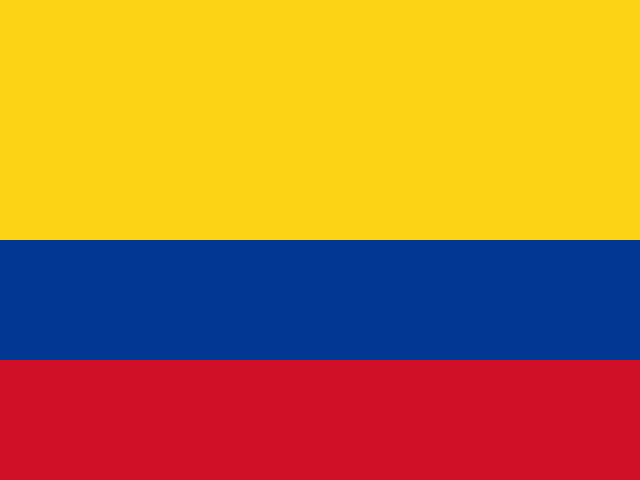 ColombiaHotels charge 19% IVA, but as a foreign tourist you are exempt, and about half try to add it anyway.
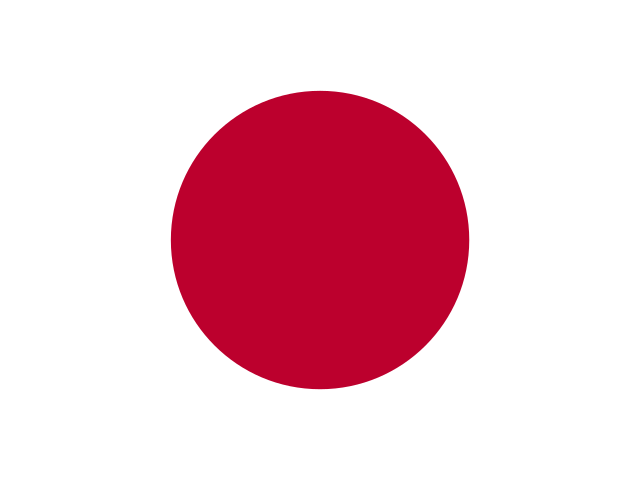 JapanThe world's most high-tech country is still cash-first, and most bank ATMs refuse US cards.
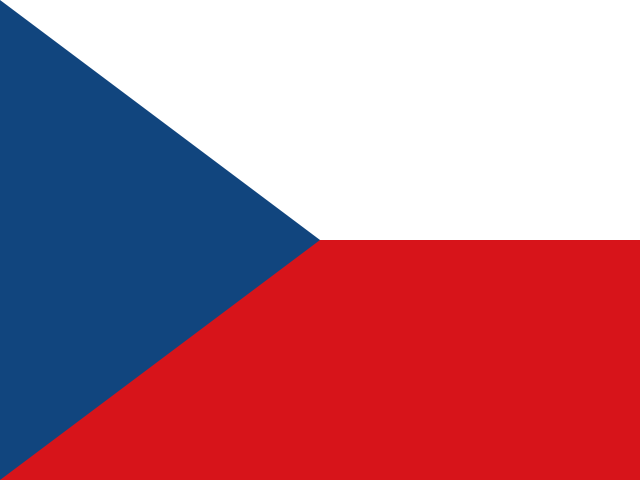 CzechiaCzech law gives you three hours to cancel a bad currency exchange and get your money back, on amounts up to 1,000 EUR.
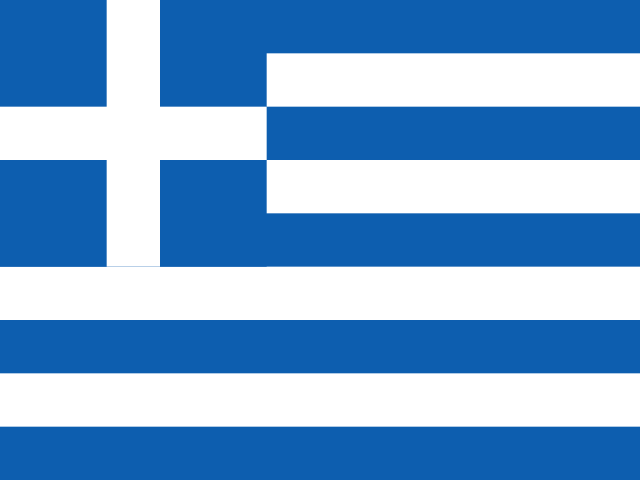 GreeceGreece's climate fee charges an Airbnb-style rental about 8 EUR a night against 2 for a budget hotel.
 El SalvadorThe country that made Bitcoin legal tender?
 CambodiaThe US dollar is Cambodia's everyday currency, and ATMs hand you crisp $100 bills nobody can break.
 TurkeyUS citizens need no visa and no e-visa for Turkey, scrapped in 2023.
 ItalyMost Italian restaurants add a coperto, a per-person cover charge of commonly 2 to 3 euros, before you have ordered anything.
The one thing most people get wrong about Netherlands
Guide checked Jul 2026You saved a good Amsterdam room rate and assume it still holds.
Amsterdam's 12.5% tourist tax is Europe's highest, and on 1 January 2026 hotel VAT jumped from 9% to 21%. Both land at checkout, so a price you saved last year can be badly wrong.
What to doRe-price anything you saved before this year, and assume both land at checkout rather than in the headline rate.
Everything we checked
What Netherlands actually charges you, in one place.
5 things we verified for Netherlands, grouped by the kind of thing they are. The numbers are below; this is the shape of them.
fees nobody quotes
money you keep
traps to dodge
timing
The number
What you'll really spend in Netherlands.
Your flights if you want them counted, your room, your on-the-ground spending, the two fees most US cards add without telling you, and Netherlands's tourist tax. One number, nothing waiting on the statement. No bank to pick, no sign-up, nothing saved.

Optional. Enter your round trip fare per traveler to fold flights into the total.
Total trip realistically somewhere between $0 and $0.
Getting thereflights, and what the border costs
Watch out for
Prepare ahead
These carry no dollar figure by design: each is named because it is real, and there is nothing honest to price here.
Departure tax is not a separate line here. Where a country charges one it is collected inside your airfare, so it is already in the flight figure, and adding it again would count it twice.
On the ground detailyour room, your days, and how much of it is cash
Whether at an ATM or a card terminal in a shop or restaurant, always choose to be charged in the local currency, not dollars. Paying in dollars (called dynamic currency conversion) lets the machine set its own, worse, exchange rate on top of any fee.
Fees nobody quotes youthe part that lands on the statement weeks later
What you'll pay
What you can refuse, and what the lookalike sites charge, is set out under Costs nobody tells you about below, with the two figures kept apart from these ones.
Costs nobody tells you about
Most of it you can keep. Here is every dollar of it.
Every one of them, and how to avoid it6 items
Two of these are money you hand over by default; the rest is money you keep by knowing. Each is its own line.
What you'll pay unless you act
- Your own bank's foreign feeswhat the fees above come toMost US cards add a percentage on what you buy and on the cash you pull, plus a few dollars per ATM withdrawal. Nothing about that is a cost of the trip; it is a cost of the card you happened to bring.A no-foreign-fee card takes both fee lines above to zero.The cards that do not charge it
- Paying in dollars at the terminalabout 3 to 8%on what you cardDynamic currency conversion lets the machine set its own rate on top of any fee, and it runs about 3 to 8 percent on whatever you put on the card. It is the single easiest charge on this page to refuse, and it costs nothing to say no.Choose EUR every time, at a till and at an ATM.How to decline it
- The airport or hotel exchange deskExchange counters make their money on the spread rather than on a stated fee, which is why we publish no percentage for it: it moves by counter, by hour and by note. The rule is what is reliable, not the number.Withdraw from a bank ATM instead, and never change cash at the airport.Getting cash here
What we'll help you dodge
- Tipping on top of a service chargeA service charge is always added to the bill in Netherlands, so a tip on top of it is paying for service twice. We put no figure on this one, because what you would have added is up to you.Read the bill first. Where the charge is on it, that is the tip.How tipping works here
- The sales tax you can claim backNetherlands refunds sales tax to visitors on qualifying shopping, with the rate and any minimum spend set out in this guide. Most travelers never claim it, and we put no dollar figure on it, because it depends on what you buy.Ask for the tax-free form at the till, keep the goods unused, and claim on the way out.The rate and the minimum spend
- The Amsterdam street-taxi overchargeAmsterdam street taxis have a longstanding reputation for overcharging tourists, taking long routes, or refusing short fares.Book through Uber, Bolt or FreeNow, or use an official metered rank, rather than an unmarked street cab.How taxis work here
Where these numbers come fromevery assumption, and its limitssources
These are the assumptions behind the number. Change the room price, nights, travelers, or travel style above, and every line here moves with them.
- Hotel
- Daily spending
- Flights
- Cash vs card
- ATM withdrawals
- Foreign fee
- The range
- Tourist tax
Rough guide, not a quote. The percentage here is a blended stand-in for a typical US card's foreign fee, not your exact rate. The real number moves with the card you carry: one no-foreign-fee card can cover both sides, while a plain rewards credit card only removes the fee on what you buy, and cash still costs a little unless that card also waives ATM and foreign-cash fees. A debit card, or accepting the "pay in dollars" (dynamic currency conversion) offer at a till or ATM, can push it higher. Rates checked Jun 2026 and rounded.
How we check and date every figureNetherlands, TTC-ed
truetripcosts.comWhat this assumes
Tips are already inside the daily spending figure, never added on top.
Not sure which card to bring? See my pick for Netherlands.
Already carry a card with no foreign transaction fee? Then you are set for Netherlands, and can skip this. There is nothing to buy.
If you are getting a card for Netherlands, this is the pairing I would pick: a no-foreign-fee credit card for spending, and a fee-free ATM debit card for cash. We earn nothing on these today. Always confirm the current fee with the issuer before you apply. Checked Jun 2026.
Capital One charges no foreign transaction fee on any of its cards.
No foreign transaction fee
Fee-free ATM cash worldwide

Want one account that holds and spends in the local currency? A different job from the three above, and the one I reach for abroad. It is free to open; you can create a virtual card in the app and add it to your phone wallet in minutes, without waiting for the physical card; and you can convert US dollars into the local currency inside the account before you travel, then spend from that balance. Wise uses the mid-market rate plus a small conversion fee (around 0.4% and up), with no flat foreign fee.
The three picks above pay us nothing, and their tags say so. Wise is the only option here that can earn us a commission, and its tag says that too. Paid or not, the pick is still the pick.
Before you fly
At least 14 countries now make you file a form online before you fly. 13 of them are free. One really does charge, and it is not the one you would guess.
Netherlands does not ask for one, so this is not a job for this trip. It is worth knowing anyway, because the list keeps growing and the pattern is always the same: the filing is new, obscure and mandatory, and the paid lookalikes outrank the government site because the real ones do not buy ads.
See every form we can source, with the official address for eachWhen to go
Cheaper and busier months in Netherlands.
The month you pick moves the budget as much as the country does. Here is the shape of Netherlands's year, with no price attached to it, because an honest one does not exist.
- Busy and pricey
- In between
- Cheaper and quieter
- Cheaper and quieter
- Jan to Feb, and Nov
- What drives the peak
- Keukenhof and the bulb fields from late Mar to mid-May, King's Day in late Apr, summer holidays, and the winter light festival in Amsterdam
Travelers, not touristsA little Dutch goes a long way
A little Dutch goes a long way
A few words and a couple of stories that turn you from a tourist into a guest. Almost everyone speaks excellent English, so nothing here is essential, but a friendly Dutch word and a bit of local knowledge are always welcome.
Say a few words
Tip: Here is the one visitors always ask about: the country is the Netherlands. Holland is just two of its twelve provinces, North and South Holland (home to Amsterdam and Rotterdam), so people from the other ten quietly notice when Holland stands in for the whole country. The Netherlands is the safe word, and the language and the people are Dutch. The country even switched its official branding from Holland to the Netherlands a few years ago for this very reason.
Know a story
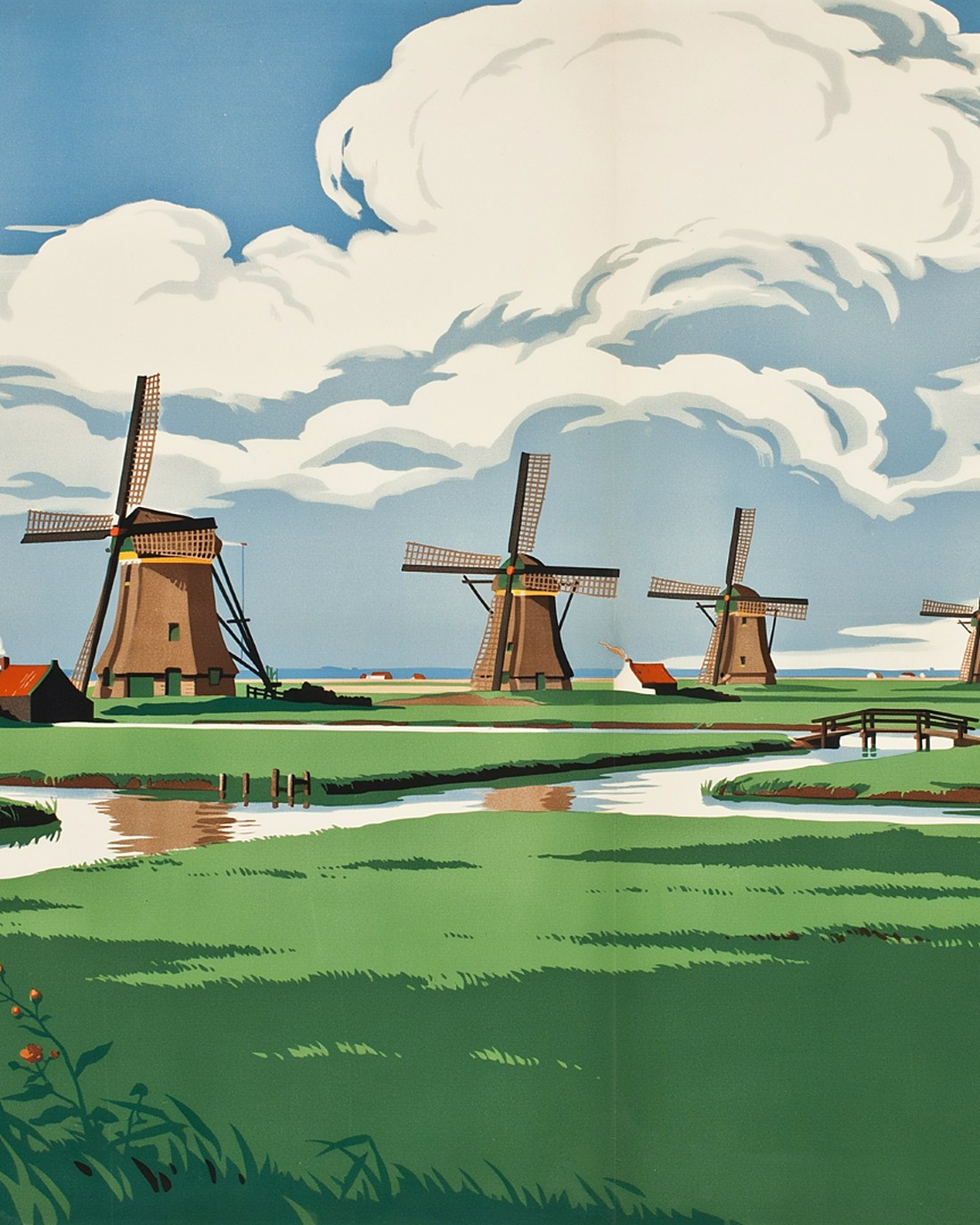
They made the land themselves
Much of the Netherlands sits below sea level, so for centuries the Dutch pumped the water out with windmills and held it back with dikes, turning sea into farmland. There is an old saying: God made the world, but the Dutch made the Netherlands. They are rightly proud of it.
Good to know: much of the country is reclaimed from the sea
The Golden Age of light
In the 1600s this small trading republic produced an explosion of art, Rembrandt, Vermeer and a whole world of everyday scenes caught in extraordinary light. It is called the Dutch Golden Age, and its paintings still fill the Rijksmuseum. A little enthusiasm for it goes far.
Good to know: the age of Rembrandt and Vermeer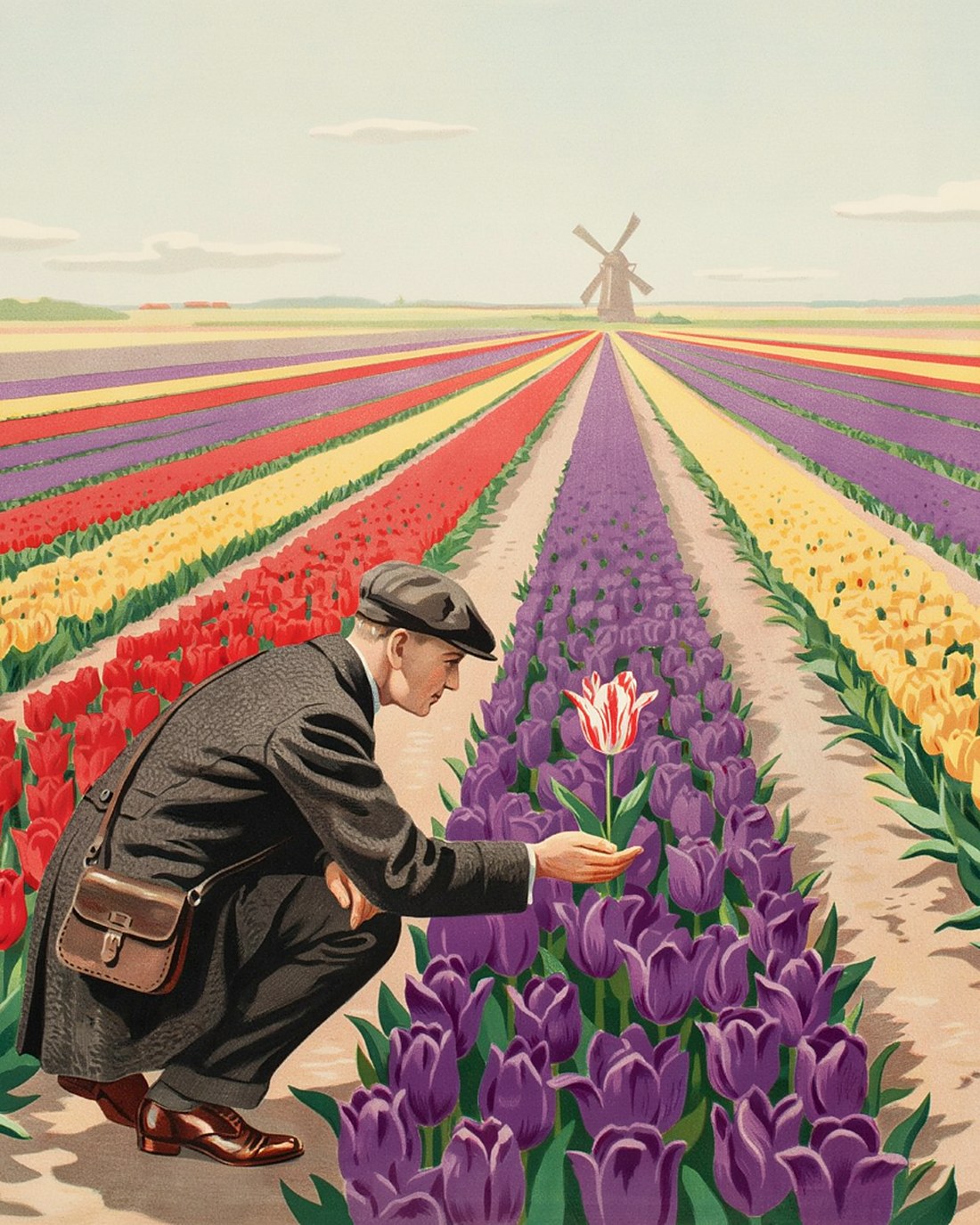
When a bulb cost a house
Tulips are not even native to the Netherlands, but in the 1630s the Dutch fell so hard for them that single rare bulbs sold for the price of a canal house, before the market crashed. Tulip mania is often called the first speculative bubble. The flowers, at least, stayed beautiful.
Good to know: tulip mania, the first speculative bubbleThe Dutch are famously direct, and it is meant kindly: they will tell you what they think, honestly and without fuss, and you will always know where you stand. That plainness, along with the bikes and the openness, is the culture in a nutshell.
No links here, nothing to buy. This part is just to help you travel well.
Sources, and how this guide was checked
Last reviewedJul 2026, 9 of 9 dated items inside their review window
Last actually changedJan 2026see the record →
Not yet individually datedWe date this guide and the fees most likely to move, but the 2 per-place tourist tax rates on this page do not carry a check date yet. They are reviewed with the guide rather than on their own schedule, and putting each of them on one is work in progress.
What the last check foundSources added. Verified with the Dutch government that VAT on hotel rooms rose from 9% to 21% on 1 January 2026 (camping stays stay at 9%), and with the City of Amsterdam that its tourist tax is 12.5% of the net room rate, the highest in Europe. Combined, that is roughly 33.5% on an Amsterdam hotel stay. The guide's figures are current.
- Dutch government (business.gov.nl)VAT on overnight accommodation rose to 21% on 1 January 2026
- City of Amsterdamthe tourist tax is 12.5% of the overnight price, excluding VAT
Our own judgmentThe daily cash share, tipping norms, and likely ATM behavior are our own estimate from experience, not an official figure.
How we checkHow every guide is researched, checked and dated
More money guides in Europe
If you are also weighing up nearby destinations, each guide covers cards, cash, ATMs and the fees to expect.

Going deeper on Netherlands
The money questions people ask on the ground.
Short, focused answers to the specific things that catch first-timers out in Netherlands.
- Taxis in the Netherlands, and the Schiphol trainIn the Netherlands the train and the bike do most of the work, and when you do need a taxi, an app is the safe bet. Amsterdam street taxis have a reputation for overcharging, so here is how to avoid it.
- Do I need cash in the Netherlands, or can I use cards?Short answer: a card for almost everything, very little cash. The Netherlands is strongly card-first, and if anything the risk runs the other way, with some places taking cards only. Here is how to handle it.
- Tipping in the NetherlandsThe Netherlands is a light-tipping country. Service is included, staff earn a proper wage, and nobody expects a US-style percentage. A modest fooi for good service is welcome but never required. Here is what you actually owe.
- Bringing your dog or cat to the Netherlands.the Netherlands runs on the single EU pet-entry process for a US-origin dog or cat: microchip, rabies in the right order, and an EU health certificate on a 10-day clock. No quarantine, no rabies titer. Here is what that means for the Netherlands, and the local parts worth knowing.
- Netherlands tourist tax, and the VAT rise that landed in JanuaryShort answer: two separate charges sit on a Dutch hotel bill, and only one of them is a surprise. The 21% VAT is already inside the rate you were quoted. Amsterdam's city tax is not, and it adds about 10% at checkout.
- Do you need a rail pass in the Netherlands?This is the shortest rail answer on the site, because the Dutch network removes the question. Trains are frequent, distances are short, nothing needs reserving, and you pay by tapping the card already in your pocket.
- Staying connected in the Netherlands.The Netherlands has some of the best mobile coverage in Europe, trains and countryside included, so there is nothing here to plan around. That makes this page short and the decision purely financial.
- What does getting sick in the Netherlands cost a visitor?The Netherlands is easy to be ill in, provided you use it the way it is designed. Almost everything runs through the GP, and turning up at a hospital instead is the mistake visitors make.
This is how Netherlands stands today.
Money rules move. We can let you know for free if that changes.