True Trip Costs: Namibia
before you go
- DoApply on the official e-visa portal before you fly
- DoRide apps: LEFA, Yango (no Uber)
- CarryBring a printed approval if you applied online
- CarryCash for: Fuel and remote areas
- ExpectAlso spend: SA rand 1:1
- ExpectSignal gaps: Most of the country, plan offline
That's the short version. Below: every fee we checked, what it all adds up to, and the traps we help you dodge.
No match. See all guides.
Money in Namibia, sorted.
A calm, current plan for the money side of your trip: the visa you now have to pay for, why you carry cash on the long roads, how the Namibian dollar and the rand fit together, and the small rules that trip up first-timers.

What you can refuse to pay here
The room rate isn't the bill, and the sticker rate isn't the price. In Namibia, dynamic currency conversion alone can quietly cost a typical traveler about $44 to $118, and it's one of several fees you can refuse.
Money scorecard
Namibia
- Ease of payingMixed
- Cash dependenceCash-heavy
- Daily costModerate
- Getting aroundSome caution
- CurrencyRand also works
Every rating is our own judgment from the Namibia guide, not a score.
See the full Namibia guideThe headline change for US travelers took effect on 1 April 2025: Americans now need a visa to enter Namibia, at N$1,600 (about US$88). A lot of older guides still say Namibia is visa-free for US citizens, and that is now wrong. You can get it through Namibia's online e-visa portal before you fly (recommended, and bring a printed approval) or as a visa on arrival at the main airports and border posts. There is also a separate N$300 day-visit fee for cruise passengers landing at Walvis Bay or Luderitz. The system is still new and details can change, so confirm on the official portal and check the US State Department advisory before you book.
The three things people ask
Will my card work? Do I need cash? Are ATMs easy?
The quick read for a first trip.
Your card
Good in towns and lodges
Visa and Mastercard are widely taken at hotels, lodges, larger shops and restaurants in Windhoek, Swakopmund and the main towns, and many take contactless. Amex is less accepted. The gaps are fuel stations (many are cash only), remote lodges, park gates and small vendors. Bring a no-foreign-fee card and a backup, since a card fault far from a town is a real problem.
Check yours →Cash
Essential on the road
Carry Namibian dollars or rand for fuel, park entry, craft stalls, small-town shops and tips. Fuel is often cash only, and it is the one thing you cannot afford to be caught short on between towns. Keep a healthy cushion when you leave a main center, and a stash of small notes for tips and quick stops.
How much to bring →ATMs
Fine in towns, sparse in between
Bank ATMs (Bank Windhoek, FNB, Standard Bank, Nedbank) are reliable in Windhoek, Swakopmund and larger towns, and dispense Namibian dollars. They thin out fast on the desert routes, so withdraw enough before a long drive. Expect a per-withdrawal fee, and always choose Namibian dollars, not US dollars, at the machine.
See ATMs in Namibia →(opens in a new tab)Cash or card
Cards work in town, cash rules the long roads.
A rough feel for everyday spending. Windhoek, Swakopmund and the tourist lodges take cards for most big-ticket things, so you can put lodges, tours and restaurant bills on plastic. But fuel stations off the main centers, park entry gates, craft markets, small-town shops and tips run on cash. On a self-drive safari you want a real cash cushion for the stretches between towns.
See what the trip really costs →Your money plan
Four steps and you're set.
Before you go
- Sort your visa at Namibia's official e-visa portal before you fly (about N$1,600 / US$88), and bring a printed approval. Visa on arrival exists as a backup, but pre-applying avoids airport queues.
- Get a no-foreign-fee debit card for ATM cash. Charles Schwab refunds ATM fees worldwide; Wise and Revolut are low-fee. Pack a no-fee Visa or Mastercard plus a backup.
- Tell your bank you are traveling so a first-day charge or withdrawal does not get blocked, and check your passport has at least three blank pages and six months' validity.
At the airport
- Pull your first Namibian dollars from a bank ATM rather than the exchange counter, and decline any offer to convert or lock a rate.
- If you did not pre-apply, complete the visa on arrival at the counter; have the fee ready and expect a queue.
- Pick up your rental car and confirm it takes you to fuel with enough cash, since the first long drive may pass cash-only stations.
Day to day
- Card for lodges, tours, town restaurants and larger shops.
- Cash for fuel, park gates, craft stalls, small-town stops and tips, in Namibian dollars or rand.
- Keep a cash cushion whenever you leave a main town, since ATMs and card machines thin out.
- Spend your Namibian dollars before you leave, since they are hard to use abroad; rand travels a little better.
A golden rule
- Namibian dollars and rand are interchangeable here at one to one, so do not worry about which you are handed as change.
- Pay in local currency, not US dollars, on any card terminal or ATM, and decline dynamic currency conversion.
Staying connected
Will my phone work here? And what will it cost?
Yes in Windhoek, Swakopmund, Walvis Bay and the main towns, with decent 4G. Coverage drops off sharply on the desert routes, in the dunes, and across large stretches of Etosha, Damaraland and the Skeleton Coast, so download offline maps and tell your lodge your route. The cost is where people get caught out, and on most US plans it lands in one of two buckets.
Your plan may already include it
Often, do nothing
Some US plans include slow data abroad at no extra cost. If that is you, the honest move is to leave it alone.
we earn nothing
Or it charges quietly, after the fact
The bill lands later
On pay-per-use plans the cost runs in the background while you travel, and the charge can show up weeks after you are home. Forgetting to switch off data roaming is the classic one. For a week or more, an eSIM is usually cheaper and keeps you in control.
Check what your own carrier charges before the trip, not after.
If an eSIM is the cheaper call, Nomad covers Namibia.
Get your Nomad eSIM→(opens in a new tab)we may earn a commissionMedical cover
The one cost with no price tag.
This is the one cost with no price tag, and it can be the largest on the page. Most US health plans and Medicare cover little or nothing abroad, so a serious illness or evacuation is paid up front. How medical costs work abroad, country by country →
First, you may not need to buy anything.
A cheap trip close to home, or a premium card that already includes emergency medical and evacuation, may mean you need nothing here. Check your card first. Saying that costs us the commission, and it is still the right call.
How much cover matters here
Strong care can sit a long way from where you are traveling and an evacuation is a genuine possibility, so this is one to weigh seriously for a trip here.
If you do want cover, this is what it is for: the evacuation and the up-front hospital bill, the part no card limit is meant to absorb.
Enough for most trips
Faye, or a comparable whole-trip policy
Bundles trip protection with emergency medical, which is enough cover for most travelers on a typical trip.
The deeper end
A dedicated travel-medical plan built for serious care and evacuation abroad
Stronger on medical care and evacuation, for a remote or higher-risk trip where that is the real exposure.
If it happens
Call it first, then call your insurer's 24/7 assistance line, which is what confirms payment and arranges an evacuation. 112 from a mobile reaches emergency services, with 10111 for police. Private ambulances (such as E-Med Rescue 924) are the fastest option in Windhoek and on the main routes, and coverage thins on the long empty roads, so carry your travel-insurance emergency number. The US 911 number does not work here.
TrueTripCosts explains the gap and points to options. It does not set your coverage amounts or act as your insurance advisor, and every policy carries its own exclusions, so read them before you buy. Emergency number checked Jul 2026. Confirm the current number before you travel, as local lines can change.
Currency basics
The Namibian dollar, the rand, and the visa you now pay.
Two currencies, one value
Namibia uses the Namibian dollar (NAD), pegged one to one with the South African rand (ZAR). Rand circulates freely and is accepted everywhere, so you can carry and spend either. Namibian dollars are hard to use outside Namibia, so spend them before you leave; rand is easier to offload.
ATMs in town, cash for the road
Bank ATMs are reliable in Windhoek, Swakopmund and larger towns and dispense Namibian dollars. They thin out on the long desert routes, and fuel stations are often cash only, so withdraw enough before a long drive and keep a cushion.
US citizens now pay a visa
Since 1 April 2025, US citizens need a visa to enter, at N$1,600 (about US$88), via the online e-visa portal or on arrival at main entry points. This is new, so ignore older guides that call Namibia visa-free for Americans. A separate N$300 day-visit fee applies to cruise passengers at Walvis Bay and Luderitz.
Tipping is expected
Tipping matters in Namibia's tourism economy: around 10% at restaurants, a set amount per day for safari guides and trackers, and small tips for fuel attendants and porters. Cash, in Namibian dollars or rand. See the tipping section below.
Real exchange rate
What your money is really worth here.
This is the mid-market rate, the one the banks trade at and the yardstick every other rate is measured against. Your card lands a little below it, and if a screen ever offers to bill you in dollars, that is worse again. So this is the number to expect, and how you spot a bad one.
1 US dollar is about 16.38 NAD
Taxes and refunds
What is on your bill, and the limited refund.
Two things worth knowing. Namibia charges a 15% VAT on most goods and services, usually built into the price you see, and some lodges add a small per-person bed levy on top, so ask whether a rate is all in if it matters. Second, there is a VAT refund scheme for goods you take out of the country, claimed at the airport or border, but it is limited in scope and the paperwork is fiddly, so most short-stay visitors do not pursue it. Treat any refund as a bonus rather than something to plan around.
That covers what a government adds. What you can still change is what the room itself costs, and that comes down to the booking moment: see how to pay less on hotels.
Fees and taxes to double-check
The numbers most likely to change.
These are the fees and taxes that move on political timelines, so we track each one on its own. Every line shows the amount, whether it is in effect yet, the date we last checked it, and a primary source where a clean one exists.
Namibia tourist visa (US citizens)
Required since 1 April 2025 at N$1,600 (about US$88), via the online e-visa portal or visa on arrival at main airports and border posts. Default stay is generally 30 days, sometimes up to 90 at the officer's discretion. Bring a printed approval if you apply online.
Cruise day-visit fee (Walvis Bay and Luderitz)
N$300 per cruise passenger disembarking for a day visit at Walvis Bay or Luderitz harbours.
Before you book: passports, the six-month rule and whether you need a visa. Not a US citizen, or connecting through Europe? The rules can differ, and even a layover can need its own visa. See our passports and visas guide →
Watch out for
The small traps that catch first-timers.
Tipping
Tipping is expected, in local cash.
Tipping is a real part of Namibia's tourism economy and appreciated. At restaurants, around 10% is standard when no service charge is included. On safari, budget a set amount per day: roughly N$100 to N$150 per guest per day for a guide and less for a tracker, handed over at the end. Fuel attendants (who pump, clean your windscreen and check tires) get a few dollars, porters a small amount per bag, and housekeeping a little per day. Tip in Namibian dollars or rand, in cash, since card tips do not reliably reach staff and remote lodges are cash anyway. Keep a stash of small notes for the road.
Common questions
Quick answers.
Do US citizens need a visa for Namibia?
Yes, since 1 April 2025. US citizens must pay a visa to enter, at N$1,600 (about US$88), obtained through Namibia's online e-visa portal before travel or as a visa on arrival at the main airports and border posts. This is a recent change, so ignore older guides that call Namibia visa-free for Americans.
How much is the Namibia visa and how do I get it?
It is N$1,600, roughly US$88, for non-African travelers. The easiest route is the official e-visa portal (eservices.mhaiss.gov.na) before you fly, printing your approval to show on arrival. Visa on arrival is available as a backup at major entry points, but pre-applying avoids airport queues. The default stay is generally 30 days, sometimes extendable to 90 at the officer's discretion.
What currency does Namibia use, and can I use South African rand?
Namibia uses the Namibian dollar (NAD), pegged one to one with the South African rand. Rand circulates freely and is accepted everywhere, so you can carry and spend either. Namibian dollars are hard to use outside Namibia, so spend them before you leave.
Do I need cash in Namibia, or will cards work?
Both. Cards work well in Windhoek, Swakopmund and at lodges and town restaurants. But fuel stations are often cash only, and park gates, craft stalls and small-town stops want cash too, so carry a real cushion of Namibian dollars or rand when you leave a main town, especially on a self-drive trip.
Is there a fee for cruise passengers in Namibia?
Yes. A N$300 day-visit fee applies to cruise passengers disembarking for the day at Walvis Bay or Luderitz harbours. It is separate from the tourist visa that applies to travelers entering by air or land.
How much cash should I bring for a week in Namibia?
For two mid-range travelers on a self-drive trip, very roughly 250 to 400 US dollars worth of Namibian dollars or rand in cash across a week for fuel, park gates, tips and small stops, on top of what you put on a card for lodges and tours. Carry more of it as small notes, and top up in towns before long drives.
What will your trip really cost?
Name where you are going. We will show you what nobody quotes.
For instance, right now
 ColombiaHotels charge 19% IVA, but as a foreign tourist you are exempt, and about half try to add it anyway.
 JapanThe world's most high-tech country is still cash-first, and most bank ATMs refuse US cards.
 CzechiaCzech law gives you three hours to cancel a bad currency exchange and get your money back, on amounts up to 1,000 EUR.
 GreeceGreece's climate fee charges an Airbnb-style rental about 8 EUR a night against 2 for a budget hotel.
 El SalvadorThe country that made Bitcoin legal tender?
 CambodiaThe US dollar is Cambodia's everyday currency, and ATMs hand you crisp $100 bills nobody can break.
 TurkeyUS citizens need no visa and no e-visa for Turkey, scrapped in 2023.
 ItalyMost Italian restaurants add a coperto, a per-person cover charge of commonly 2 to 3 euros, before you have ordered anything.
The one thing most people get wrong about Namibia
Guide checked Jul 2026You read that Namibia is visa-free for Americans, which it was for years.
It stopped on 1 April 2025. Entry now costs about N$1,600, roughly US$88 per person, and a great many guides and blog posts still say it is free.
The old adviceNamibia is visa-free for US passports, just turn up
Nowabout US$88 a person, required since 1 April 2025
What to doApply on the official e-visa portal before you fly, or pay on arrival at main airports and border posts, and bring a printed approval if you applied online.
Everything we checked
What Namibia actually charges you, in one place.
5 things we verified for Namibia, grouped by the kind of thing they are. The numbers are below; this is the shape of them.
fees nobody quotes
money you keep
traps to dodge
timing
The number
What you'll really spend in Namibia.
Your flights if you want them counted, your room, your on-the-ground spending, the two fees most US cards add without telling you, and Namibia's tourist tax. One number, nothing waiting on the statement. No bank to pick, no sign-up, nothing saved.
Optional. Enter your round trip fare per traveler to fold flights into the total.
Total trip realistically somewhere between $0 and $0.
Getting thereflights, and what the border costs
Watch out for
Prepare ahead
These carry no dollar figure by design: each is named because it is real, and there is nothing honest to price here.
Departure tax is not a separate line here. Where a country charges one it is collected inside your airfare, so it is already in the flight figure, and adding it again would count it twice.
On the ground detailyour room, your days, and how much of it is cash
Whether at an ATM or a card terminal in a shop or restaurant, always choose to be charged in the local currency, not dollars. Paying in dollars (called dynamic currency conversion) lets the machine set its own, worse, exchange rate on top of any fee.
Fees nobody quotes youthe part that lands on the statement weeks later
What you'll pay
Plus the one-off entry charge, which sits in Getting there above with the flights, because it is per person rather than per night.
What you can refuse, and what the lookalike sites charge, is set out under Costs nobody tells you about below, with the two figures kept apart from these ones.
Costs nobody tells you about
Most of it you can keep. Here is every dollar of it.
Every one of them, and how to avoid it5 items
Two of these are money you hand over by default; the rest is money you keep by knowing. Each is its own line.
What you'll pay unless you act
- Your own bank's foreign feeswhat the fees above come toMost US cards add a percentage on what you buy and on the cash you pull, plus a few dollars per ATM withdrawal. Nothing about that is a cost of the trip; it is a cost of the card you happened to bring.A no-foreign-fee card takes both fee lines above to zero.The cards that do not charge it
- Paying in dollars at the terminalabout 3 to 8%on what you cardDynamic currency conversion lets the machine set its own rate on top of any fee, and it runs about 3 to 8 percent on whatever you put on the card. It is the single easiest charge on this page to refuse, and it costs nothing to say no.Choose NAD every time, at a till and at an ATM.How to decline it
- The airport or hotel exchange deskExchange counters make their money on the spread rather than on a stated fee, which is why we publish no percentage for it: it moves by counter, by hour and by note. The rule is what is reliable, not the number.Withdraw from a bank ATM instead, and never change cash at the airport.Getting cash here
What we'll help you dodge
- Reseller markup on the entry chargeThe charge itself is unavoidable. Paying an agent on top of it is not, and the sites that rank above the official one are agents. We publish no figure for the markup because it varies by reseller.Apply on the official government portal, linked in Getting there above.The official source for this charge
- The sales tax you can claim backNamibia refunds sales tax to visitors on qualifying shopping, with the rate and any minimum spend set out in this guide. Most travelers never claim it, and we put no dollar figure on it, because it depends on what you buy.Ask for the tax-free form at the till, keep the goods unused, and claim on the way out.The rate and the minimum spend
Where these numbers come fromevery assumption, and its limitssources
These are the assumptions behind the number. Change the room price, nights, travelers, or travel style above, and every line here moves with them.
- Hotel
- Daily spending
- Flights
- Cash vs card
- ATM withdrawals
- Foreign fee
- The range
- Tourist tax
Rough guide, not a quote. The percentage here is a blended stand-in for a typical US card's foreign fee, not your exact rate. The real number moves with the card you carry: one no-foreign-fee card can cover both sides, while a plain rewards credit card only removes the fee on what you buy, and cash still costs a little unless that card also waives ATM and foreign-cash fees. A debit card, or accepting the "pay in dollars" (dynamic currency conversion) offer at a till or ATM, can push it higher. Rates checked Jun 2026 and rounded.
How we check and date every figureNamibia, TTC-ed
truetripcosts.comWhat this assumes
Tips are already inside the daily spending figure, never added on top.
Not sure which card to bring? See my pick for Namibia.
Already carry a card with no foreign transaction fee? Then you are set for Namibia, and can skip this. There is nothing to buy.
If you are getting a card for Namibia, this is the pairing I would pick: a no-foreign-fee credit card for spending, and a fee-free ATM debit card for cash. We earn nothing on these today. Always confirm the current fee with the issuer before you apply. Checked Jun 2026.
Capital One charges no foreign transaction fee on any of its cards.
No foreign transaction fee
Fee-free ATM cash worldwide

Want one account that holds and spends in the local currency? A different job from the three above, and the one I reach for abroad. It is free to open; you can create a virtual card in the app and add it to your phone wallet in minutes, without waiting for the physical card; and you can convert US dollars into the local currency inside the account before you travel, then spend from that balance. Wise uses the mid-market rate plus a small conversion fee (around 0.4% and up), with no flat foreign fee.
The three picks above pay us nothing, and their tags say so. Wise is the only option here that can earn us a commission, and its tag says that too. Paid or not, the pick is still the pick.
Before you fly
At least 14 countries now make you file a form online before you fly. 13 of them are free. One really does charge, and it is not the one you would guess.
Namibia does not ask for one, so this is not a job for this trip. It is worth knowing anyway, because the list keeps growing and the pattern is always the same: the filing is new, obscure and mandatory, and the paid lookalikes outrank the government site because the real ones do not buy ads.
See every form we can source, with the official address for eachWhen to go
Cheaper and busier months in Namibia.
The month you pick moves the budget as much as the country does. Here is the shape of Namibia's year, with no price attached to it, because an honest one does not exist.
- Busy and pricey
- In between
- Cheaper and quieter
- Cheaper and quieter
- Jan to Mar, and the green shoulder in Apr and May
- What drives the peak
- The dry season, when animals concentrate at waterholes, plus European and North American summer holidays
Travelers, not touristsA few words open doors
A few words open doors
Namibia has many languages, with English the official one and Afrikaans, German and indigenous languages like Oshiwambo and Damara/Nama widely spoken. English gets you a long way, so no one expects more, but a warm greeting and a little curiosity mark you as a guest rather than a tourist. Namibians are calm, courteous and welcoming, and a small effort is met with real warmth.
Say a few words
Tip: A relaxed handshake and a greeting before getting to business is the norm, and rushing straight to the point can feel abrupt. Ask before photographing people, especially Himba and other traditional communities, where a small arrangement is often expected and gracious. Namibia is spread out and unhurried, so patience on the long roads and at rural stops is part of the trip. Respect conservancy and park rules, since much of the wildlife lives on community and private land.
Know a story
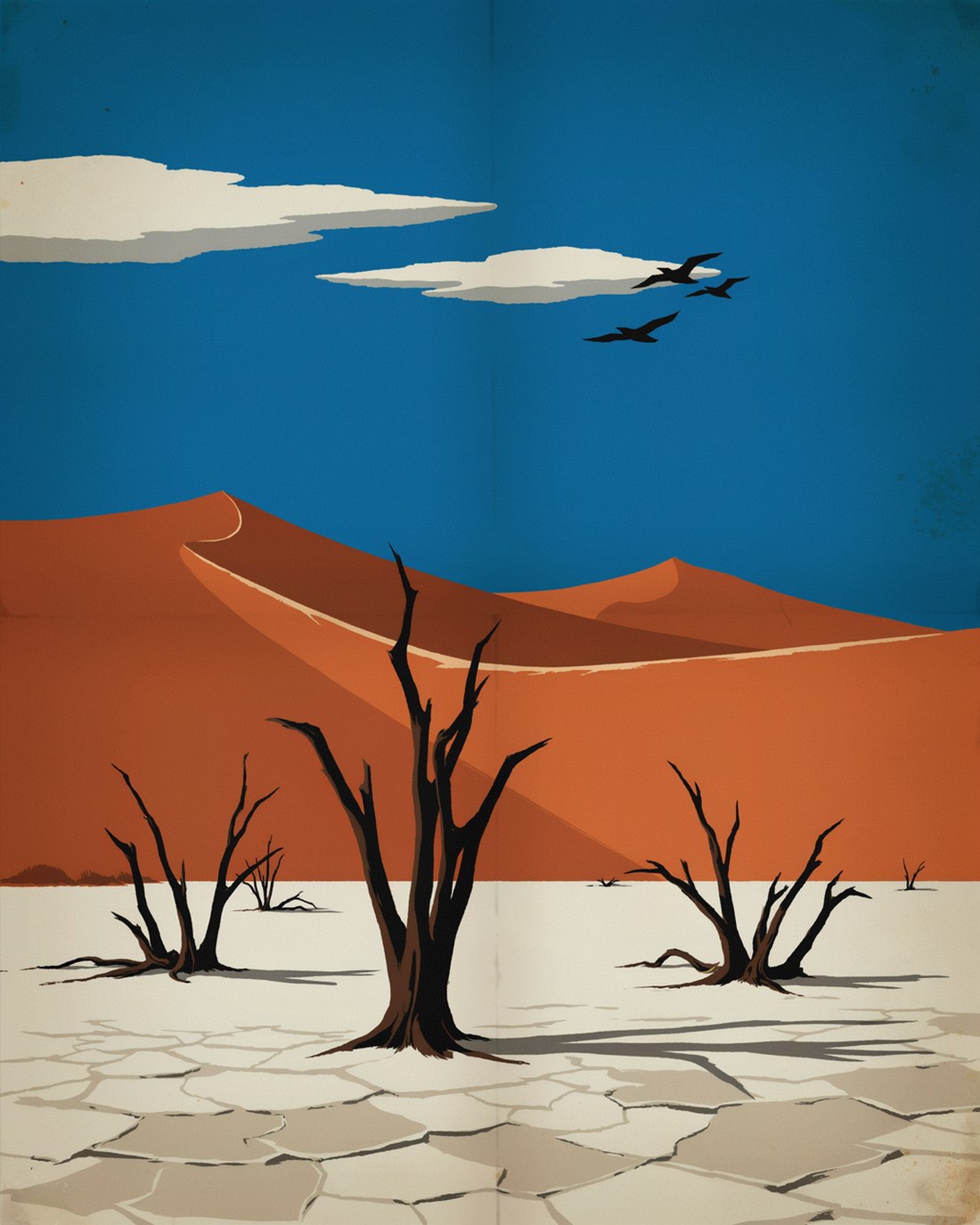
The oldest desert on earth
The Namib, which gives the country its name, is often called the oldest desert in the world, a sea of towering red dunes running down to the Atlantic. At Sossusvlei and Deadvlei, wind-sculpted dunes glow crimson at dawn above white clay pans studded with ancient blackened trees. Oryx and springbok cross the sand as if painted there. It is one of the most otherworldly landscapes on the planet.
Good to know: Namibia is named for the Namib, the world's oldest desert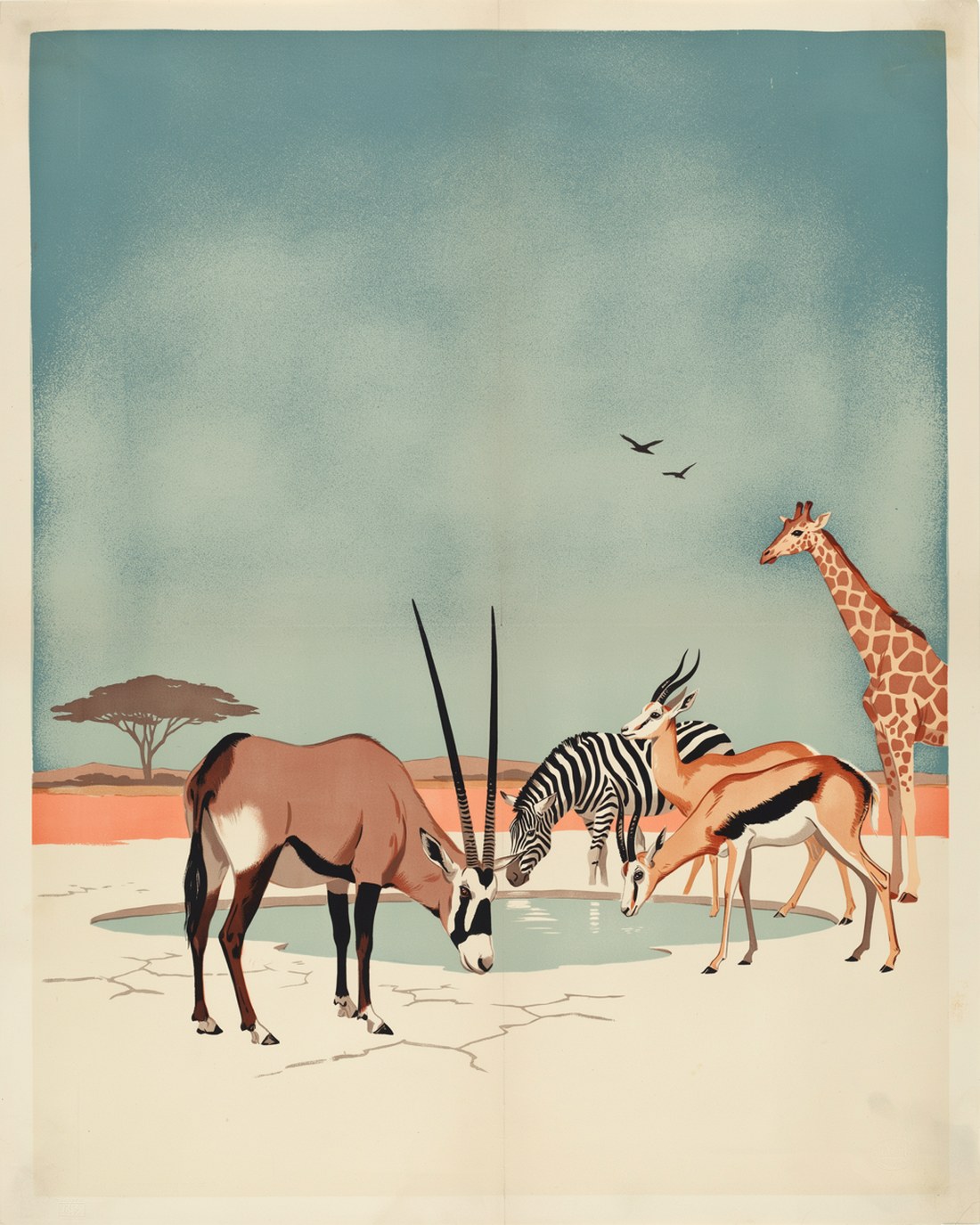
The great white place
Etosha, the great white salt pan visible from space, is one of Africa's finest wildlife reserves, where oryx, zebra, springbok, giraffe, elephants and lions gather at waterholes across a shimmering expanse. In the dry season the animals come to the water and the watching is extraordinary. Namibia's model of community conservancies has helped wildlife recover across the country, a genuine conservation success story.
Good to know: the Etosha pan is large enough to be seen from space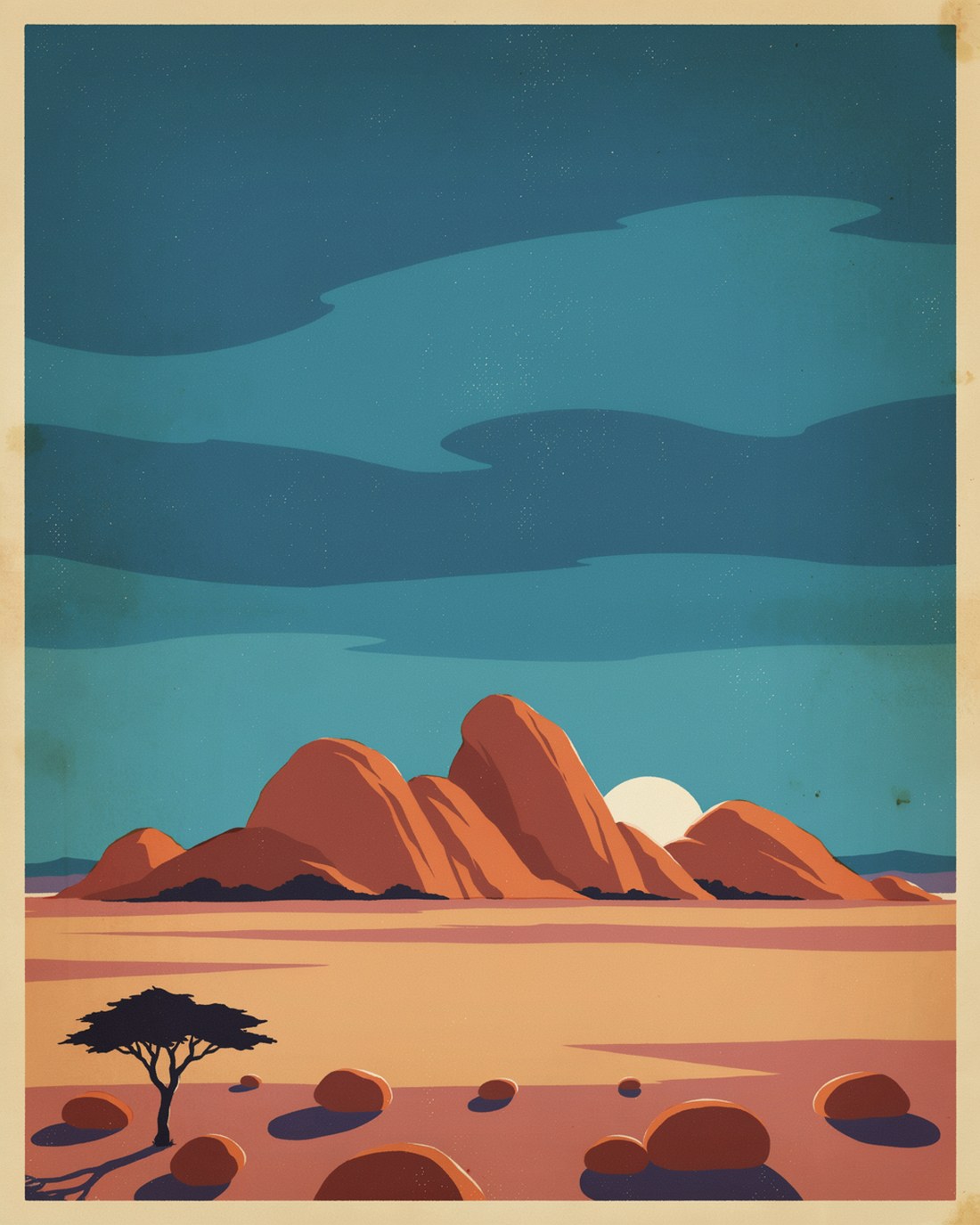
Ancient rock and empty horizons
Away from the dunes, Namibia's interior is a vast open canvas of granite koppies, balancing boulders and rounded inselbergs that blaze orange at sunset, from the great dome of Spitzkoppe to the plains of Damaraland. This is desert-adapted country where elephants and rhinos roam free and the horizons run forever. Driving through it, under some of the darkest, most star-filled skies on earth, is the essence of a Namibian road trip.
Good to know: Namibia has some of the darkest night skies in the world for stargazingNamibians carry a quiet pride in their vast, dramatic land and in a young nation that has become one of Africa's conservation leaders, with wildlife protected across community conservancies. Greet people warmly, take your time, ask before you photograph, and the welcome you get in return is genuine and generous.
No links here, nothing to buy. This part is just to help you travel well.
Sources, and how this guide was checked
Last reviewedJul 2026, 8 of 9 dated items inside their review window
Last actually changedApr 2025see the record →
What the last check foundSources added on first publish. The big change for US travelers: since 1 April 2025, Americans must pay a visa to enter Namibia, at N$1,600 (about US$88), obtained through the online e-visa portal or on arrival, confirmed by the US Embassy in Windhoek and Namibian mission fee schedules. This outdates the older visa-free content that still dominates search. Verified the Namibian dollar's 1:1 peg to the South African rand, and that rand circulates freely, from long-standing central bank arrangement. State Department advisory is Level 2.
- US Embassy Windhoeknew entry requirements for US citizens, effective 1 April 2025 (visa required, online portal or on arrival)
- Namibia Ministry of Home Affairs, Immigration, Safety and Securitythe official e-visa and visa-on-arrival portal
- Bank of Namibiathe Namibian dollar and its peg to the South African rand
- US State DepartmentNamibia travel advisory (Level 2) and local conditions
Our own judgmentThe daily cash share, the tipping norms, and the ATM fee ranges are our own read from recent traveler and bank reports, not a single official table. The visa fee is set in Namibian dollars, so its US dollar figure moves with the exchange rate; treat about US$88 as approximate. The visa-on-arrival system is still new and the US Embassy notes implementation details can change, so confirm on the official portal before you travel.
How we checkHow every guide is researched, checked and dated
More money guides in Africa
If you are also weighing up nearby destinations, each guide covers cards, cash, ATMs and the fees to expect.
Going deeper on Namibia
The money questions people ask on the ground.
Short, focused answers to the specific things that catch first-timers out in Namibia.
- Do US citizens need a visa for Namibia?This one has changed, and a lot of the internet has not caught up. Namibia used to be visa-free for Americans; since April 2025 it is not. Here is what you actually need, and the official place to get it.
- Do I need cash in Namibia, or can I use cards?In Windhoek and the tourist towns, cards are fine. The catch is the driving: Namibia is a road-trip country, and fuel and remote stops often mean cash. Here is how to plan for both.
- Tipping in NamibiaNamibia has a modest, friendly tipping culture with a couple of local twists: you tip the person who pumps your fuel, and safari guides and lodge staff are where tipping really counts.
- Taxis and getting around NamibiaNamibia is a self-drive country first and foremost. If you are not renting a car, ride-hailing exists only in the main towns, and it is not the apps you know from home. Here is how it really works.
- Staying connected in Namibia.Namibia is the country on this site where buying the right data plan changes the least. Coverage follows the towns and the tarred roads, and once you leave them there is frequently no signal at all, on any network, at any price. The planning that matters here is offline planning.
- What does getting sick in Namibia cost?Namibia is the emptiest country we cover, and that single fact reorganises this whole page. The medicine in Windhoek is competent. The problem is that most of the time you are not in Windhoek, and the road there is long.
This is how Namibia stands today.
Money rules move. We can let you know for free if that changes.