True Trip Costs: France
before you go
- DoSay euros, not dollars, every single time
- CarryBring one card that has a chip and a PIN
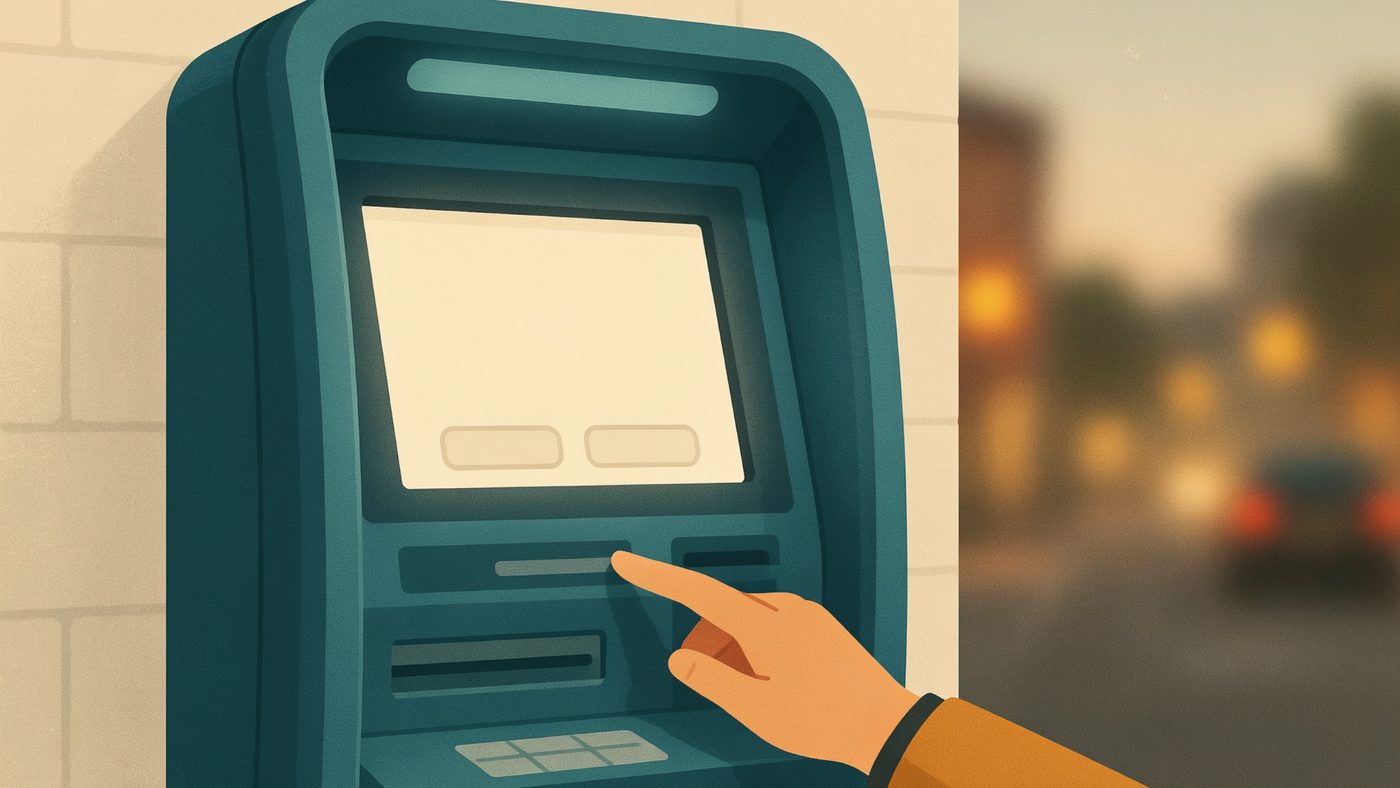
- WithdrawThe standalone kiosks are the dear way to get cash
- ExpectService is in the price already, by law
- ExpectCDG airport: Flat 56 euros to the Right Bank
That's the short version. Below: every fee we checked, what it all adds up to, and the traps we help you dodge.
No match. See all guides.
Money in France, sorted.
A calm, current plan for the money side of your trip: what to tap, the little cash you still want, and the small rules that trip up first-timers.

What you can refuse to pay here
The room rate isn't the bill, and the sticker rate isn't the price. In France, dynamic currency conversion alone can quietly cost a typical traveler about $69 to $183, and it's one of several fees you can refuse.
Money scorecard
France
- Ease of payingEasy
- Cash dependenceLight cash use
- Daily costPricier
- Getting aroundHonest taxis
- CurrencyStable
Every rating is our own judgment from the France guide, not a score.
See the full France guideParis raised its tourist tax. From January 1, 2026 the city's nightly taxe de sejour went up, partly to fund transport and 2028 Olympic-legacy projects. Expect about 5.53 euros per adult per night at a mid-range (3-star) Paris hotel, and more at higher categories, charged separately from your room rate. Children under 18 are still exempt, and most towns outside Paris stay at a euro or two.
Since April 2026 the EU's Entry/Exit System (EES) has been live at Schengen borders. Instead of a passport stamp you give a quick fingerprint and photo on arrival, and the system then tracks your 90 days automatically. There is no fee, no form and nothing to apply for.
The catch is time, not money: several major airports have run peak queues of two to five hours through the summer, and some countries are using EU-permitted pauses to ease them. Build in a buffer on arrival, especially on a tight connection.
ETIAS, the separate online authorization, is not running and has no launch date. The EU removed its late-2026 target in July 2026 and says it will announce a real date several months ahead, so any site selling you an ETIAS today is selling something that does not exist yet. For now a US passport is all you need.
Full detail, and the official EU pages, on passports and visas.
The three things people ask
Will my card work? Do I need cash? Are ATMs easy?
The quick read for a first trip.
Your card
Works almost everywhere
Visa and Mastercard are taken nearly everywhere, and contactless is standard, including Apple Pay and Google Pay. Amex is less widely accepted. A few small shops set a card minimum, often around 5 to 10 euros.
Check yours →Cash
A little, for the small stuff
You can get through most days on a card, but keep some euros for bakeries, open-air markets, small cafes, tips and rural spots. A few coins are handy for some public toilets too.
How much to bring →ATMs
Easy, skip the Euronet ones
Plentiful in towns and cities. Use a machine attached to a real bank (BNP Paribas, Credit Agricole, Societe Generale, LCL), not a standalone Euronet or Travelex kiosk, which charge more and push the dollar conversion.
See ATMs in France →(opens in a new tab)Cash or card
Day to day, France is mostly card.
A rough feel for everyday spending. Cities, shops, restaurants and transit are overwhelmingly card and contactless. The cash you do want is for bakeries, open-air markets, small village cafes, a few tips, and the odd shop with a card minimum. Out in the countryside, carry a little more.
See what the trip really costs →Your money plan
Four steps and you're set.
Before you go
- Bring a no-foreign-fee Visa or Mastercard for almost everything, plus a backup card from a different bank.
- Add a no-fee debit card for ATM cash. Charles Schwab refunds ATM fees worldwide; Wise and Revolut are low-fee.
- Set your cards up for contactless and add them to Apple Pay or Google Pay. Most US issuers no longer need a travel notice, but it does not hurt to flag the trip.
At the airport
- Skip the airport exchange counters; their rates are poor.
- For cash, find a bank ATM rather than the bright Euronet kiosks near the exits, and decline "convert to USD." Always choose euros.
- Pull a larger amount at once so any per-withdrawal fee stings less.
Day to day
- Tap your card or phone for almost everything: shops, restaurants, museums and transit.
- Keep cash for bakeries, open-air markets, small village cafes and tips.
- Always choose euros on the card terminal and the ATM screen, never dollars.
A golden rule
- Always pay in euros, never in dollars. Choosing your home currency (dynamic currency conversion) quietly adds 3 to 8%.
- This is true at shop card terminals and at ATMs alike, and the standalone Euronet machines push it hardest.
Staying connected
Will my phone work here? And what will it cost?
Yes across the cities, tourist regions and main routes, with excellent 4G and 5G growing in the bigger cities and along the TGV lines. Signal thins in the Alps and Pyrenees valleys and remote rural areas like inland Brittany and the Dordogne. The cost is where people get caught out, and on most US plans it lands in one of two buckets.
Your plan may already include it
Often, do nothing
Some US plans include slow data abroad at no extra cost. If that is you, the honest move is to leave it alone.
we earn nothing
Or it charges quietly, after the fact
The bill lands later
On pay-per-use plans the cost runs in the background while you travel, and the charge can show up weeks after you are home. Forgetting to switch off data roaming is the classic one. For a week or more, an eSIM is usually cheaper and keeps you in control.
Check what your own carrier charges before the trip, not after.
If an eSIM is the cheaper call, Nomad covers France.
Get your Nomad eSIM→(opens in a new tab)we may earn a commissionMedical cover
The one cost with no price tag.
Every other number on this page has a price you can look up. This one does not, and it can be the largest of them all. Most US health plans cover little or nothing once you leave the country, and Medicare covers essentially none of it abroad. A serious illness or injury is paid up front, and a medical evacuation runs from tens of thousands of dollars to past $100,000 if you are remote or an ocean from home.
First, you may not need to buy anything.
A cheap, refundable trip close to home does not need this. And if you are healthy, headed somewhere with good care, and one of the premium cards on the shortlist above already includes emergency medical and evacuation, you may be covered already. Check your card's benefits guide before you buy. Saying that costs us the commission, and it is still the right call.
How much cover matters here
Here, good hospitals are easy to reach and the care is high quality, so for a healthy traveler this leans more toward your call than a must.
If you do want cover, this is what it is for: the evacuation and the up-front hospital bill, the part no card limit is meant to absorb.
Enough for most trips
Faye, or a comparable whole-trip policy
Bundles trip protection with emergency medical, which is enough cover for most travelers on a typical trip.
The deeper end
A dedicated travel-medical plan built for serious care and evacuation abroad
Stronger on medical care and evacuation, for a remote or higher-risk trip where that is the real exposure.
If it happens
Call it first, then call your insurer's 24/7 assistance line, which is what confirms payment and arranges an evacuation. 112 reaches every service, and 15 connects you straight to the medical service, the SAMU.
TrueTripCosts explains the gap and points to options. It does not set your coverage amounts or act as your insurance advisor, and every policy carries its own exclusions, so read them before you buy. Emergency number checked Jul 2026. Confirm the current number before you travel, as local lines can change.
Renting a car
Where the rental desk makes its money.
Renting is often the best way to see France, and the cover is where the counter earns its margin. The rental comes with basic collision cover, but it leaves you owing the excess, the first slice of any damage or theft bill, often several hundred to a couple of thousand dollars, held on your card until the car is back. The desk will offer to erase that excess. It is a real product, just priced at the counter for far more than the same cover costs if you arrange it before you go.
You may not need to buy anything at all. Some US credit cards include rental collision cover when you pay with the card and decline the counter's version, so check what your own card covers on rentals before you add anything extra. We cannot read your policy for you, and flagging this can cost us the sale below, but it is the honest first step.
If your card does not cover it, or you would rather have cover built for this, a standalone policy bought ahead is the cheaper way to handle it. It covers the damage and theft the rental leaves you liable for, often including parts the counter cover leaves out like tires, glass and the underbody, and mechanical faults stay the rental company's problem. RentalCover covers rentals in France. Read what the policy includes before you buy.
Cover your rental with RentalCover→(opens in a new tab)we may earn a commissionCurrency basics
The euro, in plain terms.
Quick conversion
About 1.14 dollars to 1 euro in mid-2026, so a 10 euro lunch is roughly $11 and 50 euros is about $57. Prices show the euro sign, often after the number, as in "12 €".
Notes and coins
Notes run 5, 10, 20, 50, 100, 200 and 500 euros, though many shops dislike anything above 50; coins go from 1 cent to 2 euros. Keep small notes and a few coins for bakeries, markets and toilets.
Contactless is king
Tap to pay is everywhere, usually with no PIN under about 50 euros, and Apple Pay and Google Pay are widely accepted. Carry a chip-and-PIN card as backup for the odd machine that wants it.
Service is included
Restaurant and cafe prices include a service charge by law ("service compris"), so tipping is optional and small. There is no US-style percentage to track.
Real exchange rate
What your money is really worth here.
This is the mid-market rate, the one the banks trade at and the yardstick every other rate is measured against. Your card lands a little below it, and if a screen ever offers to bill you in dollars, that is worse again. So this is the number to expect, and how you spot a bad one.
1 US dollar is about 0.88 EUR
Taxes and refunds
The tourist tax on your room, and money back on shopping.
Two things to know. Most towns add a small tourist tax (taxe de sejour) to your lodging, charged per person per night, usually a euro or two, collected at the hotel or built into an Airbnb booking, and children under 18 are exempt. It is higher in Paris, which raised its rates in 2026, where a mid-range hotel can run around 6 euros and up per adult per night. Separately, non-EU visitors can claim a VAT refund (detaxe) on shopping. French VAT is 20%, and if you spend over 100 euros in one store on the same day, ask for a tax-free form ("detaxe"), show your passport, keep the goods unused, and validate at a PABLO kiosk when you leave the EU. After fees you get roughly 10 to 15% back. Apps like ZappTax or Wevat can combine smaller receipts to clear the threshold.
That covers what a government adds. What you can still change is what the room itself costs, and that comes down to the booking moment: see how to pay less on hotels.
Before you book: passports, the six-month rule and whether you need a visa. Not a US citizen, or connecting through Europe? The rules can differ, and even a layover can need its own visa. See our passports and visas guide →
Watch out for
The small traps that catch first-timers.
Tipping
Service is included, so tip lightly.
By French law, restaurant and cafe prices already include a service charge, shown as "service compris," and staff earn a full wage. So tipping is optional and modest, not the US 15 to 20%. For good service, round up or leave a euro or two; in a nicer restaurant, about 5% is generous. Cash is best, since a tip left in cash goes straight to the staff, while the newer card-terminal tip prompts may be pooled or skipped. At a hotel, a euro or two for housekeeping or a couple of euros per bag for a porter is plenty, and a few euros for a helpful taxi driver or tour guide. There is never any pressure, and no one will think less of you for not tipping.
Common questions
Quick answers.
Do I need cash in France?
Not much. France is card-first, and contactless works almost everywhere, including Apple Pay and Google Pay. Keep some euros for bakeries, open-air markets, small village cafes, tips and the occasional shop with a card minimum, but you can put most spending on a card.
What ATM should I use in France?
Use a machine attached to a real bank, such as BNP Paribas, Credit Agricole, Societe Generale or LCL. Avoid the standalone Euronet and Travelex kiosks at airports, stations and tourist squares; they charge more and push the dollar conversion. Always choose to be charged in euros.
Should I pay in euros or dollars in France?
Always euros. If a card machine or ATM offers to charge you in dollars, decline. That dynamic currency conversion adds roughly 3 to 8%, and your own bank's rate is better.
Do you tip in France?
Only lightly. Service is included by law ("service compris") and staff are paid a full wage, so tipping is optional. Round up or leave a euro or two for good service, or about 5% in a nicer restaurant. Cash is better than the card-terminal prompt.
What is the tourist tax and VAT refund in France?
Most towns add a small taxe de sejour to your lodging, per person per night, usually a euro or two and higher in Paris, with under-18s exempt. Separately, non-EU visitors can reclaim VAT (detaxe) on shopping over 100 euros in one store on the same day: ask for the tax-free form, keep the goods unused, and validate at a PABLO kiosk when you leave. After fees you get roughly 10 to 15% back.
How much cash should I bring for a week in France?
For two mid-range travelers, very roughly 200 to 300 euros in day-to-day cash across a week, beyond your hotel, pulled in one or two ATM visits. France is card-first, so most spending goes on a card and the cash is for small extras.
What will your trip really cost?
Name where you are going. We will show you what nobody quotes.
For instance, right now
 ColombiaHotels charge 19% IVA, but as a foreign tourist you are exempt, and about half try to add it anyway.
 JapanThe world's most high-tech country is still cash-first, and most bank ATMs refuse US cards.
 CzechiaCzech law gives you three hours to cancel a bad currency exchange and get your money back, on amounts up to 1,000 EUR.
 GreeceGreece's climate fee charges an Airbnb-style rental about 8 EUR a night against 2 for a budget hotel.
 El SalvadorThe country that made Bitcoin legal tender?
 CambodiaThe US dollar is Cambodia's everyday currency, and ATMs hand you crisp $100 bills nobody can break.
 TurkeyUS citizens need no visa and no e-visa for Turkey, scrapped in 2023.
 ItalyMost Italian restaurants add a coperto, a per-person cover charge of commonly 2 to 3 euros, before you have ordered anything.
The one thing most people get wrong about France
Guide checked Jul 2026You brace yourself to be quoted a price for the ride into Paris.
The fare from Charles de Gaulle into Paris is fixed by government decree, bags and tolls included, at any hour. There is nothing to negotiate, so anyone approaching you in the arrivals hall with a price is by definition not a licensed taxi.
What to doWalk past everyone who offers you a ride and join the official rank outside. The number is set before you get in.
Everything we checked
What France actually charges you, in one place.
5 things we verified for France, grouped by the kind of thing they are. The numbers are below; this is the shape of them.
fees nobody quotes
money you keep
traps to dodge
timing
The number
What you'll really spend in France.
Your flights if you want them counted, your room, your on-the-ground spending, the two fees most US cards add without telling you, and France's tourist tax. One number, nothing waiting on the statement. No bank to pick, no sign-up, nothing saved.
Optional. Enter your round trip fare per traveler to fold flights into the total.
Total trip realistically somewhere between $0 and $0.
Getting thereflights, and what the border costs
Watch out for
Prepare ahead
These carry no dollar figure by design: each is named because it is real, and there is nothing honest to price here.
Departure tax is not a separate line here. Where a country charges one it is collected inside your airfare, so it is already in the flight figure, and adding it again would count it twice.
On the ground detailyour room, your days, and how much of it is cash
Whether at an ATM or a card terminal in a shop or restaurant, always choose to be charged in the local currency, not dollars. Paying in dollars (called dynamic currency conversion) lets the machine set its own, worse, exchange rate on top of any fee.
Fees nobody quotes youthe part that lands on the statement weeks later
What you'll pay
What you can refuse, and what the lookalike sites charge, is set out under Costs nobody tells you about below, with the two figures kept apart from these ones.
Costs nobody tells you about
Most of it you can keep. Here is every dollar of it.
Every one of them, and how to avoid it11 items
Two of these are money you hand over by default; the rest is money you keep by knowing. Each is its own line.
What you'll pay unless you act
- Your own bank's foreign feeswhat the fees above come toMost US cards add a percentage on what you buy and on the cash you pull, plus a few dollars per ATM withdrawal. Nothing about that is a cost of the trip; it is a cost of the card you happened to bring.A no-foreign-fee card takes both fee lines above to zero.The cards that do not charge it
- Paying in dollars at the terminalabout 3 to 8%on what you cardDynamic currency conversion lets the machine set its own rate on top of any fee, and it runs about 3 to 8 percent on whatever you put on the card. It is the single easiest charge on this page to refuse, and it costs nothing to say no.Choose EUR every time, at a till and at an ATM.How to decline it
- The airport or hotel exchange deskExchange counters make their money on the spread rather than on a stated fee, which is why we publish no percentage for it: it moves by counter, by hour and by note. The rule is what is reliable, not the number.Withdraw from a bank ATM instead, and never change cash at the airport.Getting cash here
What we'll help you dodge
- Tipping on top of a service chargeA service charge is always added to the bill in France, so a tip on top of it is paying for service twice. We put no figure on this one, because what you would have added is up to you.Read the bill first. Where the charge is on it, that is the tip.How tipping works here
- The sales tax you can claim backFrance refunds sales tax to visitors on qualifying shopping, with the rate and any minimum spend set out in this guide. Most travelers never claim it, and we put no dollar figure on it, because it depends on what you buy.Ask for the tax-free form at the till, keep the goods unused, and claim on the way out.The rate and the minimum spend
- The CDG unlicensed airport toutRides sold by a tout inside the terminal routinely run several times the official government-set fare.Ignore anyone who approaches you inside the terminal offering a taxi; follow the signs to the official rank, where a marshal assigns a licensed cab at the fixed fare.The full scam guide
- The gold ring "found" at your feetSomeone "finds" a ring near you and, once you engage, tries to sell it to you as gold.Do not take the ring and do not stop walking.The full scam guide
- The Montmartre friendship braceletA friendly chat while a thread is woven onto your wrist ends in a demand for payment.Do not let anyone start weaving a thread onto your wrist on the steps below Sacre-Coeur.The full scam guide
- The petition or clipboard distractionWhile your hands and eyes are on the paper, your pockets are not.Do not stop for a clipboard or petition, usually from a group of young people; it is a pickpocket distraction.The full scam guide
- The three-card or shell gameA fixture near the tourist bridges that is designed to take money, not to be won.Do not play; it is not a game you can win.The full scam guide
- The metro ticket sold by a strangerA ticket sold by a stranger on the concourse can be already used, invalid, or simply overpriced.Buy tickets only from the machine, a staffed window or the official app.The full scam guide
Where these numbers come fromevery assumption, and its limitssources
These are the assumptions behind the number. Change the room price, nights, travelers, or travel style above, and every line here moves with them.
- Hotel
- Daily spending
- Flights
- Cash vs card
- ATM withdrawals
- Foreign fee
- The range
- Tourist tax
Rough guide, not a quote. The percentage here is a blended stand-in for a typical US card's foreign fee, not your exact rate. The real number moves with the card you carry: one no-foreign-fee card can cover both sides, while a plain rewards credit card only removes the fee on what you buy, and cash still costs a little unless that card also waives ATM and foreign-cash fees. A debit card, or accepting the "pay in dollars" (dynamic currency conversion) offer at a till or ATM, can push it higher. Rates checked Jun 2026 and rounded.
How we check and date every figureFrance, TTC-ed
truetripcosts.comWhat this assumes
Tips are already inside the daily spending figure, never added on top.
Not sure which card to bring? See my pick for France.
Already carry a card with no foreign transaction fee? Then you are set for France, and can skip this. There is nothing to buy.
If you are getting a card for France, this is the pairing I would pick: a no-foreign-fee credit card for spending, and a fee-free ATM debit card for cash. We earn nothing on these today. Always confirm the current fee with the issuer before you apply. Checked Jun 2026.
Capital One charges no foreign transaction fee on any of its cards.
No foreign transaction fee
Fee-free ATM cash worldwide

Want one account that holds and spends in the local currency? A different job from the three above, and the one I reach for abroad. It is free to open; you can create a virtual card in the app and add it to your phone wallet in minutes, without waiting for the physical card; and you can convert US dollars into the local currency inside the account before you travel, then spend from that balance. Wise uses the mid-market rate plus a small conversion fee (around 0.4% and up), with no flat foreign fee.
The three picks above pay us nothing, and their tags say so. Wise is the only option here that can earn us a commission, and its tag says that too. Paid or not, the pick is still the pick.
Before you fly
At least 14 countries now make you file a form online before you fly. 13 of them are free. One really does charge, and it is not the one you would guess.
France does not ask for one, so this is not a job for this trip. It is worth knowing anyway, because the list keeps growing and the pattern is always the same: the filing is new, obscure and mandatory, and the paid lookalikes outrank the government site because the real ones do not buy ads.
See every form we can source, with the official address for eachWhen to go
Cheaper and busier months in France.
The month you pick moves the budget as much as the country does. Here is the shape of France's year, with no price attached to it, because an honest one does not exist.
- Busy and pricey
- In between
- Cheaper and quieter
- Cheaper and quieter
- Late Jan to Mar in the cities, and Nov
- What drives the peak
- French school holidays in Jul and Aug, the Mediterranean coast season, Alpine ski weeks in Feb, and the Alsace Christmas markets
Travelers, not touristsA little French goes a long way
A little French goes a long way
A little French, starting with Bonjour, changes everything here. Say it as you walk into any shop, cafe or lift, add a story or two, and you become a guest rather than a tourist.
Say a few words
Tip: The single most important word in France is Bonjour. Say it before anything else when you enter a shop or approach someone, because skipping straight to your question can read as rude. Add Madame or Monsieur and you will be met warmly.
Know a story

Painting the light itself
In gardens like these, French painters broke the old rules and chased the light itself, dabbing colour straight onto the canvas to catch a passing moment. Claude Monet painted his own water-lily pond at Giverny again and again across the seasons. The movement they began, Impressionism, changed art forever.
Good to know: Monet's garden at Giverny still blooms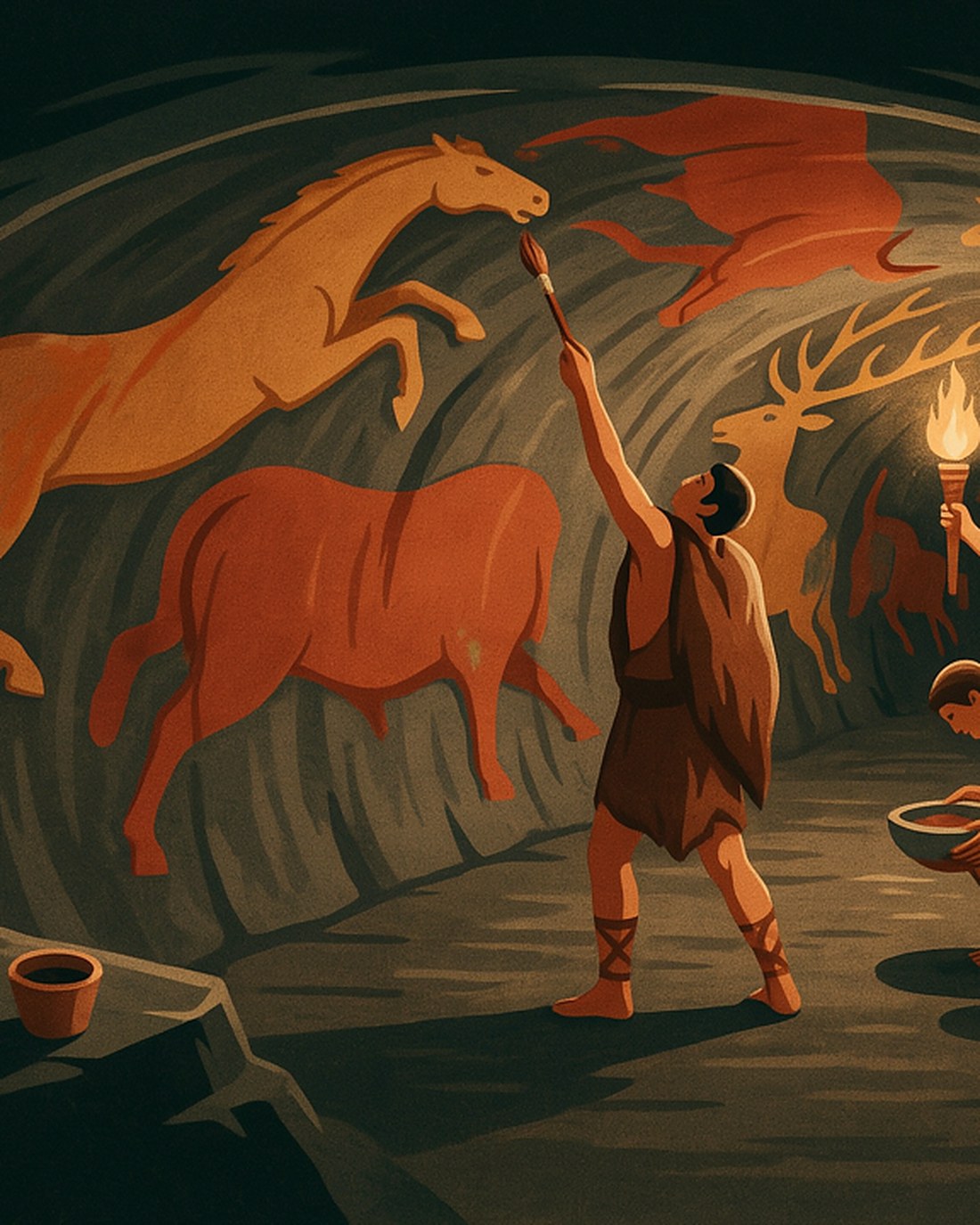
Art from the dawn of time
Deep in a cave in the Dordogne, early hunters painted horses, bulls and deer on the walls around 17,000 years ago, by the light of flickering lamps. The Lascaux paintings are so alive they are called the Sistine Chapel of prehistory. The real cave is closed now to protect it, but a faithful replica nearby lets you see them.
Good to know: see the replica, Lascaux IV
Life at the cafe
The Paris cafe is not fast food, it is a place to sit, watch the street and let time pass, and a single coffee buys you the table for as long as you like. In the Belle Epoque, the golden years around 1900, cafes were where artists, writers and everyone else met. Order un café, take a little table on the pavement, and you are part of it.
Say it: un café (uhn kah-FAY)The French are proud of their art of living, the food, the wine, the language and the long lunch, and they love to share it with anyone who makes a little effort. Lead with Bonjour and a smile, and any coolness melts fast.
No links here, nothing to buy. This part is just to help you travel well.
Sources, and how this guide was checked
Last reviewedJul 2026, 13 of 13 dated items inside their review window
Last actually changedJan 2026see the record →
Not yet individually datedWe date this guide and the fees most likely to move, but the 4 per-place tourist tax rates on this page do not carry a check date yet. They are reviewed with the guide rather than on their own schedule, and putting each of them on one is work in progress.
What the last check foundSources added. Verified that Paris raised its taxe de sejour on 1 January 2026, so a mid-range hotel now runs about 6 euros a person per night and the top categories more, while most towns outside Paris stay at a euro or two. The detaxe VAT refund still starts at 100 euros spent in one store. The guide's figures are current.
- French government (service-public.fr)the Paris taxe de sejour rates that took effect 1 January 2026
- Paris Convention and Visitors Bureauthe tourist tax by accommodation category, per person per night
Our own judgmentThe daily cash share, tipping norms, and likely ATM behavior are our own estimate from experience, not an official figure.
How we checkHow every guide is researched, checked and dated
More money guides in Europe
If you are also weighing up nearby destinations, each guide covers cards, cash, ATMs and the fees to expect.




Going deeper on France
The money questions people ask on the ground.
Short, focused answers to the specific things that catch first-timers out in France.
- Tipping in FranceFrance is not a US-style tipping country. Service is included in the price by law, staff earn a full wage, and no one expects 15 to 20%. A small pourboire for good service is a kindness, not an obligation. Here is what you actually owe.
- Paris taxis and Uber, and the CDG fixed fareParis gives you real choice, a hailable licensed taxi or a proper Uber, but the airport is where money is won or lost. Here is how the two compare, the fixed fare that protects you, and the tout trick to skip.
- Bringing your dog or cat to France.France is one of the most common EU destinations for US pet owners, and the good news is there is nothing France-specific to fear at the border. It runs on the single EU pet-entry process: microchip, rabies in the right order, and an EU health certificate on a 10-day clock. No quarantine, no rabies titer. Here is what that means for France, and the local parts worth knowing.
- France's tourist tax, and the Paris surcharges.France adds a small per-adult, per-night tax to your stay, set by each town. In most places it is a euro or two. In Paris it is now much more, because the region stacks extra charges on top. Here is what to expect in 2026.
- Do I need cash in France, or can I use cards?Short answer: card for almost everything, a little cash for bakeries and market stalls. France is firmly card-first, and contactless runs the day. The things to get right are a chip-and-PIN backup, the fee-heavy kiosk ATMs, and the dollar prompt.
- France's VAT refund (detaxe), and what you get back.France charges 20% VAT, and non-EU visitors can claim some of it back on shopping through the detaxe scheme. It is fully digital via the PABLO kiosks, but operator fees mean the real refund is well under the headline. Here is how it works.
- Staying connected in France.France is well covered where you will be, from Paris to the villages, so the real decision is how you pay for data. For most US travelers an eSIM is far cheaper than the carrier day pass. Here is the math, and the few places signal drops.
- What does renting a car in France really cost?France is a joy to drive, with quiet back roads and superb motorways, and the motorways are where the meter runs. The costs to plan for are per-kilometer tolls, the low-emission sticker some cities require, and getting the insurance right before the counter.
- Common money scams in France, and what they cost youParis has a small, well-rehearsed repertoire of money tricks, and most of them are performed on the same handful of streets. They rely on your politeness rather than any threat, and each one has a tell you can learn in a sentence.
- Do you need a rail pass in France?France runs some of the best fast trains in the world and sells them cheaply if you commit early. A pass asks you to pay for flexibility, then charges you again at every fast train you board.
- What does getting sick in France cost a visitor?France is where the honest answer is calmer than the reflex. Yes, you pay. No, a doctor's appointment is not going to be an American-sized number, because the tariffs are regulated.
This is how France stands today.
Money rules move. We can let you know for free if that changes.