True Trip Costs: Hong Kong
before you go
- DoOn a card: Choose HKD, not US dollars
- DoGet an Octopus card
- Don'tDo not go looking for a refund desk that does not exist
- ExpectRead the folio at check-in for the 3%
- ExpectRestaurants: A 10% service charge is common
- ExpectNot the mainland: No firewall here
That's the short version. Below: every fee we checked, what it all adds up to, and the traps we help you dodge.
No match. See all guides.
Money in Hong Kong, sorted.
A calm, current plan for the money side of your trip: why your card covers almost everything, the cash worth keeping for taxis and markets, the Octopus card that runs the MTR, trams and the Star Ferry, and the two taxes to know in a city with no sales tax.

What you can refuse to pay here
The room rate isn't the bill, and the sticker rate isn't the price. In Hong Kong, dynamic currency conversion alone can quietly cost a typical traveler about $80 to $215, and it's one of several fees you can refuse.
Money scorecard
Hong Kong
- Ease of payingEasy
- Cash dependenceLight cash use
- Daily costPricier
- Getting aroundHonest taxis
- CurrencyStable
Every rating is our own judgment from the Hong Kong guide, not a score.
See the full Hong Kong guideOne lodging cost is new since your last trip. On 1 January 2025 Hong Kong brought back its 3% Hotel Accommodation Tax on the room charge, after 17 years at zero. It is usually already in your hotel bill, though a few hotels collect it at check-in. Otherwise Hong Kong stays a free port with no sales tax, and the old paper arrival card was scrapped in October 2024, so there is no form to fill on the way in.
The three things people ask
Will my card work? Do I need cash? Are ATMs easy?
The quick read for a first trip.
Your card
Works nearly everywhere
Visa, Mastercard and Amex are taken at hotels, shops, restaurants and chains, alongside Octopus, Apple Pay, Google Pay, Alipay and WeChat Pay. You can go most of a day without cash in the malls and big districts, tapping card or phone for almost everything.
Check yours →Cash
For taxis and markets
Keep some Hong Kong dollars for taxis, red minibuses, the street and wet markets (Temple Street, the Ladies' Market), and the cha chaan tengs and dai pai dong. Note that merchants may refuse the big HK$500 and HK$1,000 notes for a small purchase, so keep smaller ones.
How much to bring →ATMs
Everywhere, 24 hours
Machines are on nearly every block, open around the clock, with English menus and a fee around HK$20. As always, choose Hong Kong dollars, not US dollars, if the screen offers to convert, and pull from a bank ATM rather than an airport exchange counter.
See ATMs in Hong Kong →(opens in a new tab)Cash or card
About as cashless as travel gets, with cash for taxis and markets.
A rough feel for everyday spending. Cards, phones and Octopus cover almost everything, from hotels and restaurants to shops, the MTR and the trams. Cash is a smaller share, for taxis, red minibuses, wet and street markets, and the cha chaan tengs and dai pai dong, and you rarely need much of it.
See what the trip really costs →Your money plan
Four steps and you're set.
Before you go
- Bring a no-foreign-fee Visa or Mastercard; Amex is also widely taken. A backup card from a second bank never hurts.
- There is no arrival card to fill out; Hong Kong scrapped it in October 2024 and uses airline passenger data instead.
- Check your passport is valid at least one month beyond your stay, and have a return or onward ticket and enough funds for the trip.
- Budget for the 3% hotel tax on your room; it is usually in the bill, but a few hotels collect it at check-in.
At the airport
- Skip the exchange counters. Pull Hong Kong dollars from an ATM in the arrivals hall, and decline 'convert to US dollars,' always choose Hong Kong dollars.
- Grab about HK$500 to 800 for taxis, minibuses and market stalls in your first day or two.
- Buy an Octopus card (HK$50 refundable deposit plus load), or add Octopus to Apple Wallet. It runs the MTR, buses, trams and the Star Ferry.
- Set up an eSIM before you land; unlike mainland China, a Hong Kong tourist SIM needs no registration.
Day to day
- Tap your card, phone or Octopus for almost everything, and choose Hong Kong dollars every time.
- Tap Octopus on the MTR, buses, trams and the Star Ferry, and top it up by cash or app.
- Keep a little cash for taxis, red minibuses, wet and street markets, and the cha chaan tengs.
- Break the big HK$500 and HK$1,000 notes at a shop or chain, since small vendors and taxis may refuse them.
A golden rule
- Always pay in Hong Kong dollars, never US dollars. Dynamic currency conversion on a terminal or ATM quietly adds a few percent.
- Tip lightly. A 10% service charge is often already on a restaurant bill; beyond that, just round up a taxi or leave small change.
Staying connected
Will my phone work here? And what will it cost?
Among the best anywhere, including inside the MTR tunnels. Hong Kong has fast 4G and wide 5G across the territory. Tourist SIMs need no registration, unlike mainland China, and for most visitors an eSIM from Airalo, Nomad or a similar provider is the easiest route. Your US plan may include some roaming, so check the rate before you rely on it. You do not need mobile data to pay by card, but you will want it for maps and getting around. The cost is where people get caught out, and on most US plans it lands in one of two buckets.
Your plan may already include it
Often, do nothing
Some US plans include slow data abroad at no extra cost. If that is you, the honest move is to leave it alone.
we earn nothing
Or it charges quietly, after the fact
The bill lands later
On pay-per-use plans the cost runs in the background while you travel, and the charge can show up weeks after you are home. Forgetting to switch off data roaming is the classic one. For a week or more, an eSIM is usually cheaper and keeps you in control.
Check what your own carrier charges before the trip, not after.
If an eSIM is the cheaper call, Nomad covers Hong Kong.
Get your Nomad eSIM→(opens in a new tab)we may earn a commissionMedical cover
The one cost with no price tag.
This is the one cost with no price tag, and it can be the largest on the page. Most US health plans and Medicare cover little or nothing abroad, so a serious illness or evacuation is paid up front. How medical costs work abroad, country by country →
First, you may not need to buy anything.
A cheap trip close to home, or a premium card that already includes emergency medical and evacuation, may mean you need nothing here. Check your card first. Saying that costs us the commission, and it is still the right call.
How much cover matters here
Care in the main cities is good, but costs add up and reaching top care from a remote spot takes time, so it is worth a real look for a trip here.
If you do want cover, this is what it is for: the evacuation and the up-front hospital bill, the part no card limit is meant to absorb.
Enough for most trips
Faye, or a comparable whole-trip policy
Bundles trip protection with emergency medical, which is enough cover for most travelers on a typical trip.
The deeper end
A dedicated travel-medical plan built for serious care and evacuation abroad
Stronger on medical care and evacuation, for a remote or higher-risk trip where that is the real exposure.
If it happens
Call it first, then call your insurer's 24/7 assistance line, which is what confirms payment and arranges an evacuation. 999 reaches police, fire and ambulance across Hong Kong. The 911 number does not work here, though 112 dialled from a mobile is routed through to 999 as a backup. Hospital emergency care is excellent, but visitors pay in full without insurance, so travel cover is worth having.
TrueTripCosts explains the gap and points to options. It does not set your coverage amounts or act as your insurance advisor, and every policy carries its own exclusions, so read them before you buy. Emergency number checked Jul 2026. Confirm the current number before you travel, as local lines can change.
Currency basics
The Hong Kong dollar, in plain terms.
Quick conversion
Hong Kong uses the Hong Kong dollar, written HK$, pegged near 7.8 to the US dollar, so HK$100 is roughly 12.80. Notes run 10, 20, 50, 100, 500 and 1,000 from three different banks, so designs vary, and coins go up to 10 dollars. There is no sales tax on the price you see.
Very card-friendly
Visa, Mastercard and Amex work almost everywhere, alongside Octopus, Apple Pay, Google Pay, Alipay and WeChat Pay. Cash is a smaller backup, mainly for taxis, red minibuses, market stalls and small eateries, so you rarely need much of it.
Octopus runs transit
An Octopus card is the stored-value key to the MTR, buses, trams, the Star Ferry and minibuses, and it pays at 7-Eleven and supermarkets too. The deposit is HK$50 and refundable, you top up by cash or app, and Apple Wallet supports Octopus in Hong Kong.
Service charge, light tipping
Tipping is modest here. Restaurants usually add a 10% service charge already, so beyond that just round up a taxi or leave small change, HK$10 to 20. Nothing more is expected.
Real exchange rate
What your money is really worth here.
This is the mid-market rate, the one the banks trade at and the yardstick every other rate is measured against. Your card lands a little below it, and if a screen ever offers to bill you in dollars, that is worse again. So this is the number to expect, and how you spot a bad one.
1 US dollar is about 7.84 HKD
Taxes and refunds
A free port with no sales tax, plus one hotel tax.
Hong Kong is a free port: there is no GST or VAT on the price you see, so prices are tax-free and there is nothing to reclaim at the airport. The one lodging cost to know is a 3% Hotel Accommodation Tax on the room charge, reinstated on 1 January 2025 after 17 years at zero. It is usually already in your hotel bill, though some hotels collect it at check-in. A few cases are exempt, including guesthouses with fewer than 10 rooms, lodging run for non-profit purposes, and stays of 28 or more consecutive nights. Because there is no VAT to begin with, there is no shopper's refund scheme like the ones in Taiwan or Europe.
That covers what a government adds. What you can still change is what the room itself costs, and that comes down to the booking moment: see how to pay less on hotels.
Fees and taxes to double-check
The numbers most likely to change.
These are the fees and taxes that move on political timelines, so we track each one on its own. Every line shows the amount, whether it is in effect yet, the date we last checked it, and a primary source where a clean one exists.
Hotel Accommodation Tax
3% on the room charge, usually shown in the hotel bill; exemptions include stays of 28 or more consecutive nights and guesthouses with fewer than 10 rooms
Before you book: passports, the six-month rule and whether you need a visa. Not a US citizen, or connecting through Europe? The rules can differ, and even a layover can need its own visa. See our passports and visas guide →
Watch out for
The small traps that catch first-timers.
Tipping
Tip lightly, if at all.
Hong Kong tips modestly, and nobody will chase you for more. At most restaurants a 10% service charge is already added to the bill, so you do not need to add anything; if you like, round up or leave the small change. For taxis, rounding up to the next dollar or two is plenty, and a hotel porter or housekeeping might get HK$10 to 20. There is no expectation of the percentage tipping you may be used to at home, so pay the bill, round up if you wish, and that is that. The main thing to check is simply whether that 10% service charge is already on the bill before you add to it.
Common questions
Quick answers.
Do I need cash in Hong Kong?
Not much. Cards, phones and Octopus cover almost everything, from hotels and restaurants to the MTR and trams. Keep some Hong Kong dollars for taxis, red minibuses, wet and street markets and the cha chaan tengs, and pull it from a 24-hour ATM as needed.
What is an Octopus card and do I need one?
Octopus is a stored-value card that runs the MTR, buses, trams, the Star Ferry and minibuses, and it pays at 7-Eleven and supermarkets. The HK$50 deposit is refundable, you top up by cash or app, and Apple Wallet supports Octopus in Hong Kong, so many visitors add it to their phone rather than carry the plastic.
Should I pay in Hong Kong dollars or US dollars?
Always Hong Kong dollars. If a card terminal or ATM offers to charge you in US dollars, decline; that dynamic currency conversion adds a few percent. Choosing the local currency lets your card's network handle the exchange at a fair rate.
Is there a sales tax or VAT in Hong Kong?
No. Hong Kong is a free port with no GST or VAT, so the price you see is what you pay and there is nothing to reclaim at the airport. The only visitor-facing tax is the 3% Hotel Accommodation Tax on hotel rooms.
What is the Hong Kong hotel tax?
A 3% Hotel Accommodation Tax on the room charge, back in effect since 1 January 2025 after 17 years at zero. It is usually already in your hotel bill, though some hotels collect it at check-in. Stays of 28 or more consecutive nights and guesthouses with fewer than 10 rooms are exempt.
Do I need a visa or an arrival card for Hong Kong?
US citizens visit visa-free for up to 90 days, with a passport valid at least one month beyond the stay and a return or onward ticket. There is no arrival card; Hong Kong scrapped it on 16 October 2024 and now uses airline advance passenger information, with e-Channel gates available to eligible visitors.
Do you tip in Hong Kong?
Lightly. Most restaurants already add a 10% service charge, so beyond that just round up or leave small change. A taxi gets rounded to the next dollar or two, and a hotel porter HK$10 to 20. There is no expectation of percentage tipping.
How much cash should I bring for a week in Hong Kong?
Not much on top of card and Octopus spending. A few hundred Hong Kong dollars for taxis, minibuses and markets, refreshed from a 24-hour ATM as needed, is plenty. Keep smaller notes, since vendors and taxis may not break a HK$500 or HK$1,000 note.
What will your trip really cost?
Name where you are going. We will show you what nobody quotes.
For instance, right now
 ColombiaHotels charge 19% IVA, but as a foreign tourist you are exempt, and about half try to add it anyway.
 JapanThe world's most high-tech country is still cash-first, and most bank ATMs refuse US cards.
 CzechiaCzech law gives you three hours to cancel a bad currency exchange and get your money back, on amounts up to 1,000 EUR.
 GreeceGreece's climate fee charges an Airbnb-style rental about 8 EUR a night against 2 for a budget hotel.
 El SalvadorThe country that made Bitcoin legal tender?
 CambodiaThe US dollar is Cambodia's everyday currency, and ATMs hand you crisp $100 bills nobody can break.
 TurkeyUS citizens need no visa and no e-visa for Turkey, scrapped in 2023.
 ItalyMost Italian restaurants add a coperto, a per-person cover charge of commonly 2 to 3 euros, before you have ordered anything.
The one thing most people get wrong about Hong Kong
Guide checked Jul 2026You plan to claim the tax back on your shopping at the airport.
There is nothing to claim. Hong Kong is a free port with no sales tax or VAT at all, so the price on the tag is the price. The one lodging cost is a 3% Hotel Accommodation Tax, reinstated on 1 January 2025, which some hotels collect separately at check-in.
What to doRead the folio at check-in for the 3%, and do not go looking for a refund desk that does not exist.
Everything we checked
What Hong Kong actually charges you, in one place.
3 things we verified for Hong Kong, grouped by the kind of thing they are. The numbers are below; this is the shape of them.
traps to dodge
timing
The number
What you'll really spend in Hong Kong.
Your flights if you want them counted, your room, your on-the-ground spending, the two fees most US cards add without telling you, and Hong Kong's tourist tax. One number, nothing waiting on the statement. No bank to pick, no sign-up, nothing saved.
Optional. Enter your round trip fare per traveler to fold flights into the total.
Total trip realistically somewhere between $0 and $0.
Getting thereflights, and what the border costs
Watch out for
Prepare ahead
These carry no dollar figure by design: each is named because it is real, and there is nothing honest to price here.
Departure tax is not a separate line here. Where a country charges one it is collected inside your airfare, so it is already in the flight figure, and adding it again would count it twice.
On the ground detailyour room, your days, and how much of it is cash
Whether at an ATM or a card terminal in a shop or restaurant, always choose to be charged in the local currency, not dollars. Paying in dollars (called dynamic currency conversion) lets the machine set its own, worse, exchange rate on top of any fee.
Fees nobody quotes youthe part that lands on the statement weeks later
What you'll pay
What you can refuse, and what the lookalike sites charge, is set out under Costs nobody tells you about below, with the two figures kept apart from these ones.
Costs nobody tells you about
Most of it you can keep. Here is every dollar of it.
Every one of them, and how to avoid it3 items
Two of these are money you hand over by default; the rest is money you keep by knowing. Each is its own line.
What you'll pay unless you act
- Your own bank's foreign feeswhat the fees above come toMost US cards add a percentage on what you buy and on the cash you pull, plus a few dollars per ATM withdrawal. Nothing about that is a cost of the trip; it is a cost of the card you happened to bring.A no-foreign-fee card takes both fee lines above to zero.The cards that do not charge it
- Paying in dollars at the terminalabout 3 to 8%on what you cardDynamic currency conversion lets the machine set its own rate on top of any fee, and it runs about 3 to 8 percent on whatever you put on the card. It is the single easiest charge on this page to refuse, and it costs nothing to say no.Choose HKD every time, at a till and at an ATM.How to decline it
- The airport or hotel exchange deskExchange counters make their money on the spread rather than on a stated fee, which is why we publish no percentage for it: it moves by counter, by hour and by note. The rule is what is reliable, not the number.Withdraw from a bank ATM instead, and never change cash at the airport.Getting cash here
Where these numbers come fromevery assumption, and its limitssources
These are the assumptions behind the number. Change the room price, nights, travelers, or travel style above, and every line here moves with them.
- Hotel
- Daily spending
- Flights
- Cash vs card
- ATM withdrawals
- Foreign fee
- The range
- Tourist tax
Rough guide, not a quote. The percentage here is a blended stand-in for a typical US card's foreign fee, not your exact rate. The real number moves with the card you carry: one no-foreign-fee card can cover both sides, while a plain rewards credit card only removes the fee on what you buy, and cash still costs a little unless that card also waives ATM and foreign-cash fees. A debit card, or accepting the "pay in dollars" (dynamic currency conversion) offer at a till or ATM, can push it higher. Rates checked Jun 2026 and rounded.
How we check and date every figureHong Kong, TTC-ed
truetripcosts.comWhat this assumes
Tips are already inside the daily spending figure, never added on top.
Not sure which card to bring? See my pick for Hong Kong.
Already carry a card with no foreign transaction fee? Then you are set for Hong Kong, and can skip this. There is nothing to buy.
If you are getting a card for Hong Kong, this is the pairing I would pick: a no-foreign-fee credit card for spending, and a fee-free ATM debit card for cash. We earn nothing on these today. Always confirm the current fee with the issuer before you apply. Checked Jun 2026.
Capital One charges no foreign transaction fee on any of its cards.
No foreign transaction fee
Fee-free ATM cash worldwide

Want one account that holds and spends in the local currency? A different job from the three above, and the one I reach for abroad. It is free to open; you can create a virtual card in the app and add it to your phone wallet in minutes, without waiting for the physical card; and you can convert US dollars into the local currency inside the account before you travel, then spend from that balance. Wise uses the mid-market rate plus a small conversion fee (around 0.4% and up), with no flat foreign fee.
The three picks above pay us nothing, and their tags say so. Wise is the only option here that can earn us a commission, and its tag says that too. Paid or not, the pick is still the pick.
Before you fly
At least 14 countries now make you file a form online before you fly. 13 of them are free. One really does charge, and it is not the one you would guess.
Hong Kong does not ask for one, so this is not a job for this trip. It is worth knowing anyway, because the list keeps growing and the pattern is always the same: the filing is new, obscure and mandatory, and the paid lookalikes outrank the government site because the real ones do not buy ads.
See every form we can source, with the official address for eachWhen to go
Cheaper and busier months in Hong Kong.
The month you pick moves the budget as much as the country does. Here is the shape of Hong Kong's year, with no price attached to it, because an honest one does not exist.
- Busy and pricey
- In between
- Cheaper and quieter
- Cheaper and quieter
- Jul to Sep, the hot humid stretch
- What drives the peak
- Dry mild autumn weather, Chinese New Year in late Jan or Feb, and the convention and trade fair calendar, which moves hotel rates on its own
Medium confidence. The seasons are well established, though the money side of them is partly our own inference.
See all 59 countries compared on the when to go pageTravelers, not touristsA little Cantonese goes a long way
A little Cantonese goes a long way
Nobody expects you to speak Cantonese, but a warm nei hou, an m goi, and a story or two mark you as a guest rather than a tourist. Hong Kong is fast and cosmopolitan, and English is widely understood, so a few local words are a friendly bonus rather than a necessity.
Say a few words
Tip: In Hong Kong, m goi (mm-GOY) is the everyday magic word: it means both 'thank you' and 'excuse me,' and it is how you call a waiter, thank a driver or squeeze past on the MTR. At the street markets, friendly haggling is expected, so it is fine to ask for a better price with a smile, then meet somewhere in the middle.
Know a story
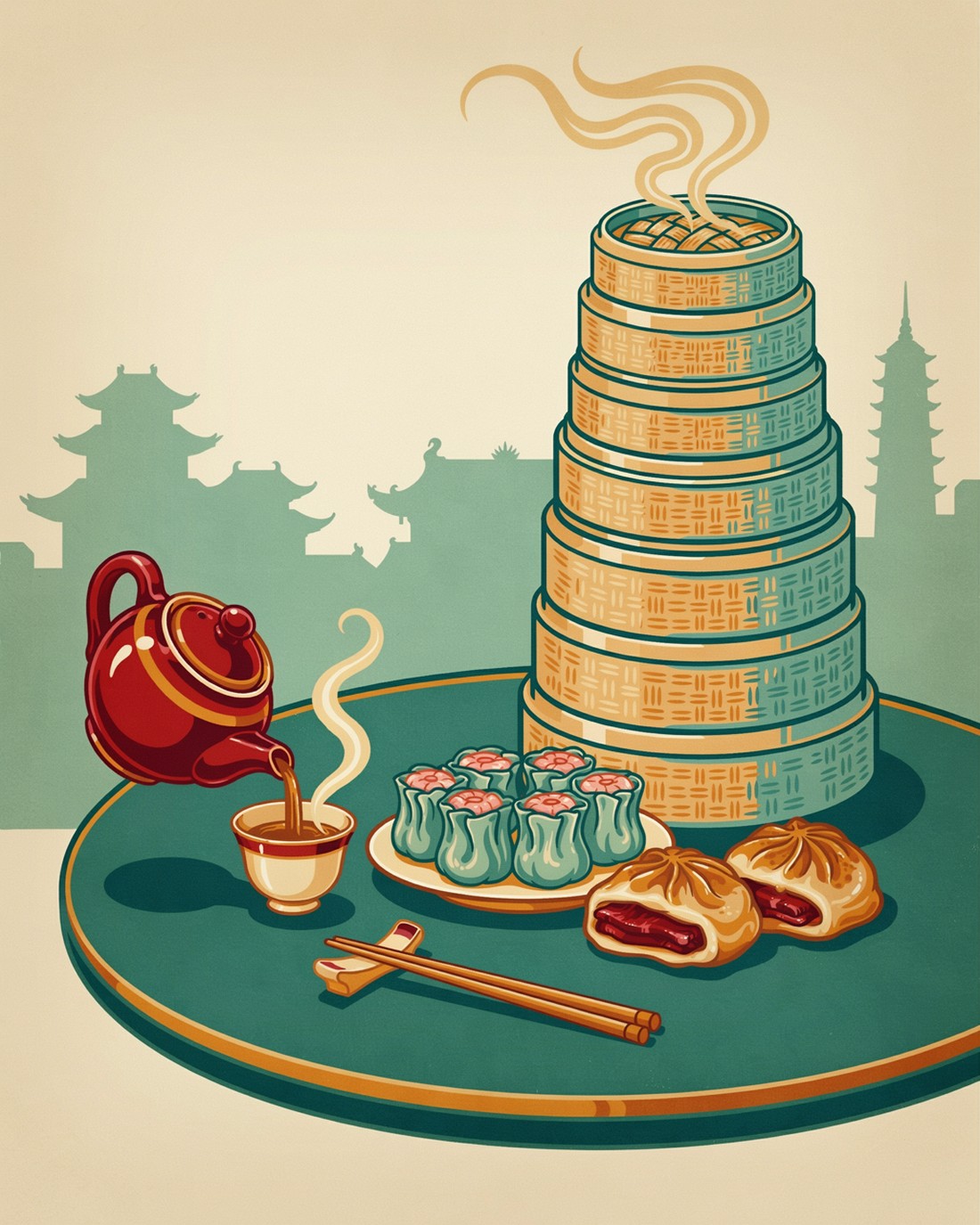
Yum cha and the dim sum trolley
A Hong Kong morning means yum cha, drinking tea over dim sum, where bamboo steamers of har gow, siu mai and char siu bao arrive at a round table. Pour tea for others before yourself, and tap two fingers on the table to say thank you without breaking the conversation, a small gesture locals will notice and appreciate.
Say it: tap two fingers to thank someone pouring your tea
The ding-ding tram
Hong Kong Island's century-old double-decker trams, nicknamed ding-ding for their bell, rattle along the north shore for a couple of Hong Kong dollars, tapped with Octopus. Climb to the upper deck for a slow, front-row view of the city, one of the best-value rides anywhere and a fine way to get your bearings.
Good to know: sit up top at the front for the view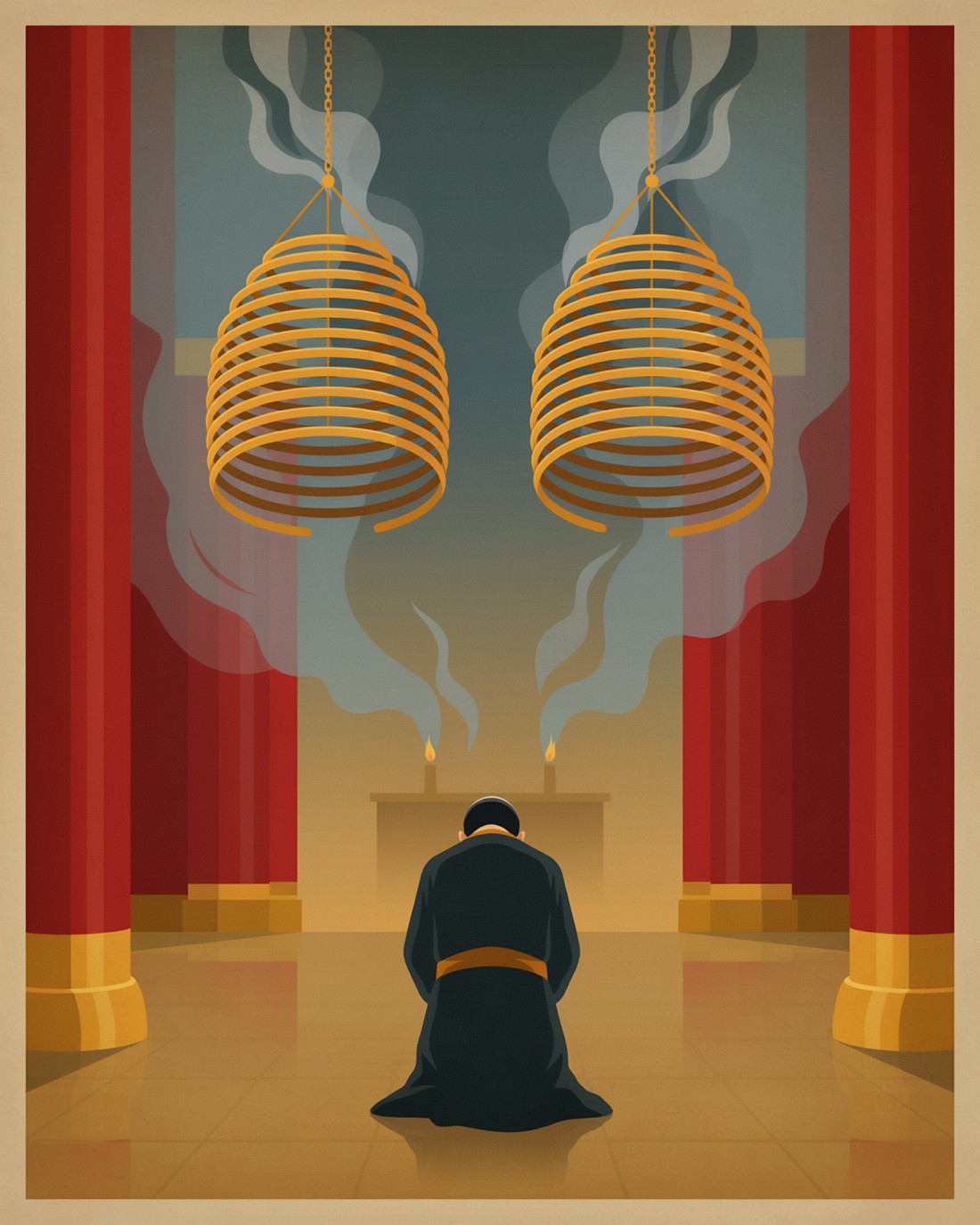
Incense coils at Man Mo Temple
Tucked among the towers, old temples like Man Mo hang giant spiral incense coils from the ceiling that smoulder for days, filling the red-pillared hall with fragrant smoke. Step in quietly, and you get a moment of calm and old Hong Kong right in the middle of the modern city.
Good to know: dress modestly and keep your voice low insideHong Kong is fast, dense and proud of its mix of East and West, from dim sum and old temples to trams, harbour views and a skyline like nowhere else. A few words of Cantonese and a little market banter are noticed and warmly returned.
No links here, nothing to buy. This part is just to help you travel well.
Sources, and how this guide was checked
Last reviewedJul 2026, 8 of 8 dated items inside their review window
Last actually changedJan 2025see the record →
Not yet individually datedWe date this guide and the fees most likely to move, but the tourist tax figure on this page does not carry a check date yet. It is reviewed with the guide rather than on its own schedule, and putting it on one is work in progress.
What the last check foundFirst publication. Confirmed the money facts that matter most this year: the Hong Kong dollar is pegged near 7.8 to the US dollar within a 7.75 to 7.85 band, Hong Kong is a free port with no GST or VAT so there is nothing to reclaim, and the 3% Hotel Accommodation Tax on the room charge has been back in effect since 1 January 2025. Also confirmed the entry facts for US visitors: visa-free for up to 90 days with a passport valid at least one month beyond the stay, and no arrival card since 16 October 2024.
- Inland Revenue Departmentthe 3% Hotel Accommodation Tax on the room charge, in effect since 1 January 2025, and its exemptions
- Immigration Departmentvisit and transit entry, the visa-free periods, adequate-funds and onward-ticket requirements
- US Consulate General Hong Kong and MacauUS citizens visit visa-free for up to 90 days with a passport valid at least one month beyond the stay
- Hong Kong Tourism Boardgeneral visitor essentials, transport and getting around
Our own judgmentThe daily cash share, the tipping feel, and which taxis and stalls will want cash are our own estimate from experience and from consistent traveler reports, not an official figure. Card acceptance varies venue by venue, so treat our read as a guide, not a guarantee.
How we checkHow every guide is researched, checked and dated
More money guides in Asia
If you are also weighing up nearby destinations, each guide covers cards, cash, ATMs and the fees to expect.




Going deeper on Hong Kong
The money questions people ask on the ground.
Short, focused answers to the specific things that catch first-timers out in Hong Kong.
- Taxis in Hong Kong, and the color zonesHong Kong taxis are cheap, honest and everywhere, but two things trip up visitors: they come in colors by area, and many still take only cash. Here is how it works.
- Tipping in Hong KongHong Kong has a light tipping culture. Most sit-down restaurants add a 10% service charge, so a tip is largely built in, and casual spots and taxis expect little or nothing. Here is what you actually owe.
- Do I need cash in Hong Kong, or can I use cards?Short answer: a card for most things, an Octopus card for the rest, and a little cash for markets. The Octopus card is the real key to Hong Kong. Here is how to handle it.
- Bringing your dog or cat to Hong Kong.Hong Kong is stricter on paperwork than on waiting. The US sits in its middle risk tier, which means no quarantine by default, no rabies titer, and no long biology clock. The whole game is the AFCD Special Permit, which you must hold before you book a flight, and getting every document exactly right, because a single gap can turn a no-quarantine move into months of it. Here is the route.
- Staying connected in Hong Kong.Hong Kong has excellent coverage, cheap prepaid data and free wifi almost everywhere, so this is an easy one. The wrinkle worth knowing is the border: Hong Kong is not behind the mainland firewall, and that changes what to buy if you are crossing.
- What does getting sick in Hong Kong cost a visitor?Hong Kong is unusually honest about this: the Hospital Authority publishes a price list for people who are not Hong Kong residents, and you are on it. The rates went up in January 2026.
This is how Hong Kong stands today.
Money rules move. We can let you know for free if that changes.