True Trip Costs: Norway
before you go
- DoAsk which tyres your car has
- CarryCash: Rarely needed, often refused
- ExpectTipping: Not really expected
- ExpectTaxis: Very expensive, fares vary by firm
That's the short version. Below: every fee we checked, what it all adds up to, and the traps we help you dodge.
No match. See all guides.
Money in Norway, sorted.
A calm, current plan for the money side of your trip: why your card covers almost everything, why it is kroner and not euros, how little you tip, the shopping tax you can claim back, and the new visitor's contribution that is now law but that no town is charging yet.
What you can refuse to pay here
The room rate isn't the bill, and the sticker rate isn't the price. In Norway, dynamic currency conversion alone can quietly cost a typical traveler about $100 to $267, and it's one of several fees you can refuse.
Money scorecard
Norway
- Ease of payingVery easy
- Cash dependenceNear cashless
- Daily costExpensive
- Getting aroundHonest taxis
- CurrencyStable
Every rating is our own judgment from the Norway guide, not a score.
See the full Norway guideNorway's visitor's contribution became law on 1 July 2026, but it is a permission slip rather than a live charge, and as of August 2026 no municipality is collecting it anywhere. Before a town can charge it, it has to show tourism strains its services, get a spending plan approved by the national ministry, and pass a local rule. It lets a town add up to 3% to the price of an overnight stay (hotels, guesthouses and short-term rentals) and to cruise calls once it is running; campsites, marinas, tents and personal campervans are exempt. Tromso is furthest along: its council approved a plan in June 2026 and is targeting 1 January 2027, still subject to ministry approval. So for a trip now you pay nothing extra; on a 2,500 NOK hotel night, the eventual 3% would be about 75 NOK, roughly 7 dollars.
Since April 2026 the EU's Entry/Exit System (EES) has been live at Schengen borders. Instead of a passport stamp you give a quick fingerprint and photo on arrival, and the system then tracks your 90 days automatically. There is no fee, no form and nothing to apply for.
The catch is time, not money: several major airports have run peak queues of two to five hours through the summer, and some countries are using EU-permitted pauses to ease them. Build in a buffer on arrival, especially on a tight connection.
ETIAS, the separate online authorization, is not running and has no launch date. The EU removed its late-2026 target in July 2026 and says it will announce a real date several months ahead, so any site selling you an ETIAS today is selling something that does not exist yet. For now a US passport is all you need.
Full detail, and the official EU pages, on passports and visas.
The three things people ask
Will my card work? Do I need cash? Are ATMs easy?
The quick read for a first trip.
Your card
Works almost everywhere
Visa and Mastercard are taken nearly everywhere, contactless is standard, and Apple or Google Pay are widely accepted, on ferries, in shops and at remote lodges. Locals often pay by the Vipps app, but you will not need it. Amex is accepted at bigger hotels and shops but is patchier, so carry a Visa or Mastercard.
Check yours →Cash
A little, rarely
Cards cover almost everything. Keep maybe 500 to 800 NOK for a small rural stall, a tiny ferry or an honesty-box farm stand. Do not load up on kroner; you will struggle to spend a big pile, and leftover euros do not work here at all.
How much to bring →ATMs
Use a bank machine
Use a bank Minibank ATM (the big banks: DNB, Nordea, SpareBank 1), common in towns. Read the on-screen fee, take a sensible amount since Norway is pricey, and always decline "convert to US dollars." Your own bank's foreign-ATM fee usually matters more than the machine's.
See ATMs in Norway →(opens in a new tab)Cash or card
Nearly cashless; the real cost is how much everything costs.
A rough feel for everyday spending. Cards and contactless cover almost everything, from hotels and restaurants to buses, ferries, museums and small kiosks, and locals lean heavily on cards and the Vipps app. You need a little cash only for the occasional rural stall, small ferry or honesty box. The real thing to plan for is not cash, it is the prices, so pad your daily budget.
See what the trip really costs →Your money plan
Four steps and you're set.
Before you go
- Bring a no-foreign-fee Visa or Mastercard with contactless for nearly everything, plus a backup card from a different bank.
- Get a no-foreign-fee debit card (Charles Schwab, Wise or Revolut) for the little cash you might pull.
- Check whether your US phone plan covers Norway. Many that include the EU leave Norway out, since it is not an EU member, so an eSIM may be cheaper.
- You may have read about Norway's new visitor's contribution, but no town is collecting it yet (see below), so there is nothing extra to pay on a trip now.
At the airport
- Skip the exchange counters. You can start tapping your card immediately, including for the airport train or bus into Oslo, Bergen or Tromso.
- If you want a little cash, pull kroner from a bank Minibank ATM and decline "convert to dollars."
- Set up an eSIM before you land (Airalo, Nomad, or a local Telenor or Telia prepaid plan) for maps and, if you are driving the fjords, road conditions.
- Doing the VAT refund on the way out? Get forms stamped at customs before you check bags.
Day to day
- Tap your card or phone for almost everything: ferries, buses, shops, restaurants and museums.
- Prices already include VAT, so the number on the tag or menu is what you pay.
- Carry a little cash only for the odd rural stall, small ferry or honesty box.
- Always choose kroner, never dollars or euros, on every card terminal and ATM screen.
A golden rule
- It is kroner, not euros, and always pay in kroner. Choosing dollars or euros (dynamic currency conversion) quietly adds 3 to 8%, and leftover euros do not spend here.
- Budget high. A coffee, a quick lunch, a beer or a fjord ferry all cost more than you expect, so plan a bigger daily number than for most of Europe.
Staying connected
Will my phone work here? And what will it cost?
Very good in and around cities, towns and along the main roads and fjord routes, with strong 4G and wide 5G. The main networks are Telenor (the widest reach) and Telia. Coverage thins in the high mountains, some remote fjords and the far north, so expect gaps if you go deep into the backcountry. Because Norway is not in the EU, the free roaming that applies elsewhere in Europe often is not free here, so check your US plan carefully; an eSIM (Airalo, Nomad, Ubigi) is frequently cheaper. You do not need mobile data to pay by card, but you will want it for maps and, if driving, road and ferry information. The cost is where people get caught out, and on most US plans it lands in one of two buckets.
Your plan may already include it
Often, do nothing
Some US plans include slow data abroad at no extra cost. If that is you, the honest move is to leave it alone.
we earn nothing
Or it charges quietly, after the fact
The bill lands later
On pay-per-use plans the cost runs in the background while you travel, and the charge can show up weeks after you are home. Forgetting to switch off data roaming is the classic one. For a week or more, an eSIM is usually cheaper and keeps you in control.
Check what your own carrier charges before the trip, not after.
If an eSIM is the cheaper call, Nomad covers Norway.
Get your Nomad eSIM→(opens in a new tab)we may earn a commissionMedical cover
The one cost with no price tag.
This is the one cost with no price tag, and it can be the largest on the page. Most US health plans and Medicare cover little or nothing abroad, so a serious illness or evacuation is paid up front. How medical costs work abroad, country by country →
First, you may not need to buy anything.
A cheap trip close to home, or a premium card that already includes emergency medical and evacuation, may mean you need nothing here. Check your card first. Saying that costs us the commission, and it is still the right call.
How much cover matters here
Care in the main cities is good, but costs add up and reaching top care from a remote spot takes time, so it is worth a real look for a trip here.
If you do want cover, this is what it is for: the evacuation and the up-front hospital bill, the part no card limit is meant to absorb.
Enough for most trips
Faye, or a comparable whole-trip policy
Bundles trip protection with emergency medical, which is enough cover for most travelers on a typical trip.
The deeper end
A dedicated travel-medical plan built for serious care and evacuation abroad
Stronger on medical care and evacuation, for a remote or higher-risk trip where that is the real exposure.
If it happens
Call it first, then call your insurer's 24/7 assistance line, which is what confirms payment and arranges an evacuation. 112 reaches the police and works from any phone, even with no SIM. For a medical emergency dial 113 for an ambulance, and 110 for the fire service. 116 117 is the out-of-hours medical line for less urgent care. Operators speak English.
TrueTripCosts explains the gap and points to options. It does not set your coverage amounts or act as your insurance advisor, and every policy carries its own exclusions, so read them before you buy. Emergency number checked Sep 2026. Confirm the current number before you travel, as local lines can change.
Renting a car
Where the rental desk makes its money.
Renting is often the best way to see Norway, and the cover is where the counter earns its margin. The rental comes with basic collision cover, but it leaves you owing the excess, the first slice of any damage or theft bill, often several hundred to a couple of thousand dollars, held on your card until the car is back. The desk will offer to erase that excess. It is a real product, just priced at the counter for far more than the same cover costs if you arrange it before you go.
You may not need to buy anything at all. Some US credit cards include rental collision cover when you pay with the card and decline the counter's version, so check what your own card covers on rentals before you add anything extra. We cannot read your policy for you, and flagging this can cost us the sale below, but it is the honest first step.
If your card does not cover it, or you would rather have cover built for this, a standalone policy bought ahead is the cheaper way to handle it. It covers the damage and theft the rental leaves you liable for, often including parts the counter cover leaves out like tires, glass and the underbody, and mechanical faults stay the rental company's problem. RentalCover covers rentals in Norway. Read what the policy includes before you buy.
Cover your rental with RentalCover→(opens in a new tab)we may earn a commissionCurrency basics
The Norwegian krone, in plain terms.
Quick conversion
Norway uses the krone (NOK). At about 9.8 kroner to the dollar in mid-2026, 100 NOK is roughly 10 dollars, 200 NOK about 20, and 500 NOK about 51. Prices already include VAT, so the figure on the tag or menu is what you pay.
Notes and coins
Notes run 50, 100, 200, 500 and 1,000 kroner; coins are 1, 5, 10 and 20 kroner. You will rarely handle much of it, since almost everything goes on a card.
It's kroner, not euros
Norway is not in the EU or the eurozone, so the currency is the Norwegian krone, not the euro. Leftover euros from elsewhere in Europe will not spend here, and there is no reason to carry dollars; your card handles everything.
Tipping is light
Service is included and staff are paid a proper wage, so tipping is modest: round up or leave about 5 to 10% for good service at a sit-down meal, nothing at a counter. See the tipping section below.
Real exchange rate
What your money is really worth here.
This is the mid-market rate, the one the banks trade at and the yardstick every other rate is measured against. Your card lands a little below it, and if a screen ever offers to bill you in dollars, that is worse again. So this is the number to expect, and how you spot a bad one.
1 US dollar is about 9.69 NOK
Taxes, tips and refunds
High prices with tax in them, a light tip, and money back on shopping.
Norway is expensive, and VAT is already in the price: 25% on most things, a reduced 12% on hotel stays and transport, and 15% on food, so the tag or menu figure is what you pay. As a non-resident you can reclaim the VAT on goods you take home, on receipts of at least 315 NOK in a single store. Ask for a tax-free form, keep the goods unused, and get it stamped by customs when you leave; after the operator's fee you get back a useful chunk, though not the full 25%. Tipping is light: service is included, so rounding up or leaving about 5 to 10% for good service at a nice restaurant is generous, not expected, and there is no terminal tip-prompt culture as in the US. New for 2026, Norway passed a visitor's contribution of up to 3% on overnight stays (below), but no town is collecting it yet, so it adds nothing to a trip now (Tromso is targeting 2027). There is no separate departure tax to pay; airport charges are built into your ticket.
That covers what a government adds. What you can still change is what the room itself costs, and that comes down to the booking moment: see how to pay less on hotels.
Before you book: passports, the six-month rule and whether you need a visa. Not a US citizen, or connecting through Europe? The rules can differ, and even a layover can need its own visa. See our passports and visas guide →
Watch out for
The small traps that catch first-timers.
Tipping
Light: service is included, rounding up is plenty.
Tipping in Norway is modest, so relax about it. Service is included and staff are paid a proper wage, so locals simply round up or leave a little for good service. At a sit-down restaurant, rounding the bill up or adding about 5 to 10% for good service is generous rather than expected; at a cafe, bar or counter, no tip is needed. For taxis, round up to the nearest note; for hotel housekeeping, a small amount is a kind gesture but not required; for a helpful guide or driver on a tour, a little extra is appreciated. Card terminals may show a tip line, but there is no strong tipping culture here as in North America, so do not feel obliged.
Common questions
Quick answers.
Do I need cash in Norway?
Not much. Cards and tap work almost everywhere, including ferries, buses and small kiosks, and locals lean on cards and the Vipps app. Keep maybe 500 to 800 NOK for a rural stall, a tiny ferry or an honesty box, and pull it from a bank Minibank ATM if you run low. Do not exchange a big pile of dollars into kroner.
Does Norway use the euro?
No. Norway is not in the EU or the eurozone, so it uses the Norwegian krone (NOK), not the euro. Cards and tap work almost everywhere, including ferries, buses and small kiosks, so you may not need much cash at all. Leftover euros from elsewhere in Europe will not spend here, so plan to pay by card in kroner.
Should I pay in kroner or US dollars in Norway?
Kroner. If a card terminal or ATM offers to charge you in US dollars (or euros), decline; that dynamic currency conversion typically adds 3 to 8%. Paying in kroner and letting your own bank convert is almost always cheaper.
What is Norway's new tourist tax, and will I pay it?
Almost certainly not yet. Norway's visitor's contribution became law on 1 July 2026, but it is a permission slip: a town has to apply and be approved before it can charge up to 3% on overnight stays, and as of 2026 no municipality is collecting it anywhere. Tromso has applied and is targeting 1 January 2027. So on a trip now you pay nothing extra; if it ever applies to your stay, 3% on a 2,500 NOK hotel night is about 75 NOK (roughly 7 dollars), and campsites, tents and personal campervans are exempt.
Can I get a VAT refund on shopping in Norway?
Yes, if you are a non-resident and spend at least 315 NOK in one store. Ask for a tax-free refund form, keep the goods unused, and get it stamped by customs when you leave Norway, then claim through the refund operator. After fees you get back a useful part of the 25% VAT, though not the full amount.
Why is Norway so expensive, and how much should I budget?
High wages, a high cost of living and heavy taxes on things like alcohol all feed into prices, from coffee to fjord ferries. For everyday spending beyond your hotel, very roughly 1,000 to 1,800 NOK a day per person (about 100 to 185 dollars) is a realistic mid-range figure, mostly on card. The fix is to budget a higher daily number than elsewhere in Europe.
Do you tip in Norway?
Not much. Service is included and staff are paid a proper wage, so tipping is a kind gesture rather than an obligation. At a sit-down restaurant, rounding the bill up or adding about 5 to 10% for good service is generous; at a cafe, bar or counter, no tip is needed. Round up for taxis, and a little extra for a helpful guide or driver on a tour is appreciated.
What will your trip really cost?
Name where you are going. We will show you what nobody quotes.
For instance, right now
 ColombiaHotels charge 19% IVA, but as a foreign tourist you are exempt, and about half try to add it anyway.
 JapanThe world's most high-tech country is still cash-first, and most bank ATMs refuse US cards.
 CzechiaCzech law gives you three hours to cancel a bad currency exchange and get your money back, on amounts up to 1,000 EUR.
 GreeceGreece's climate fee charges an Airbnb-style rental about 8 EUR a night against 2 for a budget hotel.
 El SalvadorThe country that made Bitcoin legal tender?
 CambodiaThe US dollar is Cambodia's everyday currency, and ATMs hand you crisp $100 bills nobody can break.
 TurkeyUS citizens need no visa and no e-visa for Turkey, scrapped in 2023.
 ItalyMost Italian restaurants add a coperto, a per-person cover charge of commonly 2 to 3 euros, before you have ordered anything.
The one thing most people get wrong about Norway
Guide checked Aug 2026You budget for tolls and fuel and assume the tyres are the rental company's problem.
Some Norwegian cities charge a winter permit for studded tyres, 35 NOK a day and 750 NOK if you skip it. Whether it costs you anything comes down to one question at the counter, because studless tyres are exempt and most rentals have them.
What to doAsk which tyres your car has. If they are studless, this is nothing to you.
Winter only, and conditional on the rental having studs. Never render as a flat charge.
Driving, tolls and winter rules in NorwayEverything we checked
What Norway actually charges you, in one place.
5 things we verified for Norway, grouped by the kind of thing they are. The numbers are below; this is the shape of them.
fees nobody quotes
money you keep
traps to dodge
timing
The number
What you'll really spend in Norway.
Your flights if you want them counted, your room, your on-the-ground spending, the two fees most US cards add without telling you, and Norway's tourist tax. One number, nothing waiting on the statement. No bank to pick, no sign-up, nothing saved.

Optional. Enter your round trip fare per traveler to fold flights into the total.
Total trip realistically somewhere between $0 and $0.
Getting thereflights, and what the border costs
Watch out for
Prepare ahead
These carry no dollar figure by design: each is named because it is real, and there is nothing honest to price here.
Departure tax is not a separate line here. Where a country charges one it is collected inside your airfare, so it is already in the flight figure, and adding it again would count it twice.
On the ground detailyour room, your days, and how much of it is cash
Whether at an ATM or a card terminal in a shop or restaurant, always choose to be charged in the local currency, not dollars. Paying in dollars (called dynamic currency conversion) lets the machine set its own, worse, exchange rate on top of any fee.
Fees nobody quotes youthe part that lands on the statement weeks later
What you'll pay
What you can refuse, and what the lookalike sites charge, is set out under Costs nobody tells you about below, with the two figures kept apart from these ones.
Costs nobody tells you about
Most of it you can keep. Here is every dollar of it.
Every one of them, and how to avoid it6 items
Two of these are money you hand over by default; the rest is money you keep by knowing. Each is its own line.
What you'll pay unless you act
- Your own bank's foreign feeswhat the fees above come toMost US cards add a percentage on what you buy and on the cash you pull, plus a few dollars per ATM withdrawal. Nothing about that is a cost of the trip; it is a cost of the card you happened to bring.A no-foreign-fee card takes both fee lines above to zero.The cards that do not charge it
- Paying in dollars at the terminalabout 3 to 8%on what you cardDynamic currency conversion lets the machine set its own rate on top of any fee, and it runs about 3 to 8 percent on whatever you put on the card. It is the single easiest charge on this page to refuse, and it costs nothing to say no.Choose NOK every time, at a till and at an ATM.How to decline it
- The airport or hotel exchange deskExchange counters make their money on the spread rather than on a stated fee, which is why we publish no percentage for it: it moves by counter, by hour and by note. The rule is what is reliable, not the number.Withdraw from a bank ATM instead, and never change cash at the airport.Getting cash here
What we'll help you dodge
- Tipping on top of a service chargeA service charge is always added to the bill in Norway, so a tip on top of it is paying for service twice. We put no figure on this one, because what you would have added is up to you.Read the bill first. Where the charge is on it, that is the tip.How tipping works here
- The sales tax you can claim backNorway refunds sales tax to visitors on qualifying shopping, with the rate and any minimum spend set out in this guide. Most travelers never claim it, and we put no dollar figure on it, because it depends on what you buy.Ask for the tax-free form at the till, keep the goods unused, and claim on the way out.The rate and the minimum spend
- The post-deregulation fare gougeSince Norway deregulated taxis, fares vary widely between companies, and some independent cabs charge steep rates.Check the fare sticker or use an app like Bolt or Uber that shows the total up front before you ride, especially at ranks and the airport.How taxis work here
Where these numbers come fromevery assumption, and its limitssources
These are the assumptions behind the number. Change the room price, nights, travelers, or travel style above, and every line here moves with them.
- Hotel
- Daily spending
- Flights
- Cash vs card
- ATM withdrawals
- Foreign fee
- The range
- Tourist tax
Rough guide, not a quote. The percentage here is a blended stand-in for a typical US card's foreign fee, not your exact rate. The real number moves with the card you carry: one no-foreign-fee card can cover both sides, while a plain rewards credit card only removes the fee on what you buy, and cash still costs a little unless that card also waives ATM and foreign-cash fees. A debit card, or accepting the "pay in dollars" (dynamic currency conversion) offer at a till or ATM, can push it higher. Rates checked Jun 2026 and rounded.
How we check and date every figureNorway, TTC-ed
truetripcosts.comWhat this assumes
Tips are already inside the daily spending figure, never added on top.
Not sure which card to bring? See my pick for Norway.
Already carry a card with no foreign transaction fee? Then you are set for Norway, and can skip this. There is nothing to buy.
If you are getting a card for Norway, this is the pairing I would pick: a no-foreign-fee credit card for spending, and a fee-free ATM debit card for cash. We earn nothing on these today. Always confirm the current fee with the issuer before you apply. Checked Jun 2026.
Capital One charges no foreign transaction fee on any of its cards.
No foreign transaction fee
Fee-free ATM cash worldwide

Want one account that holds and spends in the local currency? A different job from the three above, and the one I reach for abroad. It is free to open; you can create a virtual card in the app and add it to your phone wallet in minutes, without waiting for the physical card; and you can convert US dollars into the local currency inside the account before you travel, then spend from that balance. Wise uses the mid-market rate plus a small conversion fee (around 0.4% and up), with no flat foreign fee.
The three picks above pay us nothing, and their tags say so. Wise is the only option here that can earn us a commission, and its tag says that too. Paid or not, the pick is still the pick.
Before you fly
At least 14 countries now make you file a form online before you fly. 13 of them are free. One really does charge, and it is not the one you would guess.
Norway does not ask for one, so this is not a job for this trip. It is worth knowing anyway, because the list keeps growing and the pattern is always the same: the filing is new, obscure and mandatory, and the paid lookalikes outrank the government site because the real ones do not buy ads.
See every form we can source, with the official address for eachWhen to go
Cheaper and busier months in Norway.
The month you pick moves the budget as much as the country does. Here is the shape of Norway's year, with no price attached to it, because an honest one does not exist.
- Busy and pricey
- In between
- Cheaper and quieter
- Cheaper and quieter
- Late Oct to Nov, and Jan
- What drives the peak
- The midnight sun, the fjord and cruise season, the Norwegian common holiday in Jul, and a separate winter draw for northern lights in Tromso and skiing from Feb
Medium confidence. The seasons are well established, though the money side of them is partly our own inference.
See all 59 countries compared on the when to go pageTravelers, not touristsA few words of Norwegian go a long way
A few words of Norwegian go a long way
Norwegians speak Norwegian, and they live for the outdoors. A friendly Takk and a story or two mark you as a guest rather than a tourist, and any effort is met with warmth.
Say a few words
Tip: Norwegians live by friluftsliv, the open-air life, a deep love of being outdoors in every season, rain or snow. There is a saying that there is no such thing as bad weather, only bad clothing. Learn Takk for thank you, lace up your boots, and you will fit right in.
Know a story

The age of the Vikings
A thousand years ago, Norse seafarers, the Vikings, sailed out from these fjords in sleek dragon-prowed longships to trade, explore and raid across Europe and beyond. Light and fast, their ships could cross open ocean or slip far up a shallow river. They reached North America five hundred years before Columbus.
Good to know: Norse sailors reached America around the year 1000
Churches built like ships
When Norway turned to Christianity, its people built soaring wooden stave churches, their frames raised like upturned ships and their gables carved with dragons from the old beliefs. Once there were more than a thousand. The few that survive, dark and steep against the northern sky, are nearly a thousand years old.
Good to know: the oldest stave churches are around 900 years old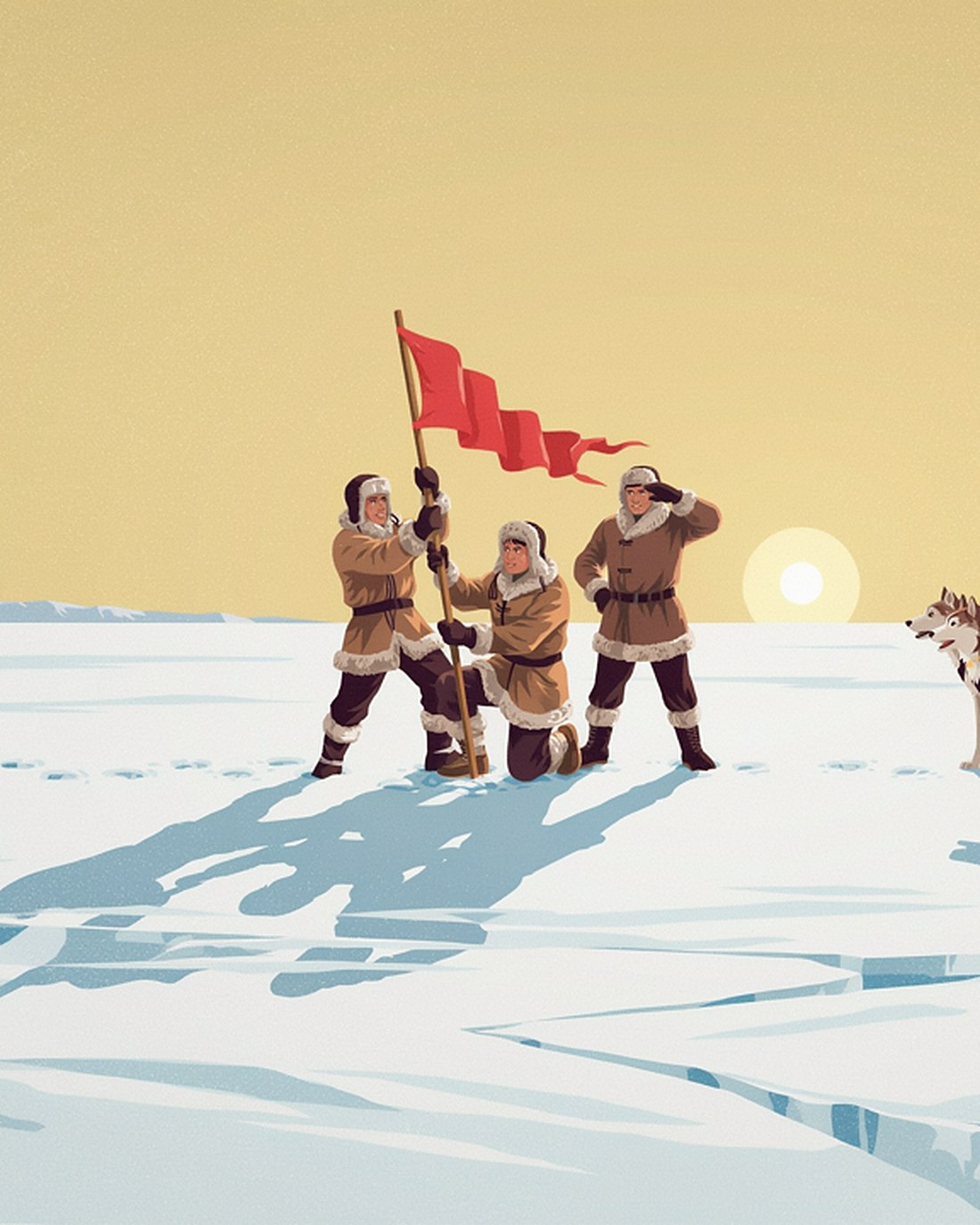
First to the South Pole
Norway bred great polar explorers, and in 1911 Roald Amundsen and his team became the first people ever to reach the South Pole, hauling sledges behind teams of hardy dogs across the ice. Careful planning and real skill on skis carried them there and safely home again. It was one of the great feats of the age of exploration.
Good to know: the South Pole was first reached in 1911Norwegians are hardy, understated and deeply attached to nature, proud of the fjords, of a Viking and seafaring past, and of a modern country that tops the world's happiness and quality-of-life lists. Ask about their favorite cabin or ski trail and the reserve melts away.
No links here, nothing to buy. This part is just to help you travel well.
Sources, and how this guide was checked
Last reviewedAug 2026, 8 of 8 dated items inside their review window
Last actually changedJul 2026see the record →
Not yet individually datedWe date this guide and the fees most likely to move, but the 2 per-place tourist tax rates on this page do not carry a check date yet. They are reviewed with the guide rather than on their own schedule, and putting each of them on one is work in progress.
What the last check foundSources added on first publish, checked July 2026. Confirmed that Norway (outside the EU, its own krone) charges VAT (MVA) of 25% on most things, a reduced 12% on hotel stays and transport and 15% on food, all already in the price, and that non-residents can reclaim VAT on goods over 315 NOK in one store. The big change: Norway passed a visitor's contribution law, up to 3% on overnight stays, that took effect 1 July 2026, but it is a permission slip, not a live charge: a municipality has to apply and be approved before it can collect, and as of August 2026 none is collecting anywhere. Tromso has applied and is targeting 1 January 2027, so the earliest a traveler pays this is 2027.
- Skatteetaten (Norwegian Tax Administration)the 25%, 15% and 12% VAT rates
- ForbesNorway's phased visitor's contribution law, up to 3% on overnight stays, with collection starting municipality by municipality
- Norway country emergency numbers112 police, 113 ambulance and 110 fire
Our own judgmentThe daily cash share, tipping norms, and likely ATM behavior are our own estimate from experience, not an official figure. No Norwegian municipality is collecting the visitor's contribution yet, so this is one to watch rather than budget for; check your specific stay if you travel in 2027 or later.
How we checkHow every guide is researched, checked and dated
More money guides in Europe
If you are also weighing up nearby destinations, each guide covers cards, cash, ATMs and the fees to expect.

Going deeper on Norway
The money questions people ask on the ground.
Short, focused answers to the specific things that catch first-timers out in Norway.
- Taxis in Norway, and checking the priceNorwegian taxis are among the priciest anywhere, and since deregulation their fares vary a lot between companies, so it pays to check before you ride. The train usually wins. Here is how it works.
- Tipping in NorwayNorway is not really a tipping country. Wages are high and service is included, so tipping is not expected. Round up for good service if you like. Here is what you actually owe.
- Do I need cash in Norway, or can I use cards?Short answer: a card for everything, and almost no cash. Norway is nearly cashless like its Nordic neighbors, uses the krone rather than the euro, and is one of Europe's most expensive countries. Here is how to handle it.
- Bringing your dog or cat to Norway.Norway is a destination some US pet owners choose, and it follows the EU pet-entry rules: microchip, rabies in the right order, and an EU health certificate on a 10-day clock. No quarantine, no rabies titer. Norway adds one thing the big EU countries do not: a timed tapeworm treatment for dogs. Here is what that means, and the local parts worth knowing.
- The Norwegian city charge for studded winter tyresNorway is the rare country that charges you to use studded winter tyres rather than banning them. Whether it costs you anything comes down to one question at the rental counter, because studless tyres are exempt and most rentals have them. Here is the fee, and how to tell if it is yours to pay.
- Staying connected in Norway.Norway covers its coast and valleys better than a country this shape has any right to, and then stops sharply above and inland. The two things worth checking before you buy are the mountain passes and Svalbard.
- What does getting sick in Norway cost a visitor?Norway has a strong public health service organised around its own residents, and a geography that makes reaching it the first question in half the country.
This is how Norway stands today.
Money rules move. We can let you know for free if that changes.