True Trip Costs: Germany
before you go
- DoChoose euros, not dollars, at every screen
- DoSay the total. Do not leave it on the table
- CarryCarry cash. Germany is not as card-first as it looks
- ExpectTrinkgeld is modest, and you round rather than calculate
- ExpectYou pay: As a private patient
- ExpectThe real trap: The city Umweltzone sticker
That's the short version. Below: every fee we checked, what it all adds up to, and the traps we help you dodge.
No match. See all guides.
Money in Germany, sorted.
A calm, current plan for the money side of your trip: why a famously efficient country still runs more on cash than you'd guess, and the small per-city tax that varies more than anywhere else in Europe.
What you can refuse to pay here
The room rate isn't the bill, and the sticker rate isn't the price. In Germany, dynamic currency conversion alone can quietly cost a typical traveler about $59 to $157, and it's one of several fees you can refuse.
Money scorecard
Germany
- Ease of payingCash-first
- Cash dependenceCash-heavy
- Daily costPricier
- Getting aroundHonest taxis
- CurrencyStable
Every rating is our own judgment from the Germany guide, not a score.
See the full Germany guideSince April 2026 the EU's Entry/Exit System (EES) has been live at Schengen borders. Instead of a passport stamp you give a quick fingerprint and photo on arrival, and the system then tracks your 90 days automatically. There is no fee, no form and nothing to apply for.
The catch is time, not money: several major airports have run peak queues of two to five hours through the summer, and some countries are using EU-permitted pauses to ease them. Build in a buffer on arrival, especially on a tight connection.
ETIAS, the separate online authorization, is not running and has no launch date. The EU removed its late-2026 target in July 2026 and says it will announce a real date several months ahead, so any site selling you an ETIAS today is selling something that does not exist yet. For now a US passport is all you need.
Full detail, and the official EU pages, on passports and visas.
The three things people ask
Will my card work? Do I need cash? Are ATMs easy?
The quick read for a first trip.
Your card
Works widely, but not everywhere
Visa and Mastercard are accepted at supermarkets, chain restaurants, hotels and most city-center shops, often via contactless. Many independent bakeries, small restaurants, market stalls and some museums are cash only or set a minimum, commonly around 10 to 30 euros.
Check yours →Cash
Keep more than you expect
Germans famously like cash, and you will run into it more than in France, Spain or the UK. Keep 50 to 100 euros for bakeries, beer gardens, markets, festivals and paid restrooms, which often want coins.
How much to bring →ATMs
Plentiful, but mind the network
Sparkasse (red S logo) and the Cash Group (Deutsche Bank, Commerzbank, Postbank) cover cities and most towns well. A foreign card is an "out of network" withdrawal almost everywhere, so expect a fee, sometimes 5 euros or more at a standalone machine. Read the screen before confirming.
See ATMs in Germany →(opens in a new tab)Cash or card
Germany is more cash-loving than its efficient reputation suggests.
A rough feel for everyday spending. Supermarkets, chain stores and hotels take cards easily, contactless included. But traditional bakeries, market stalls, beer gardens, small family restaurants and many museums still prefer cash, or are cash only, and that habit runs deeper here than in most of Western Europe.
See what the trip really costs →Your money plan
Four steps and you're set.
Before you go
- Bring a no-foreign-fee Visa or Mastercard for hotels, supermarkets and chain restaurants, plus a backup card from a different bank.
- Get a no-fee debit card for cash. Charles Schwab refunds ATM fees worldwide; Wise and Revolut are low-fee.
- Amex is accepted far less than Visa or Mastercard in Germany, so do not rely on it as your main card.
At the airport
- Skip the airport exchange counters, the rates are poor.
- Pull euros from a Sparkasse or Cash Group ATM (look for the red S, or Deutsche Bank, Commerzbank, Postbank) and decline "convert to USD."
- Withdraw a larger amount at once, since the out-of-network fee is usually a flat charge per withdrawal, not a percentage.
Day to day
- Card for supermarkets (Rewe, Edeka, Aldi, Lidl), chain restaurants and hotels.
- Cash for bakeries, beer gardens, market stalls, small family-run restaurants and paid public toilets.
- A handy local trick: supermarkets and drugstores like dm and Rossmann will often give you cash back free of charge with a card purchase.
- Always choose euros, never dollars, on every card terminal and ATM screen.
A golden rule
- Always pay in euros, never in dollars. Choosing your home currency (dynamic currency conversion) quietly adds 3 to 8%.
- When a restaurant brings the card reader, state the total you want to pay out loud, including any tip, before they process it. Leaving coins on the table after paying and walking off reads as a mistake, not a tip.
Staying connected
Will my phone work here? And what will it cost?
Yes, with one well-known catch. Deutsche Telekom has the strongest and most consistent nationwide coverage, including small towns, the Alps and the Black Forest, with Vodafone a close second, especially in the western half of the country. O2 has closed much of its old rural gap but still trails the other two outside cities. The famous weak point is German long-distance trains: ICE lines run through long tunnels and rural stretches with patchy signal, even though free onboard wifi (WIFIonICE) helps fill the gaps. Pick a Telekom-backed eSIM if your trip includes rural regions or a lot of train travel. The cost is where people get caught out, and on most US plans it lands in one of two buckets.
Your plan may already include it
Often, do nothing
Some US plans include slow data abroad at no extra cost. If that is you, the honest move is to leave it alone.
we earn nothing
Or it charges quietly, after the fact
The bill lands later
On pay-per-use plans the cost runs in the background while you travel, and the charge can show up weeks after you are home. Forgetting to switch off data roaming is the classic one. For a week or more, an eSIM is usually cheaper and keeps you in control.
Check what your own carrier charges before the trip, not after.
If an eSIM is the cheaper call, Nomad covers Germany.
Get your Nomad eSIM→(opens in a new tab)we may earn a commissionMedical cover
The one cost with no price tag.
This is the one cost with no price tag, and it can be the largest on the page. Most US health plans and Medicare cover little or nothing abroad, so a serious illness or evacuation is paid up front. How medical costs work abroad, country by country →
First, you may not need to buy anything.
A cheap trip close to home, or a premium card that already includes emergency medical and evacuation, may mean you need nothing here. Check your card first. Saying that costs us the commission, and it is still the right call.
How much cover matters here
Here, good hospitals are easy to reach and the care is high quality, so for a healthy traveler this leans more toward your call than a must.
If you do want cover, this is what it is for: the evacuation and the up-front hospital bill, the part no card limit is meant to absorb.
Enough for most trips
Faye, or a comparable whole-trip policy
Bundles trip protection with emergency medical, which is enough cover for most travelers on a typical trip.
The deeper end
A dedicated travel-medical plan built for serious care and evacuation abroad
Stronger on medical care and evacuation, for a remote or higher-risk trip where that is the real exposure.
If it happens
Call it first, then call your insurer's 24/7 assistance line, which is what confirms payment and arranges an evacuation. 112 covers ambulance and fire, and it is free from any phone.
TrueTripCosts explains the gap and points to options. It does not set your coverage amounts or act as your insurance advisor, and every policy carries its own exclusions, so read them before you buy. Emergency number checked Jul 2026. Confirm the current number before you travel, as local lines can change.
Renting a car
Where the rental desk makes its money.
Renting is often the best way to see Germany, and the cover is where the counter earns its margin. The rental comes with basic collision cover, but it leaves you owing the excess, the first slice of any damage or theft bill, often several hundred to a couple of thousand dollars, held on your card until the car is back. The desk will offer to erase that excess. It is a real product, just priced at the counter for far more than the same cover costs if you arrange it before you go.
You may not need to buy anything at all. Some US credit cards include rental collision cover when you pay with the card and decline the counter's version, so check what your own card covers on rentals before you add anything extra. We cannot read your policy for you, and flagging this can cost us the sale below, but it is the honest first step.
If your card does not cover it, or you would rather have cover built for this, a standalone policy bought ahead is the cheaper way to handle it. It covers the damage and theft the rental leaves you liable for, often including parts the counter cover leaves out like tires, glass and the underbody, and mechanical faults stay the rental company's problem. RentalCover covers rentals in Germany. Read what the policy includes before you buy.
Cover your rental with RentalCover→(opens in a new tab)we may earn a commissionCurrency basics
The euro, in plain terms.
Quick conversion
About 1.14 dollars to 1 euro in mid-2026, so a 10 euro meal is roughly $11.40, and 100 euros is about $114.
Notes and coins
Notes run 5, 10, 20, 50, 100, 200 and 500 euros, though many small shops dislike anything above 50. Coins go from 1 cent to 2 euros, and Germans use them freely, exact change is expected and appreciated.
The Girocard isn't yours
Most Germans pay with a Girocard, a domestic debit network that does not work for foreign visitors. Your Visa or Mastercard is a separate, sometimes pricier transaction for the merchant, which is part of why some small businesses skip cards altogether.
Tipping is light
Round up the bill rather than calculating a percentage. There is no US-style 18 to 20% expectation here, see the tipping section below.
Real exchange rate
What your money is really worth here.
This is the mid-market rate, the one the banks trade at and the yardstick every other rate is measured against. Your card lands a little below it, and if a screen ever offers to bill you in dollars, that is worse again. So this is the number to expect, and how you spot a bad one.
1 US dollar is about 0.88 EUR
Taxes and refunds
City bed taxes, and money back on shopping.
Germany has no single national tourist tax. Instead, individual cities charge their own bed tax, added to your hotel bill on leisure stays. Berlin charges 7.5% of the room rate, Cologne charges 5%, Hamburg uses a sliding scale that runs from about 60 cents to roughly 5 euros depending on the room price, and Frankfurt charges a flat 2 euros per person per night. Munich and the rest of Bavaria charge nothing. Most smaller towns charge nothing. Separately, if you shop, non-EU visitors can reclaim part of Germany's 19% VAT (a reduced 7% applies to books, food and hotel stays). Ask for a tax-free form at the till, keep the goods unused, and get it stamped by customs when you leave the EU. After the refund operator's fee, expect back roughly 10 to 14%, not the full 19%.
That covers what a government adds. What you can still change is what the room itself costs, and that comes down to the booking moment: see how to pay less on hotels.
Tourist tax, checked by area
What we have re-checked against the source.
Berlin
7.5% of the room
Munich
0% of the room
Before you book: passports, the six-month rule and whether you need a visa. Not a US citizen, or connecting through Europe? The rules can differ, and even a layover can need its own visa. See our passports and visas guide →
Watch out for
The small traps that catch first-timers.
Tipping
Round up, don't calculate a percentage.
Tipping in Germany is light and works differently than in the US. At a restaurant or bar, round up the bill, on a 23 euro tab, say "25, bitte" when you pay, rather than working out 18 to 20%. For a larger meal, an extra 5% on top is generous. Taxi drivers get the fare rounded up. Hotel porters or housekeeping can be left 1 to 2 euros, appreciated but not expected. Fast food counters, bakeries, supermarkets and self-service cafes get no tip at all. The key habit to know: state the total you want to pay, tip included, before the card reader is run or change is handed back, since Germans settle the tip in the moment rather than leaving cash behind afterward.
Common questions
Quick answers.
Do I need cash in Germany?
Yes, more than you would expect from a country with this reputation for efficiency. Supermarkets, chain restaurants and hotels take cards easily, but bakeries, market stalls, beer gardens, small family restaurants and paid restrooms often want cash. Keep 50 to 100 euros on hand and top up at a Sparkasse or Cash Group ATM.
What is the best ATM to use in Germany?
Look for Sparkasse (red S logo), or the Cash Group network: Deutsche Bank, Commerzbank and Postbank. A foreign card is treated as out-of-network almost everywhere, so a fee is likely, sometimes 5 euros or more at independent machines. Read the on-screen fee and always decline the dollar conversion.
Should I pay in euros or dollars in Germany?
Always euros. If a card terminal or ATM offers to charge you in dollars, decline. That dynamic currency conversion adds roughly 3 to 8%, and your own bank's rate is better.
Do you tip in Germany?
Lightly, and by rounding up rather than calculating a percentage. Round a restaurant bill up to the next few euros, round up a taxi fare, and leave 1 to 2 euros for hotel porters or housekeeping. State your total, tip included, before the card is run, since leaving cash behind after paying is not how it is done here.
What is Germany's tourist tax?
There is no single national tax. Individual cities charge their own bed tax on leisure stays: Berlin is 7.5% of the room rate, Cologne is 5%, Hamburg slides from about 60 cents to roughly 5 euros with the room price, and Frankfurt charges a flat 2 euros per person a night. Munich and the rest of Bavaria charge nothing, and so do most smaller towns.
How much cash should I bring for a week in Germany?
For two mid-range travelers, very roughly 300 to 400 euros (about $340 to $450) in day-to-day cash across a week, beyond your hotel, pulled in a couple of ATM visits. Cards cover supermarkets, chains and hotels; the cash covers bakeries, markets, beer gardens and the odd cash-only restaurant.
What will your trip really cost?
Name where you are going. We will show you what nobody quotes.
For instance, right now
 ColombiaHotels charge 19% IVA, but as a foreign tourist you are exempt, and about half try to add it anyway.
 JapanThe world's most high-tech country is still cash-first, and most bank ATMs refuse US cards.
 CzechiaCzech law gives you three hours to cancel a bad currency exchange and get your money back, on amounts up to 1,000 EUR.
 GreeceGreece's climate fee charges an Airbnb-style rental about 8 EUR a night against 2 for a budget hotel.
 El SalvadorThe country that made Bitcoin legal tender?
 CambodiaThe US dollar is Cambodia's everyday currency, and ATMs hand you crisp $100 bills nobody can break.
 TurkeyUS citizens need no visa and no e-visa for Turkey, scrapped in 2023.
 ItalyMost Italian restaurants add a coperto, a per-person cover charge of commonly 2 to 3 euros, before you have ordered anything.
The one thing most people get wrong about Germany
Guide checked Aug 2026You expect Europe's efficiency capital to be the easiest place in the region to tap a card.
Germany is one of its most cash-loving countries instead. Bakeries, market stalls, small restaurants and traditional shops often prefer cash or take nothing else, and a counter with a card reader on it can still be cash-only under 20 or 30 euros.
What to doCarry 50 to 100 euros, ask before you order, and pull it from a Sparkasse or Cash Group machine rather than a standalone one.
Everything we checked
What Germany actually charges you, in one place.
5 things we verified for Germany, grouped by the kind of thing they are. The numbers are below; this is the shape of them.
fees nobody quotes
money you keep
traps to dodge
timing
The number
What you'll really spend in Germany.
Your flights if you want them counted, your room, your on-the-ground spending, the two fees most US cards add without telling you, and Germany's tourist tax. One number, nothing waiting on the statement. No bank to pick, no sign-up, nothing saved.
Optional. Enter your round trip fare per traveler to fold flights into the total.
Total trip realistically somewhere between $0 and $0.
Getting thereflights, and what the border costs
Watch out for
Prepare ahead
These carry no dollar figure by design: each is named because it is real, and there is nothing honest to price here.
Departure tax is not a separate line here. Where a country charges one it is collected inside your airfare, so it is already in the flight figure, and adding it again would count it twice.
On the ground detailyour room, your days, and how much of it is cash
Whether at an ATM or a card terminal in a shop or restaurant, always choose to be charged in the local currency, not dollars. Paying in dollars (called dynamic currency conversion) lets the machine set its own, worse, exchange rate on top of any fee.
Fees nobody quotes youthe part that lands on the statement weeks later
What you'll pay
What you can refuse, and what the lookalike sites charge, is set out under Costs nobody tells you about below, with the two figures kept apart from these ones.
Costs nobody tells you about
Most of it you can keep. Here is every dollar of it.
Every one of them, and how to avoid it4 items
Two of these are money you hand over by default; the rest is money you keep by knowing. Each is its own line.
What you'll pay unless you act
- Your own bank's foreign feeswhat the fees above come toMost US cards add a percentage on what you buy and on the cash you pull, plus a few dollars per ATM withdrawal. Nothing about that is a cost of the trip; it is a cost of the card you happened to bring.A no-foreign-fee card takes both fee lines above to zero.The cards that do not charge it
- Paying in dollars at the terminalabout 3 to 8%on what you cardDynamic currency conversion lets the machine set its own rate on top of any fee, and it runs about 3 to 8 percent on whatever you put on the card. It is the single easiest charge on this page to refuse, and it costs nothing to say no.Choose EUR every time, at a till and at an ATM.How to decline it
- The airport or hotel exchange deskExchange counters make their money on the spread rather than on a stated fee, which is why we publish no percentage for it: it moves by counter, by hour and by note. The rule is what is reliable, not the number.Withdraw from a bank ATM instead, and never change cash at the airport.Getting cash here
What we'll help you dodge
- The sales tax you can claim backGermany refunds sales tax to visitors on qualifying shopping, with the rate and any minimum spend set out in this guide. Most travelers never claim it, and we put no dollar figure on it, because it depends on what you buy.Ask for the tax-free form at the till, keep the goods unused, and claim on the way out.The rate and the minimum spend
Where these numbers come fromevery assumption, and its limitssources
These are the assumptions behind the number. Change the room price, nights, travelers, or travel style above, and every line here moves with them.
- Hotel
- Daily spending
- Flights
- Cash vs card
- ATM withdrawals
- Foreign fee
- The range
- Tourist tax
Rough guide, not a quote. The percentage here is a blended stand-in for a typical US card's foreign fee, not your exact rate. The real number moves with the card you carry: one no-foreign-fee card can cover both sides, while a plain rewards credit card only removes the fee on what you buy, and cash still costs a little unless that card also waives ATM and foreign-cash fees. A debit card, or accepting the "pay in dollars" (dynamic currency conversion) offer at a till or ATM, can push it higher. Rates checked Jun 2026 and rounded.
How we check and date every figureGermany, TTC-ed
truetripcosts.comWhat this assumes
Tips are already inside the daily spending figure, never added on top.
Not sure which card to bring? See my pick for Germany.
Already carry a card with no foreign transaction fee? Then you are set for Germany, and can skip this. There is nothing to buy.
If you are getting a card for Germany, this is the pairing I would pick: a no-foreign-fee credit card for spending, and a fee-free ATM debit card for cash. We earn nothing on these today. Always confirm the current fee with the issuer before you apply. Checked Jun 2026.
Capital One charges no foreign transaction fee on any of its cards.
No foreign transaction fee
Fee-free ATM cash worldwide

Want one account that holds and spends in the local currency? A different job from the three above, and the one I reach for abroad. It is free to open; you can create a virtual card in the app and add it to your phone wallet in minutes, without waiting for the physical card; and you can convert US dollars into the local currency inside the account before you travel, then spend from that balance. Wise uses the mid-market rate plus a small conversion fee (around 0.4% and up), with no flat foreign fee.
The three picks above pay us nothing, and their tags say so. Wise is the only option here that can earn us a commission, and its tag says that too. Paid or not, the pick is still the pick.
Before you fly
At least 14 countries now make you file a form online before you fly. 13 of them are free. One really does charge, and it is not the one you would guess.
Germany does not ask for one, so this is not a job for this trip. It is worth knowing anyway, because the list keeps growing and the pattern is always the same: the filing is new, obscure and mandatory, and the paid lookalikes outrank the government site because the real ones do not buy ads.
See every form we can source, with the official address for eachWhen to go
Cheaper and busier months in Germany.
The month you pick moves the budget as much as the country does. Here is the shape of Germany's year, with no price attached to it, because an honest one does not exist.
- Busy and pricey
- In between
- Cheaper and quieter
- Cheaper and quieter
- Jan to Feb, and Nov before the markets open
- What drives the peak
- Summer holidays, Oktoberfest in Munich from late Sep to early Oct, Christmas markets from late Nov, and the big trade fairs, which fill one city at a time
Travelers, not touristsA little German goes a long way
A little German goes a long way
Germans speak German, and they value courtesy and directness in equal measure. A clear Guten Tag and a story or two mark you as a guest rather than a tourist.
Say a few words
Tip: Greet people with a clear Guten Tag and expect friendly directness in return. A lovely afternoon custom is Kaffee und Kuchen, coffee and cake, a proper pause to sit down together with something sweet. Germans also treasure their forests and long country walks.
Know a story
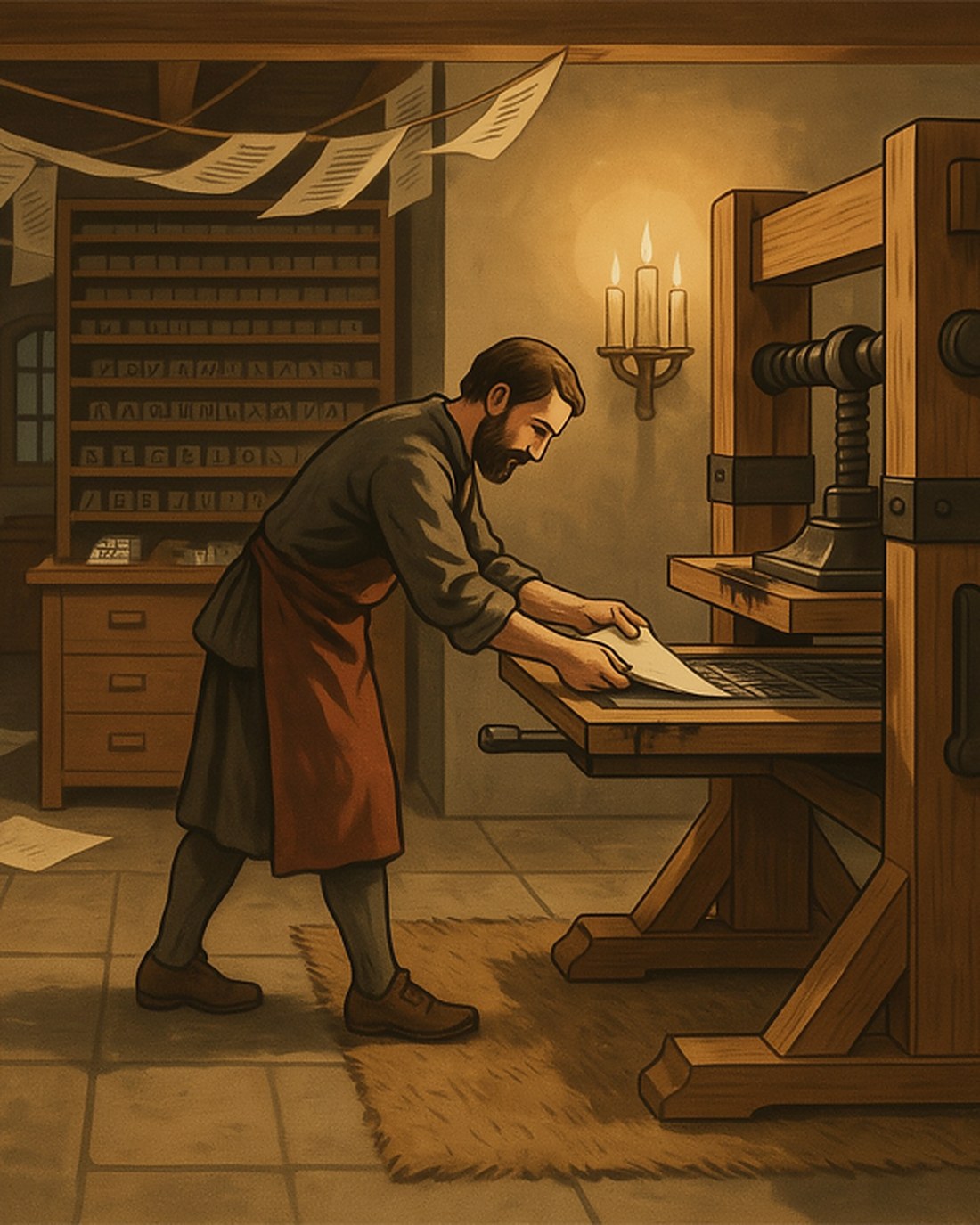
The invention that changed everything
Around 1450 in the city of Mainz, Johannes Gutenberg built Europe's first printing press with movable metal type, and suddenly books could be made quickly and cheaply for the first time. Knowledge spread as never before. Few inventions have done more to shape the modern world.
Good to know: the printing press dates from around 1450
Music for all humanity
Germany has given the world some of its greatest composers, and none is more beloved than Ludwig van Beethoven. He wrote symphonies of thunder and tenderness, and composed some of his greatest music, including the famous Ode to Joy, after he had gone almost completely deaf. His work still moves audiences everywhere.
Good to know: he composed while going deaf
A tale of four friends
The Brothers Grimm gathered Germany's old folk tales, Cinderella, Hansel and Gretel, Rapunzel, and preserved them for the world. In one favorite, the Bremen Town Musicians, four aging animals set off together for a better life and cleverly scare off a band of robbers by standing on one another's backs. It is a story about finding your place and your friends.
Say it: the Bremen Town MusiciansGermans are proud of a deep heritage of thinkers, poets and composers, of Kaffee und Kuchen and Christmas markets, and of a countryside of dark forests and fairy-tale castles. Show genuine interest and a little enthusiasm, and their warmth and dry humor come right out.
No links here, nothing to buy. This part is just to help you travel well.
Sources, and how this guide was checked
Last reviewedAug 2026, 10 of 10 dated items inside their review window
Last actually changedJul 2026see the record →
Not yet individually datedWe date this guide and the fees most likely to move, but the 4 per-place tourist tax rates on this page do not carry a check date yet. They are reviewed with the guide rather than on their own schedule, and putting each of them on one is work in progress.
What the last check foundSources added, and a correction. We removed Munich from the list of cities charging a bed tax: Bavaria banned local hotel taxes and its Constitutional Court upheld that ban in 2025, so Munich does not levy one. The other city rates are confirmed (Berlin 7.5%, Cologne 5%, Hamburg on a sliding scale, Frankfurt 2 euros a night), as is the 19% VAT refund for non-EU visitors, which starts at 50.01 euros spent in one store.
- German Customs (Zoll)VAT-free shopping for non-EU visitors, the 50.01 euro minimum and how to claim the refund
Our own judgmentThe daily cash share, tipping norms, and likely ATM behavior are our own estimate from experience, not an official figure.
How we checkHow every guide is researched, checked and dated
More money guides in Europe
If you are also weighing up nearby destinations, each guide covers cards, cash, ATMs and the fees to expect.



Going deeper on Germany
The money questions people ask on the ground.
Short, focused answers to the specific things that catch first-timers out in Germany.
- Taxis in Germany, and the FreeNow appGerman taxis are metered, regulated and honest, so there are no games to watch for. Install FreeNow, know that the S-Bahn usually beats a taxi from the airport, and round up to tip. Here is how it works.
- Germany's bed tax, city by city.Germany has no national tourist tax. Each city decides for itself, and more than 40 of them now charge one, which is why the answer changes when you change town. The big tourist cities take a percentage of the room or a small flat fee, and Munich and the rest of Bavaria charge nothing at all.
- Do I need cash in Germany, or can I use cards?Short answer: more cash than the rest of Western Europe. Germany is card-friendly in larger shops and hotels, but a surprising number of everyday places take only cash, so carry euros. Here is how to handle it.
- Tipping in GermanyGermany has a real but modest tipping custom called Trinkgeld, and one habit that surprises visitors: you tell the server the total you want to pay, rather than leaving coins on the table. Here is how it works.
- Bringing your dog or cat to Germany.Germany is one of the most common EU destinations for US pet owners, and there is nothing Germany-specific to fear at the border. It runs on the single EU pet-entry process: microchip, rabies in the right order, and an EU health certificate on a 10-day clock. No quarantine, no rabies titer. Here is what that means for Germany, and the local parts worth knowing.
- Driving in Germany: tolls, stickers and finesGermany is one of the cheapest countries in Europe to drive through, because there is no motorway toll for cars at all. The cost that catches visitors is much smaller and much easier to trip over: a windscreen sticker for city centers.
- Staying connected in Germany.German mobile coverage is strong, including in small towns and much of the countryside, so the real decision is how you pay for data rather than whether you will have any. The one place it reliably disappoints is the long-distance train.
- Do you need a rail pass in Germany?Germany is the one country in this part of Europe where a pass is cheap to actually use, which makes this a closer call than France or Spain. It still usually loses to a fare you booked early, and there is a separate ticket that confuses everybody.
- What does getting sick in Germany cost a visitor?Germany has one of the densest, most capable hospital networks in Europe, and being uninsured there is a billing problem rather than an access problem.
This is how Germany stands today.
Money rules move. We can let you know for free if that changes.