
True Trip Costs: Brazil
before you go
- DoSort the e-visa on the official VFS portal early
- DoOn a card: Choose reais (mind the IOF)
- CarryBring one no-foreign-fee card for everything else
- Don'tPix runs the country but needs a Brazilian tax ID, so it is not for you
- ExpectTipping: A 10% service charge, usually added
That's the short version. Below: every fee we checked, what it all adds up to, and the traps we help you dodge.
No match. See all guides.
Money in Brazil, sorted.
A calm, current plan for the money side of your trip: why your card covers almost everything, what Pix is and whether you need it, the cash worth carrying, and the e-visa you have to sort before you fly.
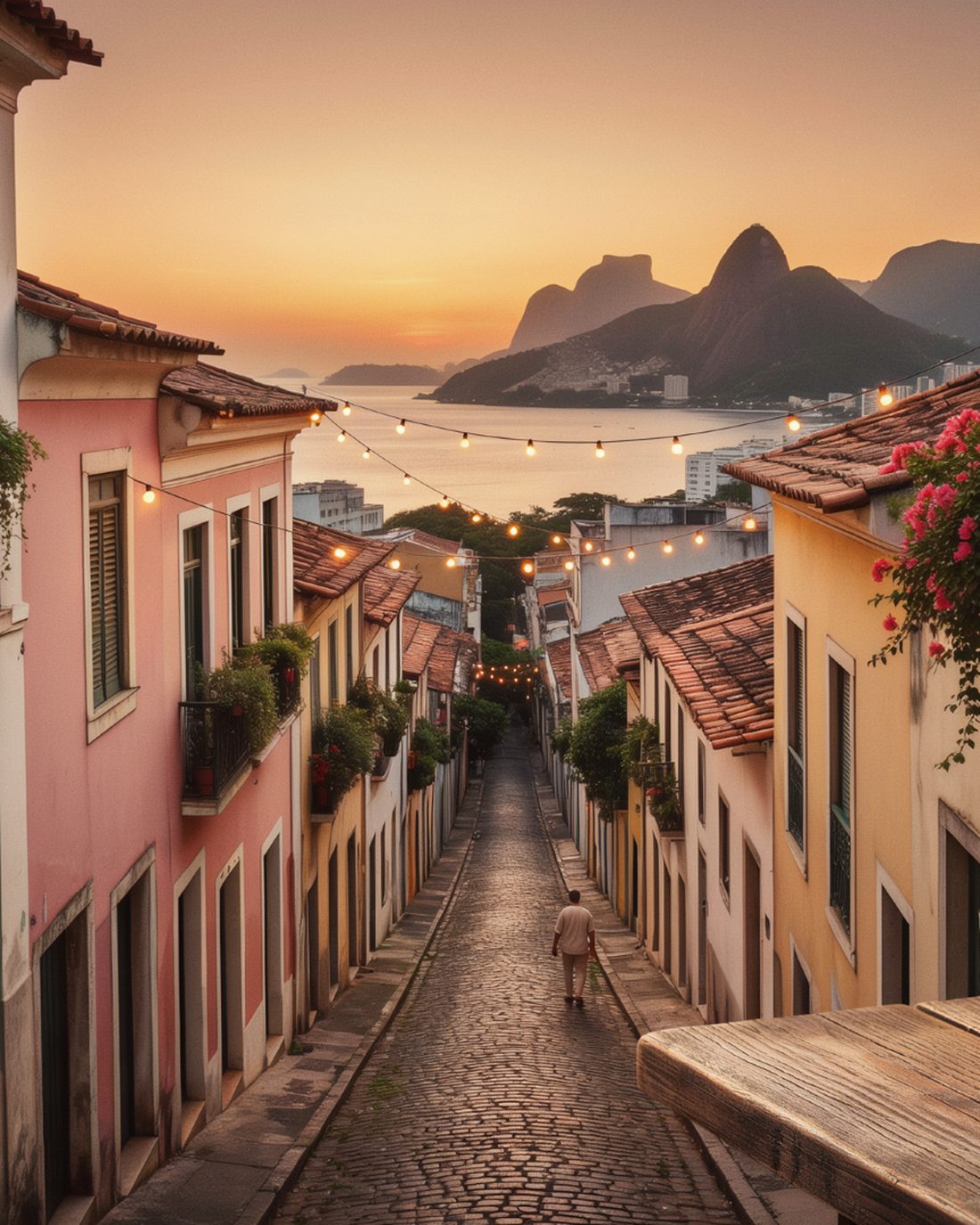
What you can refuse to pay here
The room rate isn't the bill, and the sticker rate isn't the price. In Brazil, dynamic currency conversion alone can quietly cost a typical traveler about $44 to $118, and it's one of several fees you can refuse.
Money scorecard
Brazil
- Ease of payingEasy
- Cash dependenceLight cash use
- Daily costPricier
- Getting aroundSome caution
- CurrencyStable
Every rating is our own judgment from the Brazil guide, not a score.
See the full Brazil guideA national tax reform that began in January 2026 is nudging service prices (hotels, car hire, tours) up by a few points, and some coastal spots such as Angra dos Reis and Ilha Grande have added visitor fees of up to 95 reais. Budget a little extra and check for a local fee at beach destinations.
The three things people ask
Will my card work? Do I need cash? Are ATMs easy?
The quick read for a first trip.
Your card
Works almost everywhere
Visa and Mastercard are near-universal, including small shops, markets and beach bars, and contactless plus Apple and Google Pay are standard. Amex is accepted in bigger cities but not consistently. Bring a no-foreign-fee card and you are set for most of the trip.
Check yours →Cash
A small backup
You need far less than you would expect. Keep a modest reserve of reais (say 150 to 300) for beach vendors, tiny towns, tips and the occasional Pix-only stall, and top up only as needed. US dollars are not spent directly; exchange them at a casa de cambio if you bring any.
How much to bring →ATMs
Low limits, one to avoid
Use Banco do Brasil, Bradesco, Santander or a Banco24Horas machine inside a bank or mall. Per-withdrawal limits are low, often around 800 to 1,000 reais, and lower at night. Bradesco has been adding a steep conversion markup it shows before you confirm, so read the screen and cancel if you see it.
See ATMs in Brazil →(opens in a new tab)Cash or card
Cards and Pix run the country; cash is a small backup.
A rough feel for everyday spending. Cards and contactless cover almost everything, from restaurants and shops to taxis and hotels. Cash is a small reserve for beach vendors, tiny towns, tips and the odd Pix-only stall, and it matters a bit more once you leave the cities for remote spots.
See what the trip really costs →Your money plan
Four steps and you're set.
Before you go
- Get your e-visa. US travelers need one, applied for on the official VFS portal. It runs roughly 80 to 100 dollars, is valid for years and multiple entries, and airlines will not let you board without it, so apply a month or two ahead.
- Bring a no-foreign-fee Visa or Mastercard for tap-to-pay, plus a backup from a different bank.
- Add a fee-free ATM debit card for the little cash you will need. Charles Schwab refunds ATM fees worldwide; Wise and Revolut are low-fee.
- Ask your bank to raise your daily ATM limit, since Brazil's per-withdrawal caps are low.
At the airport
- Skip the airport exchange counters; you rarely need cash on arrival since cards work everywhere.
- If you want a little cash, pull reais from a Banco do Brasil, Santander or Banco24Horas machine and decline "convert to dollars."
- Set up an eSIM before landing. A local SIM needs a Brazilian tax ID, so an eSIM is the easy route for maps and ride apps.
Day to day
- Tap your card for almost everything, from restaurants to taxis to beach bars.
- Keep a little cash for beach vendors, small towns, tips and Pix-only stalls.
- Pix is optional for tourists. It is everywhere, but cards cover you; only some small vendors are Pix-only, and cash handles those.
- Always choose reais, never dollars, on every card terminal and ATM.
A golden rule
- Always pay in reais, never in dollars. Choosing your home currency (dynamic currency conversion) quietly adds about 3 to 6% on card terminals and ATMs.
- And do not forget: no e-visa, no boarding. It is the one thing that can end a Brazil trip before it starts.
Staying connected
Will my phone work here? And what will it cost?
Strong across the cities and tourist areas. Vivo has the widest reach, with Claro and TIM close behind, and 4G is strong with growing 5G in Rio, Sao Paulo, Salvador and the main beach hubs. Signal thins in the Amazon and the remote interior. One catch: buying a local prepaid SIM requires a Brazilian tax ID (CPF), so an eSIM from Airalo, Nomad or Holafly is the easier route for visitors. You do not need mobile data to pay by card, but you will want it for maps, ride apps and any Pix payment. The cost is where people get caught out, and on most US plans it lands in one of two buckets.
Your plan may already include it
Often, do nothing
Some US plans include slow data abroad at no extra cost. If that is you, the honest move is to leave it alone.
we earn nothing
Or it charges quietly, after the fact
The bill lands later
On pay-per-use plans the cost runs in the background while you travel, and the charge can show up weeks after you are home. Forgetting to switch off data roaming is the classic one. For a week or more, an eSIM is usually cheaper and keeps you in control.
Check what your own carrier charges before the trip, not after.
If an eSIM is the cheaper call, Nomad covers Brazil.
Get your Nomad eSIM→(opens in a new tab)we may earn a commissionMedical cover
The one cost with no price tag.
This is the one cost with no price tag, and it can be the largest on the page. Most US health plans and Medicare cover little or nothing abroad, so a serious illness or evacuation is paid up front. How medical costs work abroad, country by country →
First, you may not need to buy anything.
A cheap trip close to home, or a premium card that already includes emergency medical and evacuation, may mean you need nothing here. Check your card first. Saying that costs us the commission, and it is still the right call.
How much cover matters here
Care in the main cities is good, but costs add up and reaching top care from a remote spot takes time, so it is worth a real look for a trip here.
If you do want cover, this is what it is for: the evacuation and the up-front hospital bill, the part no card limit is meant to absorb.
Enough for most trips
Faye, or a comparable whole-trip policy
Bundles trip protection with emergency medical, which is enough cover for most travelers on a typical trip.
The deeper end
A dedicated travel-medical plan built for serious care and evacuation abroad
Stronger on medical care and evacuation, for a remote or higher-risk trip where that is the real exposure.
If it happens
Call it first, then call your insurer's 24/7 assistance line, which is what confirms payment and arranges an evacuation. 192 is the SAMU ambulance line, 190 reaches the police and 193 the fire brigade. Operators may not speak English, so have your address written in Portuguese to read out.
TrueTripCosts explains the gap and points to options. It does not set your coverage amounts or act as your insurance advisor, and every policy carries its own exclusions, so read them before you buy. Emergency number checked Jul 2026. Confirm the current number before you travel, as local lines can change.
Renting a car
Where the rental desk makes its money.
Renting is often the best way to see Brazil, and the cover is where the counter earns its margin. The rental comes with basic collision cover, but it leaves you owing the excess, the first slice of any damage or theft bill, often several hundred to a couple of thousand dollars, held on your card until the car is back. The desk will offer to erase that excess. It is a real product, just priced at the counter for far more than the same cover costs if you arrange it before you go.
You may not need to buy anything at all. Some US credit cards include rental collision cover when you pay with the card and decline the counter's version, so check what your own card covers on rentals before you add anything extra. We cannot read your policy for you, and flagging this can cost us the sale below, but it is the honest first step.
If your card does not cover it, or you would rather have cover built for this, a standalone policy bought ahead is the cheaper way to handle it. It covers the damage and theft the rental leaves you liable for, often including parts the counter cover leaves out like tires, glass and the underbody, and mechanical faults stay the rental company's problem. RentalCover covers rentals in Brazil. Read what the policy includes before you buy.
Cover your rental with RentalCover→(opens in a new tab)we may earn a commissionCurrency basics
The real, in plain terms.
Quick conversion
At about 5.2 reais (R$) to the dollar in mid-2026, 10 reais is roughly 2 dollars, 50 about 10, and 100 about 19. To ballpark a price fast, halve the reais and knock off a bit. Notes run 2, 5, 10, 20, 50, 100 and 200 reais.
What Pix is, and if you need it
Pix is Brazil's instant QR-code payment system and it is everywhere, but using it directly needs a Brazilian tax ID and bank account. As a tourist you can skip it: cards cover a normal trip, and cash handles the few Pix-only beach stalls. Workarounds exist (a free tax ID plus Wise, or tourist Pix apps) but they are optional.
Cards are king
Visa and Mastercard work almost everywhere, including small shops and beach bars, with contactless and mobile wallets standard. Amex is patchy outside big cities. Card machines can struggle on weak signal in remote spots, so carry a little cash there.
Tipping is light
A 10% service charge (taxa de servico) is usually already on restaurant bills, and that is the tip. Nothing extra is expected, and outside restaurants (taxis, tours) tipping is not the norm. See the tipping section below.
Real exchange rate
What your money is really worth here.
This is the mid-market rate, the one the banks trade at and the yardstick every other rate is measured against. Your card lands a little below it, and if a screen ever offers to bill you in dollars, that is worse again. So this is the number to expect, and how you spot a bad one.
1 US dollar is about 5.1 BRL
Entry, taxes and fees
The e-visa you need, and the 2026 cost changes.
The big one is entry: US travelers now need an e-visa for Brazil, applied for on the official VFS portal (brazil.vfsevisa.com). It costs roughly 80 to 100 dollars, is valid for years with multiple entries, and airlines will not board you without it, so apply a month or two before you fly and confirm the current fee on the official site. On taxes, Brazil has no tourist VAT-refund scheme, so there is nothing to reclaim on shopping. A 2026 tax reform has nudged the price of hotels, car hire and tours up by a few points, and some coastal spots such as Angra dos Reis and Ilha Grande have introduced visitor fees of up to 95 reais, with a handful of cities weighing hotel bed taxes. There is no separate departure tax to pay at the airport; it is built into your ticket.
That covers what a government adds. What you can still change is what the room itself costs, and that comes down to the booking moment: see how to pay less on hotels.
Fees and taxes to double-check
The numbers most likely to change.
These are the fees and taxes that move on political timelines, so we track each one on its own. Every line shows the amount, whether it is in effect yet, the date we last checked it, and a primary source where a clean one exists.
Brazil visitor e-visa (US citizens)
about 81 dollars, on the official VFS portal before boarding
In a hurry? A private service can prepare and file this visa for a fee on top of the official cost above, which stays the cheaper route.
File it faster with RushMyTravelVisa→(opens in a new tab)we may earn a commissionBefore you book: passports, the six-month rule and whether you need a visa. Not a US citizen, or connecting through Europe? The rules can differ, and even a layover can need its own visa. See our passports and visas guide →
Watch out for
The small traps that catch first-timers.
Tipping
Light, and usually already on the bill.
Tipping in Brazil is refreshingly low-key. Sit-down restaurants almost always add a 10% service charge (taxa de servico, often called "os dez por cento") to the bill, and that counts as the tip, so there is no need to add more on top. It is technically optional and you can ask for it to be removed if service was poor, but most people simply leave it. Outside restaurants, tipping is not really expected: rounding up a taxi fare is a kind gesture, not an obligation, and tour guides or drivers appreciate a little cash for a great day but do not rely on it. If you want to reward exceptional service, a small cash tip in reais is the surest way to reach the person.
Common questions
Quick answers.
Do I need cash in Brazil?
Not much. Brazil is one of the most cashless countries anywhere, and cards with contactless work almost everywhere, including small shops and beach bars. Keep a small reserve of reais (150 to 300) for beach vendors, tiny towns, tips and the occasional Pix-only stall, and top up from an ATM only as needed.
Do I need Pix as a tourist in Brazil?
No. Pix is Brazil's instant payment system and it is everywhere, but using it directly requires a Brazilian tax ID (CPF) and bank account. Cards cover a normal tourist trip, and a little cash handles the few vendors that are Pix-only. There are workarounds (a free CPF plus Wise, or tourist Pix apps), but they are optional, not necessary.
Do US citizens need a visa for Brazil?
Yes. As of 2025, US travelers need an e-visa, applied for in advance on the official VFS portal. It costs roughly 80 to 100 dollars, is valid for years with multiple entries, and airlines will not let you board without it, so apply a month or two before you travel and confirm the current fee on the official site.
Should I pay in reais or dollars in Brazil?
Always reais. If a card terminal or ATM offers to charge you in dollars, decline; that dynamic currency conversion adds a few percent. US dollars are not spent directly in shops; exchange any you bring at a casa de cambio.
What is the best ATM to use in Brazil?
Use Banco do Brasil, Santander or a Banco24Horas machine inside a bank branch or mall. Withdrawal limits for foreign cards are low, often 800 to 1,000 reais and lower at night, so you may need more than one withdrawal. Avoid Bradesco's steep conversion markup, always choose reais, and cover the keypad, since card cloning is common.
How much cash should I bring for a week in Brazil?
Very little. For two mid-range travelers, roughly 500 to 800 reais (about 100 to 155 dollars) of cash across a week is plenty beyond your card spending, since cards and contactless cover almost everything. The cash is for beach vendors, tips, small towns and any Pix-only stalls.
What will your trip really cost?
Name where you are going. We will show you what nobody quotes.
For instance, right now
 ColombiaHotels charge 19% IVA, but as a foreign tourist you are exempt, and about half try to add it anyway.
 JapanThe world's most high-tech country is still cash-first, and most bank ATMs refuse US cards.
 CzechiaCzech law gives you three hours to cancel a bad currency exchange and get your money back, on amounts up to 1,000 EUR.
 GreeceGreece's climate fee charges an Airbnb-style rental about 8 EUR a night against 2 for a budget hotel.
 El SalvadorThe country that made Bitcoin legal tender?
 CambodiaThe US dollar is Cambodia's everyday currency, and ATMs hand you crisp $100 bills nobody can break.
 TurkeyUS citizens need no visa and no e-visa for Turkey, scrapped in 2023.
 ItalyMost Italian restaurants add a coperto, a per-person cover charge of commonly 2 to 3 euros, before you have ordered anything.
The one thing most people get wrong about Brazil
Guide checked Jul 2026You picture Brazil as a cash-and-caution trip and plan the hard part for when you arrive.
Brazil is more cashless than most of Europe, and you can tap a card at a beach bar. The hard part happens before you leave home: a US visitor needs an e-visa at about 81 dollars, airlines are fined for boarding you without one, and it can take up to ten working days.
What to doSort the e-visa on the official VFS portal early, and bring one no-foreign-fee card for everything else. Pix runs the country but needs a Brazilian tax ID, so it is not for you.
Everything we checked
What Brazil actually charges you, in one place.
5 things we verified for Brazil, grouped by the kind of thing they are. The numbers are below; this is the shape of them.
fees nobody quotes
money you keep
traps to dodge
timing
The number
What you'll really spend in Brazil.
Your flights if you want them counted, your room, your on-the-ground spending, the two fees most US cards add without telling you, and Brazil's tourist tax. One number, nothing waiting on the statement. No bank to pick, no sign-up, nothing saved.

Optional. Enter your round trip fare per traveler to fold flights into the total.
Total trip realistically somewhere between $0 and $0.
Getting thereflights, and what the border costs
Watch out for
Prepare ahead
These carry no dollar figure by design: each is named because it is real, and there is nothing honest to price here.
Departure tax is not a separate line here. Where a country charges one it is collected inside your airfare, so it is already in the flight figure, and adding it again would count it twice.
On the ground detailyour room, your days, and how much of it is cash
Whether at an ATM or a card terminal in a shop or restaurant, always choose to be charged in the local currency, not dollars. Paying in dollars (called dynamic currency conversion) lets the machine set its own, worse, exchange rate on top of any fee.
Fees nobody quotes youthe part that lands on the statement weeks later
What you'll pay
Plus the one-off entry charge, which sits in Getting there above with the flights, because it is per person rather than per night.
What you can refuse, and what the lookalike sites charge, is set out under Costs nobody tells you about below, with the two figures kept apart from these ones.
Costs nobody tells you about
Most of it you can keep. Here is every dollar of it.
Every one of them, and how to avoid it5 items
Two of these are money you hand over by default; the rest is money you keep by knowing. Each is its own line.
What you'll pay unless you act
- Your own bank's foreign feeswhat the fees above come toMost US cards add a percentage on what you buy and on the cash you pull, plus a few dollars per ATM withdrawal. Nothing about that is a cost of the trip; it is a cost of the card you happened to bring.A no-foreign-fee card takes both fee lines above to zero.The cards that do not charge it
- Paying in dollars at the terminalabout 3 to 8%on what you cardDynamic currency conversion lets the machine set its own rate on top of any fee, and it runs about 3 to 8 percent on whatever you put on the card. It is the single easiest charge on this page to refuse, and it costs nothing to say no.Choose BRL every time, at a till and at an ATM.How to decline it
- The airport or hotel exchange deskExchange counters make their money on the spread rather than on a stated fee, which is why we publish no percentage for it: it moves by counter, by hour and by note. The rule is what is reliable, not the number.Withdraw from a bank ATM instead, and never change cash at the airport.Getting cash here
What we'll help you dodge
- Reseller markup on the e-visaabout $81the official priceThe official e-visa is about $81 on the government site. Resellers charge above that for the same document. We publish no figure for the markup because none is sourced for Brazil, and it varies by reseller.Apply on the official government portal, linked in Getting there above.The official source for this charge
- The unofficial airport driverUnofficial drivers who approach arriving passengers inside the terminal are where problems concentrate.Never accept a ride from someone who approaches you in the arrivals hall; use an app from the marked pickup area or the official prepaid taxi desk instead.How taxis work here
Where these numbers come fromevery assumption, and its limitssources
These are the assumptions behind the number. Change the room price, nights, travelers, or travel style above, and every line here moves with them.
- Hotel
- Daily spending
- Flights
- Cash vs card
- ATM withdrawals
- Foreign fee
- The range
- Tourist tax
Rough guide, not a quote. The percentage here is a blended stand-in for a typical US card's foreign fee, not your exact rate. The real number moves with the card you carry: one no-foreign-fee card can cover both sides, while a plain rewards credit card only removes the fee on what you buy, and cash still costs a little unless that card also waives ATM and foreign-cash fees. A debit card, or accepting the "pay in dollars" (dynamic currency conversion) offer at a till or ATM, can push it higher. Rates checked Jun 2026 and rounded.
How we check and date every figureBrazil, TTC-ed
truetripcosts.comWhat this assumes
Tips are already inside the daily spending figure, never added on top.
Not sure which card to bring? See my pick for Brazil.
Already carry a card with no foreign transaction fee? Then you are set for Brazil, and can skip this. There is nothing to buy.
If you are getting a card for Brazil, this is the pairing I would pick: a no-foreign-fee credit card for spending, and a fee-free ATM debit card for cash. We earn nothing on these today. Always confirm the current fee with the issuer before you apply. Checked Jun 2026.
Capital One charges no foreign transaction fee on any of its cards.
No foreign transaction fee
Fee-free ATM cash worldwide

Want one account that holds and spends in the local currency? A different job from the three above, and the one I reach for abroad. It is free to open; you can create a virtual card in the app and add it to your phone wallet in minutes, without waiting for the physical card; and you can convert US dollars into the local currency inside the account before you travel, then spend from that balance. Wise uses the mid-market rate plus a small conversion fee (around 0.4% and up), with no flat foreign fee.
The three picks above pay us nothing, and their tags say so. Wise is the only option here that can earn us a commission, and its tag says that too. Paid or not, the pick is still the pick.
Before you fly
At least 14 countries now make you file a form online before you fly. 13 of them are free. One really does charge, and it is not the one you would guess.
Brazil does not ask for one, so this is not a job for this trip. It is worth knowing anyway, because the list keeps growing and the pattern is always the same: the filing is new, obscure and mandatory, and the paid lookalikes outrank the government site because the real ones do not buy ads.
See every form we can source, with the official address for eachWhen to go
Cheaper and busier months in Brazil.
The month you pick moves the budget as much as the country does. Here is the shape of Brazil's year, with no price attached to it, because an honest one does not exist.
- Busy and pricey
- In between
- Cheaper and quieter
- Cheaper and quieter
- Late Apr to Jun, and Sep, on the coast
- What drives the peak
- Carnival, whose date moves with Easter and lands in Feb or Mar, the southern summer, Brazilian school holidays in Jan and Jul, and New Year in Rio
Travelers, not touristsA little Portuguese goes a long way
A little Portuguese goes a long way
Brazil speaks Portuguese, not Spanish, and a warm Oi and a story or two mark you as a guest rather than a tourist. Brazilians are famously friendly, and a little effort goes a long way.
Say a few words
Tip: First, it is Portuguese, not Spanish, so Obrigado, not Gracias. And Brazilians love the jeitinho, the knack of finding a warm, creative way around a problem. A smile, a little patience and some friendly chat open almost any door.
Know a story

The greatest party on Earth
Every year before Lent, Brazil throws Carnival, and Rio's is the most famous of all: samba schools in dazzling costumes parade through a purpose-built stadium, the Sambadrome, while the whole country dances for days on end. Millions pour into the streets. It is joy turned into a national art form.
Good to know: Rio parades in the Sambadrome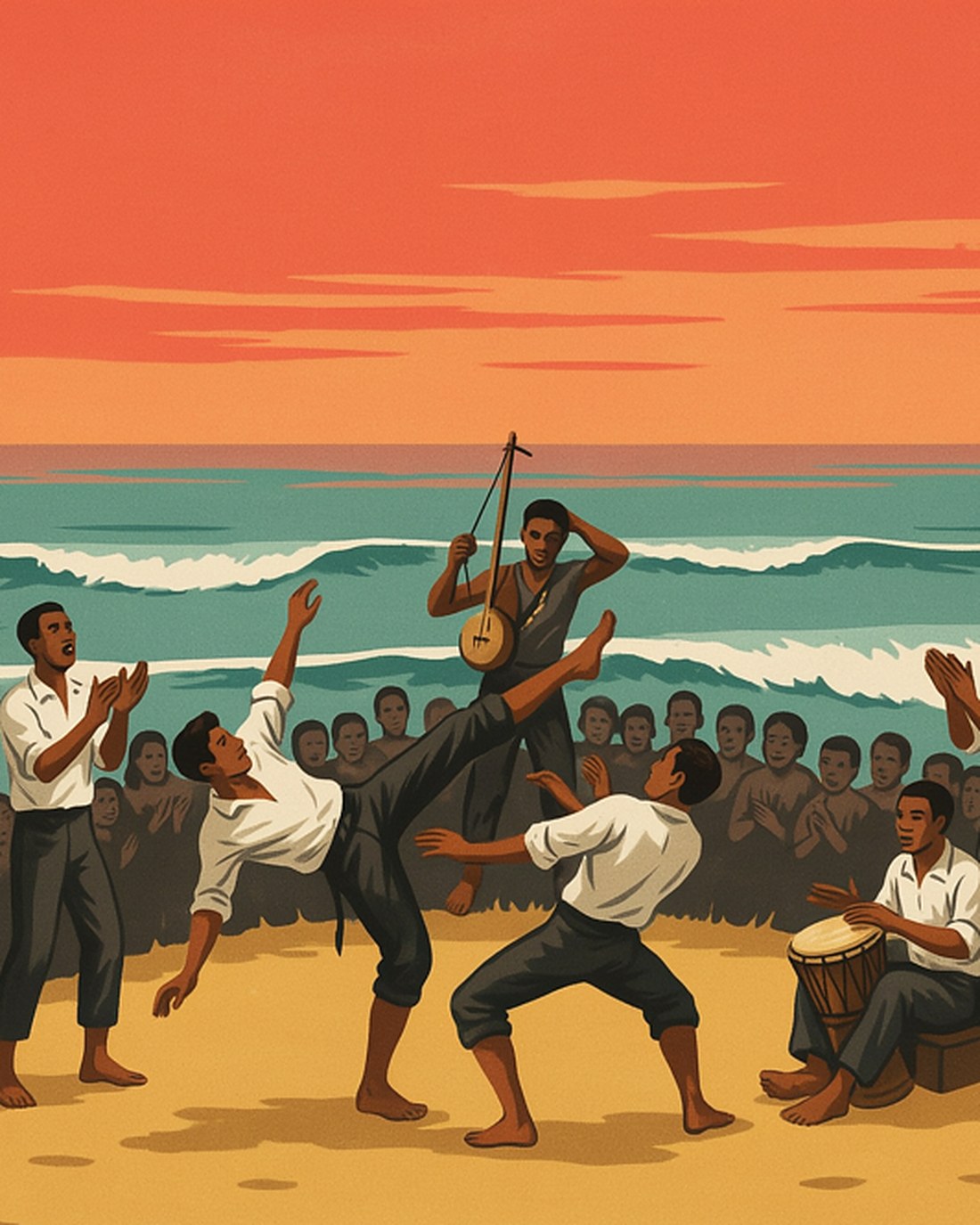
The fight hidden in a dance
Capoeira is a martial art that looks like a dance, all sweeping kicks and cartwheels done to the twang of a bow-shaped instrument called the berimbau. Enslaved Africans created it in Brazil centuries ago, and it is said they disguised their training as dancing so it would be allowed. Today it is played in a roda, a circle, the world over.
Say it: capoeira (kah-poo-AY-rah)
The first capital, and Brazil's soul
Salvador, up on the northeast coast, was Brazil's first capital, and its old heart, the Pelourinho, is a hillside of pastel baroque houses and gilded churches. It is the center of Afro-Brazilian culture, of the music, food and faith carried across the Atlantic. Much of what the world loves about Brazil was born here.
Good to know: Salvador was the first capitalBrazilians are warm, expressive and quick to fold a stranger into the fun, whether over football, music or a long shared meal. They are proud of a vast, mixed country that speaks Portuguese and moves to its own beat, and they love it when a visitor joins in.
No links here, nothing to buy. This part is just to help you travel well.
Sources, and how this guide was checked
Last reviewedJul 2026, 8 of 9 dated items inside their review window
Last actually changedApr 2025see the record →
What the last check foundSources added. Confirmed US citizens have needed a visitor e-visa to enter Brazil since April 2025, applied for on the official VFS portal, and that Brazil has no general tourist tax or tourist VAT refund, though some destinations such as Fernando de Noronha charge their own daily fee.
- Brazil eVisa official portal (VFS Global)the visitor e-visa US, Canadian and Australian citizens need before boarding, about 81 dollars
- District of Fernando de Noronhathe daily environmental preservation fee (TPA) charged to visitors, an example of the local fees a few beach destinations now add
Our own judgmentThe daily cash share, tipping norms, and likely ATM behavior are our own estimate from experience, not an official figure.
How we checkHow every guide is researched, checked and dated
More money guides in the Americas
If you are also weighing up nearby destinations, each guide covers cards, cash, ATMs and the fees to expect.





Going deeper on Brazil
The money questions people ask on the ground.
Short, focused answers to the specific things that catch first-timers out in Brazil.
- Taxis in Brazil, and the apps to useIn Brazil, the ride apps are not just cheaper than street taxis, they are the safer choice, which is why locals lean on them. Install Uber and 99, and here is how to use them and leave the airport smoothly.
- Tipping in BrazilIn Brazil, a 10% service charge is usually already on your restaurant bill, so a tip is largely built in. Here is what you actually owe, and where a little extra makes sense.
- Do US citizens need a visa for Brazil?Short answer: yes, and it caught a lot of people out. Brazil brought back a visa for Americans in 2025, it is online only, and there is one official site. Here is the cost, the timing, and how not to overpay.
- Do I need cash in Brazil, or can I use cards?Short answer: cards cover most of a city trip, and you need less cash than you would think. The wrinkles are Brazilian: Pix has taken over informal payments but tourists mostly cannot use it, and foreign cards carry a local tax. Here is how to pay well.
- Common money scams in Brazil, and what they cost youBrazil is one of the great travel countries and millions of visits pass without any of this. But we are not going to tell you a few habits defuse it, because that would be dishonest. The main ways money leaves a foreign visitor in Brazil are not an inflated bill or a rigged meter. They are a drink you did not watch being poured, and a car you cannot get out of. That changes the advice: it is about not entering the situation, and about limiting what can be taken if you do. The situations are specific and recognisable. Note that this page covers money; the US State Department has Brazil at Level 2 with a kidnapping risk indicator, so read the full advisory for the wider picture.
- Staying connected in Brazil.Almost everything written online about Brazilian SIM cards says a tourist cannot buy one without a CPF tax number. That was a real obstacle once. It is now out of date, and correcting it happens to make our own eSIM look less necessary.
- What does getting sick in Brazil cost a visitor?Brazil is one of the most reassuring pages on this site, and we are going to say so plainly: Brazil's public system treats anyone in an emergency, tourists included, without a bill at the door. The money question here is not whether you will be treated. It is whether you choose the private tier, and who pays for a flight home.
This is how Brazil stands today.
Money rules move. We can let you know for free if that changes.