True Trip Costs: Egypt
before you go
- DoTreat the card as the backup for hotels and the largest bills
- DoOn a card: Choose pounds, not dollars
- CarryBreak them into small notes immediately
- WithdrawPull pounds from a bank ATM
- ExpectRed Sea diving: Chamber and transfer risk
- ExpectTipping (baksheesh): Constant and expected
That's the short version. Below: every fee we checked, what it all adds up to, and the traps we help you dodge.
No match. See all guides.
Money in Egypt, sorted.
A calm, current plan for the money side of your trip: why you should carry cash and small notes, how tipping (baksheesh) really works, and the service and tax that gets added at hotels and tourist restaurants.
What you can refuse to pay here
The room rate isn't the bill, and the sticker rate isn't the price. In Egypt, a reseller's markup on the entry charge alone can quietly cost a typical traveler about $90 to $260, and it's one of several fees you can refuse.
Money scorecard
Egypt
- Ease of payingCash-first
- Cash dependenceCash-heavy
- Daily costBudget
- Getting aroundSome caution
- CurrencyStable
Every rating is our own judgment from the Egypt guide, not a score.
See the full Egypt guideThe three things people ask
Will my card work? Do I need cash? Are ATMs easy?
The quick read for a first trip.
Your card
Only in the upscale spots
Visa and Mastercard work at hotels, malls and higher-end restaurants, and contactless is spreading in Cairo. Outside those, cards are rarely accepted: markets, taxis, street food, small shops and tips are cash. Treat a card as a backup for big bills, not your main way to pay.
Check yours →Cash
This is how Egypt runs
Egyptian pounds cover almost everything, and you will want a lot of small notes for tips. Keep 5, 10 and 20 pound notes on you at all times for baksheesh, and larger notes for meals and shopping. Break big notes when you can, since small ones vanish quickly.
How much to bring →ATMs
Use a bank machine
Bank ATMs (National Bank of Egypt, Banque Misr, CIB, QNB) are your best source of pounds. Read the fee, take a good amount when a machine is working (some run empty), and always decline "convert to US dollars." Skip the street money changers entirely.
See ATMs in Egypt →(opens in a new tab)Cash or card
Cash first, and lots of small notes for tips.
A rough feel for everyday spending. Cards are fine at hotels, malls and higher-end restaurants, but most of daily life, markets, taxis, street food, small shops, entry extras and the many small tips, happens in cash. The real habit to build is carrying a stack of small notes (5, 10, 20 pounds) so you always have something for baksheesh.
See what the trip really costs →Your money plan
Four steps and you're set.
Before you go
- Bring a no-foreign-fee debit card as your main tool, since Egypt runs on cash. Charles Schwab refunds ATM fees worldwide; Wise and Revolut are low-fee.
- Bring a no-foreign-fee Visa or Mastercard too, for hotels, malls and bigger restaurants.
- A few small, clean US dollar or euro notes can be handy for tipping guides or on a Nile cruise, but plan to pay for daily life in pounds.
At the airport
- Skip the airport exchange counters, the rates are poor.
- Pull pounds from a bank ATM (National Bank of Egypt, Banque Misr, CIB, QNB) and decline "convert to US dollars."
- Take a healthy amount and ask for or break into small notes early, because you will tip constantly.
Day to day
- Cash for almost everything: markets, taxis, street food, small shops and tips.
- Card only for hotels, malls and higher-end restaurants.
- Keep a pocket of small notes ready for baksheesh, all day.
- Always choose pounds, never US dollars, on any card terminal or ATM screen.
A golden rule
- Carry small notes and tip often. Baksheesh is woven into daily life, in small amounts, for almost any help, so a wad of 5, 10 and 20 pound notes is your most useful tool.
- Pay in pounds and avoid street changers. Decline dollar conversion on cards and ATMs, and change money only at banks, ATMs or your hotel, never on the street.
Staying connected
Will my phone work here? And what will it cost?
Good in Cairo, the Nile cities and the Red Sea resorts, and along the main tourist routes, thinning out in the deep desert. The networks are Orange, Vodafone, Etisalat and WE, with wide 4G and some 5G. You can buy a tourist SIM at the airport or in town with your passport, or use an eSIM (Airalo, Nomad, Ubigi), which is simplest for a short trip. Egypt is not in the EU, so European roaming does not apply. You do not need mobile data to pay for anything; cash covers you either way. The cost is where people get caught out, and on most US plans it lands in one of two buckets.
Your plan may already include it
Often, do nothing
Some US plans include slow data abroad at no extra cost. If that is you, the honest move is to leave it alone.
we earn nothing
Or it charges quietly, after the fact
The bill lands later
On pay-per-use plans the cost runs in the background while you travel, and the charge can show up weeks after you are home. Forgetting to switch off data roaming is the classic one. For a week or more, an eSIM is usually cheaper and keeps you in control.
Check what your own carrier charges before the trip, not after.
If an eSIM is the cheaper call, Nomad covers Egypt.
Get your Nomad eSIM→(opens in a new tab)we may earn a commissionMedical cover
The one cost with no price tag.
This is the one cost with no price tag, and it can be the largest on the page. Most US health plans and Medicare cover little or nothing abroad, so a serious illness or evacuation is paid up front. How medical costs work abroad, country by country →
First, you may not need to buy anything.
A cheap trip close to home, or a premium card that already includes emergency medical and evacuation, may mean you need nothing here. Check your card first. Saying that costs us the commission, and it is still the right call.
How much cover matters here
Strong care can sit a long way from where you are traveling and an evacuation is a genuine possibility, so this is one to weigh seriously for a trip here.
If you do want cover, this is what it is for: the evacuation and the up-front hospital bill, the part no card limit is meant to absorb.
Enough for most trips
Faye, or a comparable whole-trip policy
Bundles trip protection with emergency medical, which is enough cover for most travelers on a typical trip.
The deeper end
A dedicated travel-medical plan built for serious care and evacuation abroad
Stronger on medical care and evacuation, for a remote or higher-risk trip where that is the real exposure.
If it happens
Call it first, then call your insurer's 24/7 assistance line, which is what confirms payment and arranges an evacuation. 123 is the ambulance line. 126 reaches the tourist police, who are more likely to speak English.
TrueTripCosts explains the gap and points to options. It does not set your coverage amounts or act as your insurance advisor, and every policy carries its own exclusions, so read them before you buy. Emergency number checked Jul 2026. Confirm the current number before you travel, as local lines can change.
Currency basics
The Egyptian pound, in plain terms.
Quick conversion
Egypt uses the pound (EGP), written LE or E-pound. As a rough mid-2026 guide at about 50 pounds to 1 US dollar, 50 pounds is roughly $1, 100 pounds about $2, and 500 pounds about $10. The rate can move, so check a live converter before you go.
Notes and coins
Pound notes run 5, 10, 20, 50, 100 and 200, with newer polymer 10 and 20 pound notes in circulation. There are small coins, but they are low value. Keep plenty of the small notes: 5, 10 and 20 pounds are the workhorses for tipping.
Cash is king, and tips are constant
Egypt is a cash economy, and tipping (baksheesh) is woven into daily life: a few pounds for the person who helps with a door, a photo, directions or a bag. Carry a thick stack of small notes so you always have something to hand over.
Watch the plus plus
At hotels and tourist restaurants, the listed price is often not the final one: many add a service charge of about 12% plus tax of around 14%, the plus plus, at the bottom of the bill. Street food and local spots usually just charge the price shown.
Real exchange rate
What your money is really worth here.
This is the mid-market rate, the one the banks trade at and the yardstick every other rate is measured against. Your card lands a little below it, and if a screen ever offers to bill you in dollars, that is worse again. So this is the number to expect, and how you spot a bad one.
1 US dollar is about 50.72 EGP
Taxes, tips and refunds
A service charge on top, tips everywhere, and no easy refund.
Egypt has no European-style per-night tourist tax, but two money habits shape your trip. First, at hotels and tourist restaurants the listed price is often not the final one: many add a service charge of about 12% plus tax of around 14% (VAT, sometimes with a small local levy), the so-called plus plus, at the bottom of the bill, so budget above the sticker at mid and upscale places. Street food and local spots usually just charge the marked price. Second, tipping (baksheesh) is everywhere: small amounts for almost any help, so carry a stack of small notes. There is no easy tourist refund on everyday spending, so do not count on claiming tax back. And always pay in pounds, changing money only at banks, ATMs or your hotel, never with a street changer.
That covers what a government adds. What you can still change is what the room itself costs, and that comes down to the booking moment: see how to pay less on hotels.
Fees and taxes to double-check
The numbers most likely to change.
These are the fees and taxes that move on political timelines, so we track each one on its own. Every line shows the amount, whether it is in effect yet, the date we last checked it, and a primary source where a clean one exists.
Egypt tourist visa (30-day, US citizens)
about 25 to 30 dollars single entry, as an e-visa on the official portal or on arrival
In a hurry? A private service can prepare and file this visa for a fee on top of the official cost above, which stays the cheaper route.
File it faster with RushMyTravelVisa→(opens in a new tab)we may earn a commissionBefore you book: passports, the six-month rule and whether you need a visa. Not a US citizen, or connecting through Europe? The rules can differ, and even a layover can need its own visa. See our passports and visas guide →
Watch out for
The small traps that catch first-timers.
Tipping
Baksheesh: small amounts, and often.
Tipping in Egypt, called baksheesh, is a genuine part of daily life, so the trick is to carry lots of small notes and give little and often. At restaurants, a service charge of around 12% is frequently already on the bill; if it is, a little extra for good service is enough, and if it is not, around 10% is normal. Beyond meals, small tips smooth almost everything: a few pounds for a porter, a helpful doorman, someone who gives directions or watches your shoes, a driver, or a guide (guides and Nile cruise crews are tipped more generously, often at the end). Have 5, 10 and 20 pound notes ready, since you will reach for them many times a day, and a card is no substitute.
Common questions
Quick answers.
Do I need cash in Egypt?
Yes, cash is essential. Cards work at hotels, malls and upscale restaurants, but markets, taxis, street food, small shops and the constant tips all run on Egyptian pounds. Bring a no-foreign-fee debit card as your main tool, pull pounds from bank ATMs, and always keep small notes for baksheesh.
Should I pay in Egyptian pounds or US dollars?
Pounds for daily life. If a card terminal or ATM offers to charge you in US dollars, decline; that conversion adds roughly 3 to 8%. A few small, clean dollar or euro notes can be handy for tipping guides or on a Nile cruise, but change money only at banks, ATMs or your hotel, never on the street.
How much should I tip in Egypt?
Often and in small amounts. At restaurants, check for a service charge (about 12%) already on the bill; if it is there, a little extra is enough, and if not, around 10% is normal. Beyond that, a few pounds smooths almost any help, and guides and cruise crews are tipped more generously. Carry lots of 5, 10 and 20 pound notes.
Why is my hotel or restaurant bill higher than the listed price?
The plus plus. Hotels and tourist restaurants often add a service charge of about 12% plus tax of around 14% to the price shown, so the total lands higher. Street food and local spots usually just charge the marked price, and some booking-site room rates already include the extras.
What is the best ATM to use in Egypt?
A bank ATM, such as National Bank of Egypt, Banque Misr, CIB or QNB. Read the fee, take a good amount while a machine is working since some run out of cash, and always decline the US-dollar conversion. Avoid street money changers entirely.
Is Egypt cheap for US travelers right now?
Yes, relatively. The pound lost a lot of value after Egypt floated it in 2024, so for visitors changing dollars, meals, taxis and many services are inexpensive. Prices in pounds can still climb with inflation, so check a live converter, but your dollar generally stretches a long way.
What will your trip really cost?
Name where you are going. We will show you what nobody quotes.
For instance, right now
 ColombiaHotels charge 19% IVA, but as a foreign tourist you are exempt, and about half try to add it anyway.
 JapanThe world's most high-tech country is still cash-first, and most bank ATMs refuse US cards.
 CzechiaCzech law gives you three hours to cancel a bad currency exchange and get your money back, on amounts up to 1,000 EUR.
 GreeceGreece's climate fee charges an Airbnb-style rental about 8 EUR a night against 2 for a budget hotel.
 El SalvadorThe country that made Bitcoin legal tender?
 CambodiaThe US dollar is Cambodia's everyday currency, and ATMs hand you crisp $100 bills nobody can break.
 TurkeyUS citizens need no visa and no e-visa for Turkey, scrapped in 2023.
 ItalyMost Italian restaurants add a coperto, a per-person cover charge of commonly 2 to 3 euros, before you have ordered anything.
The one thing most people get wrong about Egypt
Guide checked Jul 2026You bring a card and assume cash is the backup, as it is nearly everywhere now.
Egypt inverts that. The constant cost is baksheesh, the small expected tips that run through the whole day, and no card can pay them. A pocket of 5, 10 and 20 pound notes is the single most useful thing you can carry.
What to doPull pounds from a bank ATM and break them into small notes immediately, and treat the card as the backup for hotels and the largest bills.
Everything we checked
What Egypt actually charges you, in one place.
5 things we verified for Egypt, grouped by the kind of thing they are. The numbers are below; this is the shape of them.
fees nobody quotes
traps to dodge
timing
The number
What you'll really spend in Egypt.
Your flights if you want them counted, your room, your on-the-ground spending, the two fees most US cards add without telling you, and Egypt's tourist tax. One number, nothing waiting on the statement. No bank to pick, no sign-up, nothing saved.

Optional. Enter your round trip fare per traveler to fold flights into the total.
Total trip realistically somewhere between $0 and $0.
Getting thereflights, and what the border costs
Watch out for
Prepare ahead
These carry no dollar figure by design: each is named because it is real, and there is nothing honest to price here.
Departure tax is not a separate line here. Where a country charges one it is collected inside your airfare, so it is already in the flight figure, and adding it again would count it twice.
On the ground detailyour room, your days, and how much of it is cash
Whether at an ATM or a card terminal in a shop or restaurant, always choose to be charged in the local currency, not dollars. Paying in dollars (called dynamic currency conversion) lets the machine set its own, worse, exchange rate on top of any fee.
Fees nobody quotes youthe part that lands on the statement weeks later
What you'll pay
Plus the one-off entry charge, which sits in Getting there above with the flights, because it is per person rather than per night.
What you can refuse, and what the lookalike sites charge, is set out under Costs nobody tells you about below, with the two figures kept apart from these ones.
Costs nobody tells you about
Most of it you can keep. Here is every dollar of it.
Every one of them, and how to avoid it12 items
Two of these are money you hand over by default; the rest is money you keep by knowing. Each is its own line.
What you'll pay unless you act
- Your own bank's foreign feeswhat the fees above come toMost US cards add a percentage on what you buy and on the cash you pull, plus a few dollars per ATM withdrawal. Nothing about that is a cost of the trip; it is a cost of the card you happened to bring.A no-foreign-fee card takes both fee lines above to zero.The cards that do not charge it
- Paying in dollars at the terminalabout 3 to 8%on what you cardDynamic currency conversion lets the machine set its own rate on top of any fee, and it runs about 3 to 8 percent on whatever you put on the card. It is the single easiest charge on this page to refuse, and it costs nothing to say no.Choose EGP every time, at a till and at an ATM.How to decline it
- The airport or hotel exchange deskExchange counters make their money on the spread rather than on a stated fee, which is why we publish no percentage for it: it moves by counter, by hour and by note. The rule is what is reliable, not the number.Withdraw from a bank ATM instead, and never change cash at the airport.Getting cash here
What we'll help you dodge
- Reseller markup on the tourist visa$30the official priceOfficial$30The lookalikes$75 to $160The official tourist visa is $30. Resellers charge $75 to $160 for the same document, and they are not a faster route, only a costlier one.Apply on the official government portal, linked in Getting there above.The official source for this charge
- The meter refusal or dollar-quoted street taxiA driver refuses the meter, quotes in dollars or euros, or takes a long route.Use Uber or Careem for upfront pricing, or agree the fare before getting into a street cab and carry small notes.How taxis work here
- The airport tout or bag-carrying "fixer"Helpers who grab bags or offer to walk you through customs can then demand a large payment.Ignore drivers who approach you in the arrivals hall; accept help with bags only from uniformed official staff.The full scam guide
- The camel or horse ride "let-down" feeA handler offers a cheap-looking ride, then once you are up, demands much more to let you down or take you back.Agree the full price, including the return and any photos, clearly out loud before you get on.The full scam guide
- The photo "helper" who takes your phoneA photo helper takes your phone to snap a picture, then wants a tip to hand it back.Decline a stranger who offers to take your photo and then takes your phone; expect a tip demand to get it back.The full scam guide
- The fake guide or ticket toutFake guides and ticket touts around major sites sell inflated tours with little real information.Buy tickets only at the official counter, and arrange a licensed guide through your hotel or a known operator in advance.The full scam guide
- The manufactured favor (baksheesh pressure)Someone points you toward something you did not ask about, then presses for a tip.Decline unrequested help with a friendly but firm no; you are not obliged to pay for a favor you did not ask for.The full scam guide
- The unofficial street money changerUnofficial currency exchange outside the airport is illegal and a route to counterfeit notes.Change money only at banks, official bureaux or ATMs; unofficial exchange is illegal in Egypt and a route to counterfeit notes.The full scam guide
- The souk opening priceSouk prices are rarely fixed and the first number is aimed at tourists.Ask your hotel what a fair price should be, start well below the opening price, and be ready to walk away.The full scam guide
Where these numbers come fromevery assumption, and its limitssources
These are the assumptions behind the number. Change the room price, nights, travelers, or travel style above, and every line here moves with them.
- Hotel
- Daily spending
- Flights
- Cash vs card
- ATM withdrawals
- Foreign fee
- The range
- Tourist tax
Rough guide, not a quote. The percentage here is a blended stand-in for a typical US card's foreign fee, not your exact rate. The real number moves with the card you carry: one no-foreign-fee card can cover both sides, while a plain rewards credit card only removes the fee on what you buy, and cash still costs a little unless that card also waives ATM and foreign-cash fees. A debit card, or accepting the "pay in dollars" (dynamic currency conversion) offer at a till or ATM, can push it higher. Rates checked Jun 2026 and rounded.
How we check and date every figureEgypt, TTC-ed
truetripcosts.comWhat this assumes
Tips are already inside the daily spending figure, never added on top.
Not sure which card to bring? See my pick for Egypt.
Already carry a card with no foreign transaction fee? Then you are set for Egypt, and can skip this. There is nothing to buy.
Egypt leans on cash more than its reputation suggests, so the card that earns its place is a fee-free ATM debit card, with a no-foreign-fee credit card for hotels and bigger spots. If you are getting one, this is the pairing I would pick. We earn nothing on these today. Always confirm the current fee with the issuer before you apply. Checked Jun 2026.
Schwab refunds worldwide ATM fees with no cap, the standout for pulling cash abroad. Opening it also opens a linked Schwab brokerage account, though you never have to fund or invest it.
No foreign transaction fee
No foreign transaction fee

Want one account that holds and spends in the local currency? A different job from the three above, and the one I reach for abroad. It is free to open; you can create a virtual card in the app and add it to your phone wallet in minutes, without waiting for the physical card; and you can convert US dollars into the local currency inside the account before you travel, then spend from that balance. Wise uses the mid-market rate plus a small conversion fee (around 0.4% and up), with no flat foreign fee.
The three picks above pay us nothing, and their tags say so. Wise is the only option here that can earn us a commission, and its tag says that too. Paid or not, the pick is still the pick.
Before you fly
At least 14 countries now make you file a form online before you fly. 13 of them are free. One really does charge, and it is not the one you would guess.
Egypt does not ask for one, so this is not a job for this trip. It is worth knowing anyway, because the list keeps growing and the pattern is always the same: the filing is new, obscure and mandatory, and the paid lookalikes outrank the government site because the real ones do not buy ads.
See every form we can source, with the official address for eachWhen to go
Cheaper and busier months in Egypt.
The month you pick moves the budget as much as the country does. Here is the shape of Egypt's year, with no price attached to it, because an honest one does not exist.
- Busy and pricey
- In between
- Cheaper and quieter
- Cheaper and quieter
- Jun to Aug, if you can take the heat
- What drives the peak
- Cool sightseeing weather, Christmas and New Year, Western school holidays, and Red Sea resort demand
Travelers, not touristsA little Arabic goes a long way
A little Arabic goes a long way
A few words and a couple of stories that turn you from a tourist into a guest. A little warmth and curiosity carry a long way in Egypt, in a shop, a cafe, wherever you land.
Say a few words
Tip: the warm greeting is As-salamu alaykum (as-sah-LAM-u ah-LAY-kum), peace be upon you. The reply is wa alaykum as-salam, and Egyptians love hearing a visitor try it.
Know a story
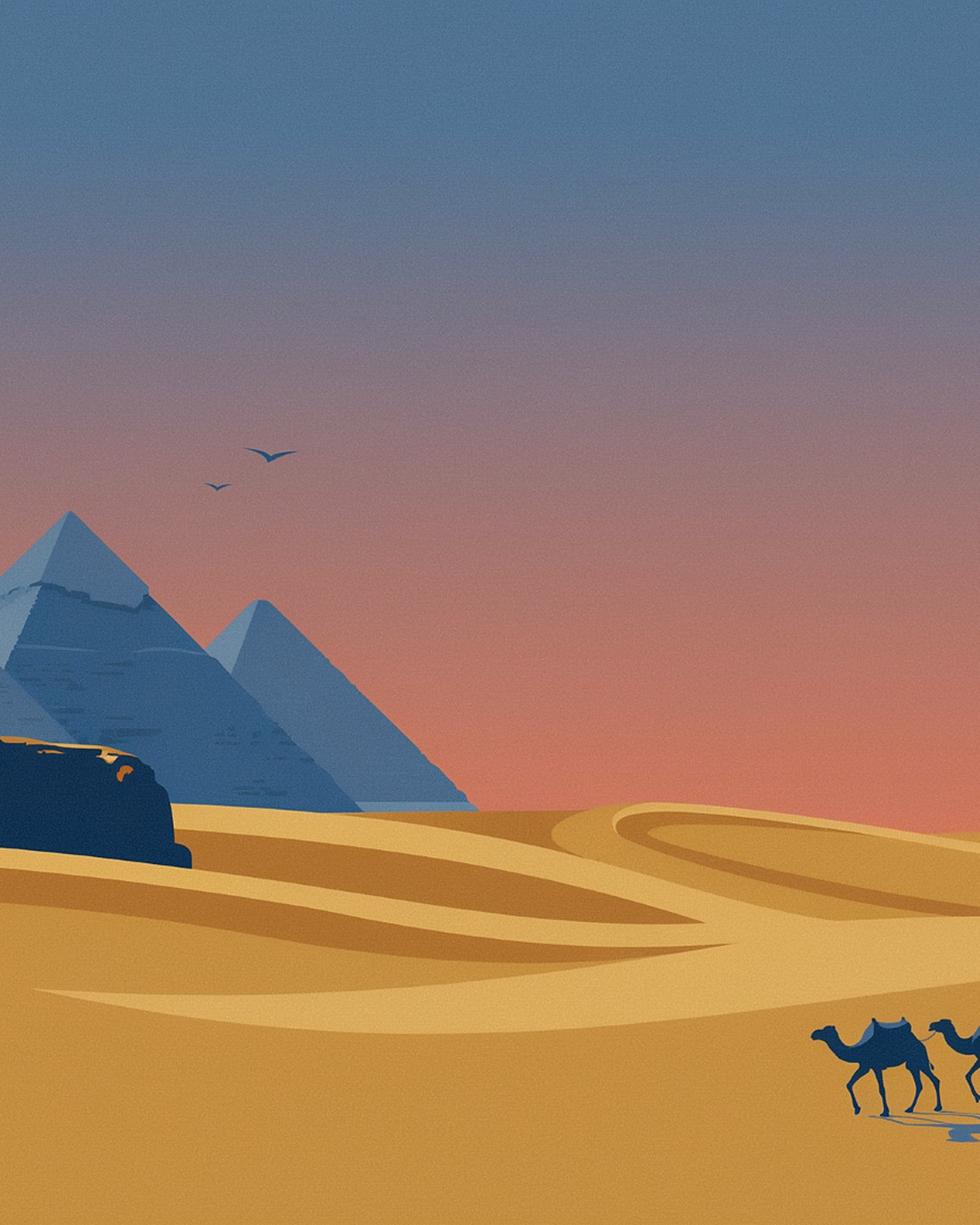
Older than you can imagine
The pyramids and the Sphinx at Giza are around 4,500 years old, so ancient that Cleopatra lived closer in time to us than to their building. Show awe for that depth of history and Egyptians warm to you at once.
Good to know: the pyramids long predate Cleopatra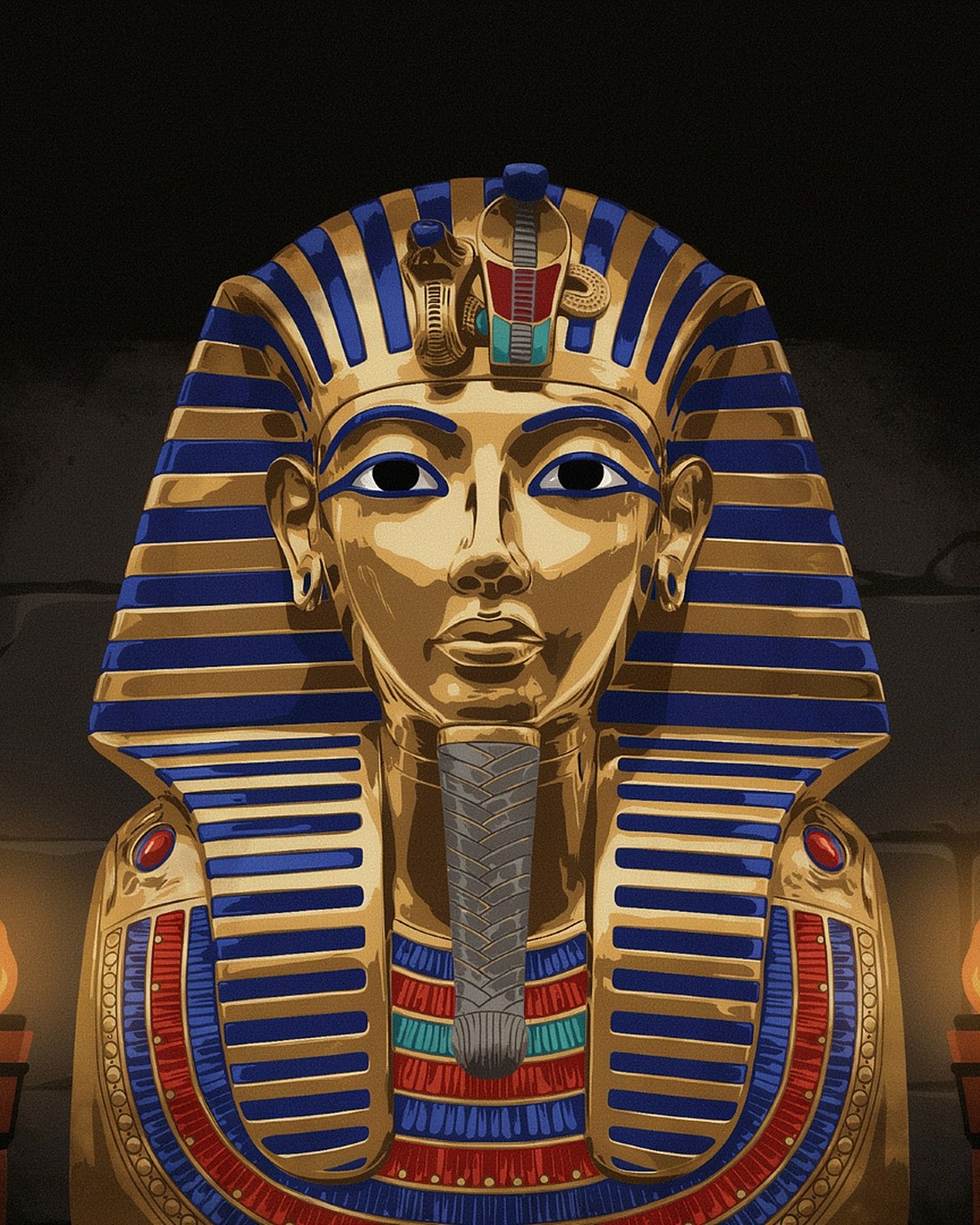
The boy king
Tutankhamun became pharaoh as a child and died young, all but forgotten, until Howard Carter opened his tomb in 1922 and found its treasures intact. His golden mask is Egypt's most beloved icon.
Good to know: his tomb was found nearly intact in 1922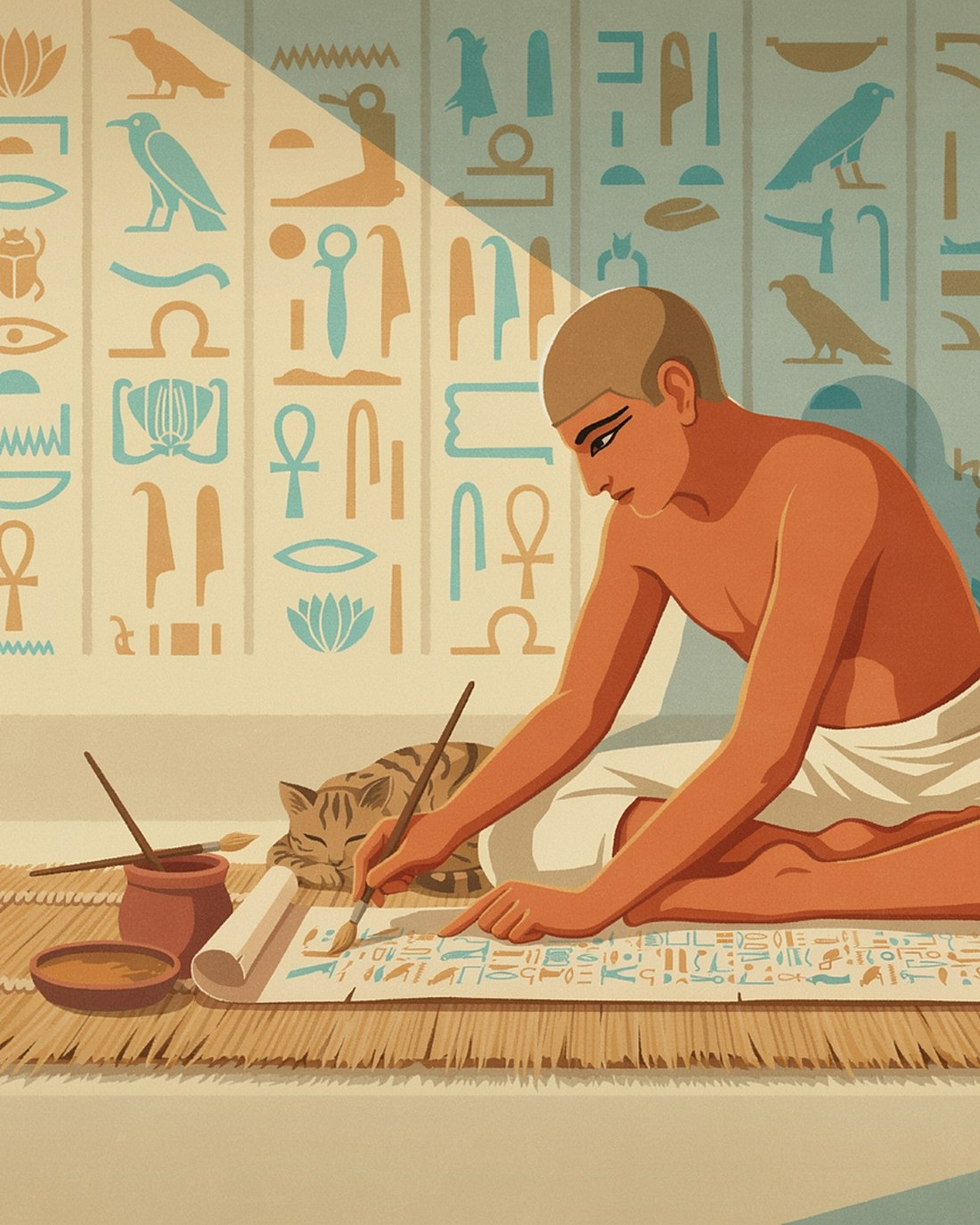
Where writing began
Egypt is one of the birthplaces of writing, its walls covered in hieroglyphs that stayed a mystery until the Rosetta Stone unlocked them. A little curiosity about the script goes a long way.
Good to know: the Rosetta Stone was the key to hieroglyphsEgypt carries one of the longest continuous civilizations on earth, thousands of years of it. Treating that history with wonder, not just a quick photo, earns real warmth.
No links here, nothing to buy. This part is just to help you travel well.
Sources, and how this guide was checked
Last reviewedJul 2026, 9 of 9 dated items inside their review window
Not yet individually datedWe date this guide and the fees most likely to move, but the tourist tax figure on this page do not carry a check date yet. They are reviewed with the guide rather than on their own schedule, and putting each of them on one is work in progress.
What the last check foundRe-checked July 2026. Egypt's standard VAT is 14%, and tourist hotels and restaurants usually add a service charge of about 12% on top, both confirmed still current. There is no European-style per-night tourist tax.
- PwC Worldwide Tax SummariesEgypt's standard VAT rate of 14%
- My Egypt Travelthe tourist police number (126), who are more likely to speak English
Our own judgmentThe 12% service charge and the mix of VAT and small local levies vary by establishment, so the figure here is a typical add-on rather than a fixed rate. The daily cash share, tipping norms and likely ATM behavior are our own estimate from experience, not an official figure.
How we checkHow every guide is researched, checked and dated
More money guides in the Middle East
If you are also weighing up nearby destinations, each guide covers cards, cash, ATMs and the fees to expect.


Going deeper on Egypt
The money questions people ask on the ground.
Short, focused answers to the specific things that catch first-timers out in Egypt.
- Do I need cash in Egypt, or can I use cards?Short answer: cash, mostly. Cards work at hotels and upscale spots, but almost everything else runs on cash, including the constant tipping. Here is how to handle it.
- Uber or Careem in Egypt, and the Cairo airport taxi trapEgypt is one of the places where an app quietly solves the problem. Here is which one to install, why the old street cabs are best skipped, and how to get out of Cairo airport without the invented fees.
- Tipping in EgyptTipping in Egypt, called baksheesh, is not an extra: it is woven into daily life. The trick is to carry lots of small notes and give little and often. Here is how much, when, and in what currency.
- Common money scams in Egypt, and what they cost youEgypt is one of the world's great trips, and the hassles that do come up are almost all about money, not danger: overcharging, pressure, and a tip expected for everything. A few calm habits defuse nearly all of it. Here is each trap, what it costs, and how to sidestep it.
- Do US citizens need a visa for Egypt?Short answer: yes, but it is quick. US citizens need a tourist visa, easiest as an e-visa on one official site before you fly, or bought on arrival. Here is the real fee, the passport rule Egypt enforces strictly, and the free Sinai exception.
- Staying connected in Egypt.Egyptian data is cheap and the tourist packs are generous, so the local SIM is the answer on price. The two things worth knowing are where the signal stops and that the airport counters price higher than the shops in town.
- What does getting sick in Egypt cost a visitor?Egypt's medical money story starts at the cashier: hospitals expect payment, often in cash, before they will treat you. The second half is geography, because the places visitors actually go, the Red Sea coast, the desert, the temples upriver, sit a long way from Cairo's best hospitals.
This is how Egypt stands today.
Money rules move. We can let you know for free if that changes.