True Trip Costs: Ecuador
before you go
- DoTaxis: Order it, never hail it
- CarryIf the Galapagos are on the plan, carry the $220 a person in cash from the mainland
- CarryCash for: Taxis, markets, small towns
- ExpectCurrency: US dollar
- ExpectTipping: A 10% service, often added
That's the short version. Below: every fee we checked, what it all adds up to, and the traps we help you dodge.
No match. See all guides.
Money in Ecuador, sorted.
A calm, current plan for the money side of your trip: why your dollars simply work, where your card covers you, the cash worth carrying for taxis, markets and the Galapagos, and the safety habits that keep it all easy.
What you can refuse to pay here
The room rate isn't the bill, but in Ecuador, it's close. Your card and a bit of care cover it, with little to refuse. See why
Money scorecard
Ecuador
- Ease of payingCash-first
- Cash dependenceCash-heavy
- Daily costModerate
- Getting aroundHigh caution
- CurrencyStable
Every rating is our own judgment from the Ecuador guide, not a score.
See the full Ecuador guideEcuador is fine for most tourist trips, but rising crime has kept the US State Department at Level 2 (exercise increased caution), with some areas at Level 3 or 4: Guayaquil south of Portete de Tarqui, parts of Esmeraldas, and the Colombian border. For your money that means a few simple habits: carry only 50 to 100 dollars on you, use ATMs inside banks or malls rather than on the street, and pre-arrange your airport transfer, especially in Guayaquil. Quito's historic center, Cuenca and the Galapagos are much calmer. Check the current advisory before you go.
The three things people ask
Will my card work? Do I need cash? Are ATMs easy?
The quick read for a first trip.
Your card
Good in the cities
Visa and Mastercard are widely taken in Quito, Guayaquil and Cuenca at hotels, better restaurants, shopping malls and tour operators, with Amex and Discover less consistent. A no-foreign-fee card is the easy way to cover city spending. Because prices are in US dollars there is no currency conversion on your card, though a few places add a small surcharge for card use.
Check yours →Cash
For taxis, markets and the Galapagos
You will want dollars in hand for taxis, markets, buses, small towns and tips, and it is essential in the Galapagos, where the park fee and transit card are cash only. Carry small, clean bills, since change for large notes is scarce and worn or torn notes can be refused, and keep only what you need on you.
How much to bring →ATMs
Use a bank machine, not the street
Bank ATMs (Banco Pichincha, Banco Guayaquil, Produbanco, Banco del Pacifico) dispense dollars. Expect a fee of about 3 to 5 dollars plus your home bank's, with withdrawal limits often around 300 to 500 dollars. For safety, use machines inside a bank branch or a mall, not street-facing ones, and there are no ATMs at the Galapagos airports, so bring cash from the mainland.
See ATMs in Ecuador →(opens in a new tab)Cash or card
Cards cover the cities; keep cash for taxis, markets, the countryside and the cash-only Galapagos fees.
A rough feel for everyday spending. Cards work well in Quito, Guayaquil and Cuenca at hotels, better restaurants, malls and tours, and since the currency is the US dollar there is nothing to convert. Cash takes over for taxis, markets, buses, small towns, tips, and the Galapagos, where the park and transit fees must be paid in cash.
See what the trip really costs →Your money plan
Four steps and you're set.
Before you go
- Bring a no-foreign-fee Visa or Mastercard for hotels, dining and shops in the cities, plus a backup from a different bank.
- Add a fee-free ATM debit card (Charles Schwab refunds ATM fees worldwide; Wise and Revolut are low-fee) for pulling dollars.
- You do not need to exchange money, since Ecuador uses the US dollar. Just bring some small, clean bills for your first taxis and tips.
- Heading to the Galapagos? Set aside cash for the fees: about 200 dollars per adult for the park and 20 dollars for the transit card, both cash.
At the airport
- Pre-arrange your transfer through your hotel or a trusted service, especially in Guayaquil, rather than hailing a taxi off the street.
- If you want cash, use a bank ATM inside the terminal and take out enough for a day or two.
- Flying on to the Galapagos? Buy the 20 dollar transit control card at the Quito or Guayaquil airport counter before your flight, in cash, and keep the receipt.
- Set up an eSIM before you land for maps and ride apps. Claro and Movistar have the best coverage.
Day to day
- Tap or dip your card at city hotels, restaurants, malls and tours.
- Keep small-bill cash for taxis, markets, buses, small towns and tips.
- Use a registered taxi or a ride app (Uber, inDrive, Cabify) rather than flagging one down, and agree the fare or run the meter.
- In the Galapagos, assume cash: the park fee and transit card are cash only, and there are no airport ATMs.
A golden rule
- You are already in dollars, so the rule here is about safety, not exchange. Carry only 50 to 100 dollars on you, use ATMs inside banks or malls, and keep the rest in the hotel safe.
- Bring clean, smaller bills. Very worn or torn US notes can be refused, change for 50s and 100s is scarce, and 20s and under are easiest to spend.
Staying connected
Will my phone work here? And what will it cost?
Good across Quito, Guayaquil and Cuenca and most towns, where 4G is widespread, and thinner in the Amazon, the high Andes and parts of the Galapagos. The main carriers are Claro and Movistar, with CNT also present. A local prepaid SIM needs your passport, so a travel eSIM from Airalo, Nomad or Holafly is the easy route if your phone supports it. You do not need mobile data to pay by card, but you will want it for maps, ride apps and calls. Most hotels have Wi-Fi. The cost is where people get caught out, and on most US plans it lands in one of two buckets.
Your plan may already include it
Often, do nothing
Some US plans include slow data abroad at no extra cost. If that is you, the honest move is to leave it alone.
we earn nothing
Or it charges quietly, after the fact
The bill lands later
On pay-per-use plans the cost runs in the background while you travel, and the charge can show up weeks after you are home. Forgetting to switch off data roaming is the classic one. For a week or more, an eSIM is usually cheaper and keeps you in control.
Check what your own carrier charges before the trip, not after.
If an eSIM is the cheaper call, Nomad covers Ecuador.
Get your Nomad eSIM→(opens in a new tab)we may earn a commissionMedical cover
The one cost with no price tag.
This is the one cost with no price tag, and it can be the largest on the page. Most US health plans and Medicare cover little or nothing abroad, so a serious illness or evacuation is paid up front. How medical costs work abroad, country by country →
First, you may not need to buy anything.
A cheap trip close to home, or a premium card that already includes emergency medical and evacuation, may mean you need nothing here. Check your card first. Saying that costs us the commission, and it is still the right call.
How much cover matters here
Care in the main cities is good, but costs add up and reaching top care from a remote spot takes time, so it is worth a real look for a trip here.
If you do want cover, this is what it is for: the evacuation and the up-front hospital bill, the part no card limit is meant to absorb.
Enough for most trips
Faye, or a comparable whole-trip policy
Bundles trip protection with emergency medical, which is enough cover for most travelers on a typical trip.
The deeper end
A dedicated travel-medical plan built for serious care and evacuation abroad
Stronger on medical care and evacuation, for a remote or higher-risk trip where that is the real exposure.
If it happens
Call it first, then call your insurer's 24/7 assistance line, which is what confirms payment and arranges an evacuation. 911 is Ecuador's nationwide emergency number (ECU 911), reaching police, ambulance and fire from any phone. An English-speaking operator is not guaranteed, so have your address written down or saved.
TrueTripCosts explains the gap and points to options. It does not set your coverage amounts or act as your insurance advisor, and every policy carries its own exclusions, so read them before you buy. Emergency number checked Jul 2026. Confirm the current number before you travel, as local lines can change.
Currency basics
The dollar, and a few local coins.
You are already in dollars
Ecuador adopted the US dollar as its official currency in 2000, so prices are in dollars and there is nothing to convert. It also mints its own centavo coins (1, 5, 10, 25 and 50 cents) worth exactly the same as US cents, so your quarters and dimes work and you may get a mix of both in change.
Cards in the cities, cash beyond
Visa and Mastercard are widely taken in Quito, Guayaquil and Cuenca at hotels, better restaurants, malls and tour operators, with Amex less so. Beyond the cities, and for taxis, markets, buses and small vendors, it is cash. Bring a no-fee card and a backup from a different bank.
ATMs, fees and a safety habit
Bank ATMs (Banco Pichincha, Banco Guayaquil, Produbanco, Banco del Pacifico) dispense dollars. Expect about 3 to 5 dollars a withdrawal plus your home bank's, with limits often around 300 to 500 dollars. Use machines inside banks or malls rather than on the street, and carry only what you need.
Tipping is modest
Many sit-down restaurants add a 10% service charge (servicio) to the bill on top of the 15% VAT; if it is there, that is the tip, though rounding up for good service is welcome. Round up taxi fares, and tip guides and porters a few dollars. See the tipping section below.
Real exchange rate
No need to convert here. This country uses the US dollar, so prices are already in the currency you think in, and on a card terminal or ATM there is nothing to convert.
Taxes and the Galapagos fees
A 15% VAT in the price, and cash fees for the Galapagos.
Ecuador keeps everyday tax simple, then adds one big set of fees for its most famous destination. Prices carry a 15% VAT (IVA), raised from 12% in April 2024 and usually baked into what you see, and sit-down restaurants often add a service charge of about 10% on top. There is no general tourist VAT refund to rely on. The costs to plan for are in the Galapagos: every foreign adult pays a 200 dollar national park entrance fee (100 dollars for children under 12), cash on arrival at Baltra or San Cristobal, and this doubled from 100 dollars in August 2024, so older guides are out of date. On top of that you buy a 20 dollar transit control card (the INGALA card) at the Quito or Guayaquil airport before you fly, also in cash. There are no ATMs at the island airports, so bring clean dollars from the mainland, and keep every receipt.
That covers what a government adds. What you can still change is what the room itself costs, and that comes down to the booking moment: see how to pay less on hotels.
Fees and taxes to double-check
The numbers most likely to change.
These are the fees and taxes that move on political timelines, so we track each one on its own. Every line shows the amount, whether it is in effect yet, the date we last checked it, and a primary source where a clean one exists.
Galapagos National Park entrance fee
200 dollars per foreign adult, 100 per child, cash on arrival
Galapagos transit control card (INGALA)
20 dollars per person, bought in cash at the mainland airport
Standard VAT (IVA)
15%, raised from 12% in April 2024
Before you book: passports, the six-month rule and whether you need a visa. Not a US citizen, or connecting through Europe? The rules can differ, and even a layover can need its own visa. See our passports and visas guide →
Watch out for
The small traps that catch first-timers.
Tipping
Modest, and often already on the bill.
Tipping in Ecuador is modest and not the pressure it can be in the US. At sit-down restaurants a 10% service charge (servicio) is often already added to the bill on top of the 15% VAT, and if it is there, that is the tip, though leaving a little extra in cash for good service is welcome. At casual places and markets, nothing is expected, but rounding up is kind. Round up taxi fares to the nearest dollar rather than tipping a percentage. For guides, tip a few dollars per person for a day tour, more for a private or multi-day guide, and on a Galapagos cruise a common guideline is roughly 10 to 20 dollars per guest per day split between the guide and crew. Give hotel porters a dollar or two a bag and housekeeping a dollar or two a day. Tip in cash, in small bills, and hand it to the person to be sure it reaches them.
Common questions
Quick answers.
Do I need to exchange money for Ecuador, or can I use US dollars?
You use US dollars, so there is nothing to exchange. Ecuador adopted the US dollar as its official currency in 2000, so prices are already in dollars and paying in cash costs you nothing extra. It mints its own centavo coins worth the same as US cents, and you may get a mix of both in change. Just bring some small, clean bills for taxis and tips.
Do I need cash in Ecuador?
Yes, for the everyday and rural side. Cards work well in Quito, Guayaquil and Cuenca at hotels, better restaurants, malls and tours, but taxis, markets, buses, small towns and tips run on cash, and the Galapagos park and transit fees are cash only. Carry small, clean dollar bills, get more from a bank ATM inside a branch or mall, and keep only what you need on you.
How much are the Galapagos entry fees in 2026?
Foreign adults pay a 200 dollar national park entrance fee (100 dollars for children under 12), in cash on arrival at Baltra or San Cristobal, which doubled from 100 dollars in August 2024. On top of that there is a 20 dollar transit control card bought at the Quito or Guayaquil airport before you fly, also cash. There are no ATMs at the island airports, so bring the money in clean dollars from the mainland.
Is Ecuador safe, and how should I handle money there?
Most tourist trips are fine, but crime has kept the US State Department at Level 2, with some areas at Level 3 or 4 (Guayaquil south of Portete de Tarqui, parts of Esmeraldas, the Colombian border). Handle money with a few habits: carry only 50 to 100 dollars on you, use ATMs inside banks or malls, pre-arrange airport transfers especially in Guayaquil, and use registered taxis or ride apps. Quito's center, Cuenca and the Galapagos are calmer. Check the current advisory before you travel.
Is there a tourist tax or a VAT refund in Ecuador?
There is no per-person nightly tourist tax to hand over. Prices include a 15% VAT (raised from 12% in April 2024), and sit-down restaurants often add about a 10% service charge, so a bill can carry both. There is no general tourist VAT refund to count on. The main costs to plan for are the Galapagos park fee and transit card, which are separate and cash only.
How much cash should I bring for a week in Ecuador?
It depends on your trip. On the mainland, very roughly 150 to 300 dollars in cash across a week beyond card spending covers taxis, markets, small towns and tips for two travelers, topped up from bank ATMs. For the Galapagos, add the fees (about 220 dollars per adult) plus extra cash, since cards and ATMs are limited on the islands. Keep it in small, clean bills.
What will your trip really cost?
Name where you are going. We will show you what nobody quotes.
For instance, right now
 ColombiaHotels charge 19% IVA, but as a foreign tourist you are exempt, and about half try to add it anyway.
 JapanThe world's most high-tech country is still cash-first, and most bank ATMs refuse US cards.
 CzechiaCzech law gives you three hours to cancel a bad currency exchange and get your money back, on amounts up to 1,000 EUR.
 GreeceGreece's climate fee charges an Airbnb-style rental about 8 EUR a night against 2 for a budget hotel.
 El SalvadorThe country that made Bitcoin legal tender?
 CambodiaThe US dollar is Cambodia's everyday currency, and ATMs hand you crisp $100 bills nobody can break.
 TurkeyUS citizens need no visa and no e-visa for Turkey, scrapped in 2023.
 ItalyMost Italian restaurants add a coperto, a per-person cover charge of commonly 2 to 3 euros, before you have ordered anything.
The one thing most people get wrong about Ecuador
Guide checked Jul 2026You expect the usual exchange-rate homework.
Ecuador uses the US dollar, so there is nothing to exchange, until the Galapagos, where you pay $220 in cash at the gate and there are no ATMs on the islands.
What to doIf the Galapagos are on the plan, carry the $220 a person in cash from the mainland.
Everything we checked
What Ecuador actually charges you, in one place.
4 things we verified for Ecuador, grouped by the kind of thing they are. The numbers are below; this is the shape of them.
money you keep
traps to dodge
timing
The number
What you'll really spend in Ecuador.
Your flights if you want them counted, your room, your on-the-ground spending, the two fees most US cards add without telling you, and Ecuador's tourist tax. One number, nothing waiting on the statement. No bank to pick, no sign-up, nothing saved.

Optional. Enter your round trip fare per traveler to fold flights into the total.
Total trip realistically somewhere between $0 and $0.
Getting thereflights, and what the border costs
Watch out for
Prepare ahead
These carry no dollar figure by design: each is named because it is real, and there is nothing honest to price here.
Departure tax is not a separate line here. Where a country charges one it is collected inside your airfare, so it is already in the flight figure, and adding it again would count it twice.
On the ground detailyour room, your days, and how much of it is cash
Whether at an ATM or a card terminal in a shop or restaurant, always choose to be charged in the local currency, not dollars. Paying in dollars (called dynamic currency conversion) lets the machine set its own, worse, exchange rate on top of any fee.
Fees nobody quotes youthe part that lands on the statement weeks later
What you'll pay
What you can refuse, and what the lookalike sites charge, is set out under Costs nobody tells you about below, with the two figures kept apart from these ones.
Costs nobody tells you about
Most of it you can keep. Here is every dollar of it.
Every one of them, and how to avoid it1 item
Two of these are money you hand over by default; the rest is money you keep by knowing. Each is its own line.
What you'll pay unless you act
- Your own bank's foreign feeswhat the fees above come toMost US cards add a percentage on what you buy and on the cash you pull, plus a few dollars per ATM withdrawal. Nothing about that is a cost of the trip; it is a cost of the card you happened to bring.A no-foreign-fee card takes both fee lines above to zero.The cards that do not charge it
Where these numbers come fromevery assumption, and its limitssources
These are the assumptions behind the number. Change the room price, nights, travelers, or travel style above, and every line here moves with them.
- Hotel
- Daily spending
- Flights
- Cash vs card
- ATM withdrawals
- Foreign fee
- The range
- Tourist tax
Rough guide, not a quote. The percentage here is a blended stand-in for a typical US card's foreign fee, not your exact rate. The real number moves with the card you carry: one no-foreign-fee card can cover both sides, while a plain rewards credit card only removes the fee on what you buy, and cash still costs a little unless that card also waives ATM and foreign-cash fees. A debit card, or accepting the "pay in dollars" (dynamic currency conversion) offer at a till or ATM, can push it higher. Rates checked Jun 2026 and rounded.
How we check and date every figureEcuador, TTC-ed
truetripcosts.comWhat this assumes
Tips are already inside the daily spending figure, never added on top.
Not sure which card to bring? See my pick for Ecuador.
Already carry a card with no foreign transaction fee? Then you are set for Ecuador, and can skip this. There is nothing to buy.
If you are getting a card for Ecuador, this is the pairing I would pick: a no-foreign-fee credit card for spending, and a fee-free ATM debit card for cash. We earn nothing on these today. Always confirm the current fee with the issuer before you apply. Checked Jun 2026.
Capital One charges no foreign transaction fee on any of its cards.
No foreign transaction fee
Fee-free ATM cash worldwide

Want one account that holds and spends in the local currency? A different job from the three above, and the one I reach for abroad. It is free to open; you can create a virtual card in the app and add it to your phone wallet in minutes, without waiting for the physical card; and you can convert US dollars into the local currency inside the account before you travel, then spend from that balance. Wise uses the mid-market rate plus a small conversion fee (around 0.4% and up), with no flat foreign fee.
The three picks above pay us nothing, and their tags say so. Wise is the only option here that can earn us a commission, and its tag says that too. Paid or not, the pick is still the pick.
Before you fly
At least 14 countries now make you file a form online before you fly. 13 of them are free. One really does charge, and it is not the one you would guess.
Ecuador does not ask for one, so this is not a job for this trip. It is worth knowing anyway, because the list keeps growing and the pattern is always the same: the filing is new, obscure and mandatory, and the paid lookalikes outrank the government site because the real ones do not buy ads.
See every form we can source, with the official address for eachWhen to go
Cheaper and busier months in Ecuador.
The month you pick moves the budget as much as the country does. Here is the shape of Ecuador's year, with no price attached to it, because an honest one does not exist.
- Busy and pricey
- In between
- Cheaper and quieter
- Cheaper and quieter
- Feb to Apr, and Sep to Nov
- What drives the peak
- North American and European summer holidays, Christmas and New Year, and Galapagos cruise demand
Medium confidence. The seasons are well established, though the money side of them is partly our own inference.
See all 59 countries compared on the when to go pageTravelers, not touristsA few Spanish words go a long way
A few Spanish words go a long way
Spanish is the language of Ecuador, and a warm hola and gracias open doors. Ecuadorians are proud of a small country that packs in the Andes, the Amazon, the Pacific coast and the Galapagos, so a little curiosity marks you as a traveler rather than a tourist.
Say a few words
Tip: Ecuadorians are formal and friendly: greet with buenos dias before asking a question, and a warm gracias goes far. In the markets, a little polite Spanish and a smile get you further than haggling hard, since prices are already fair.
Know a story
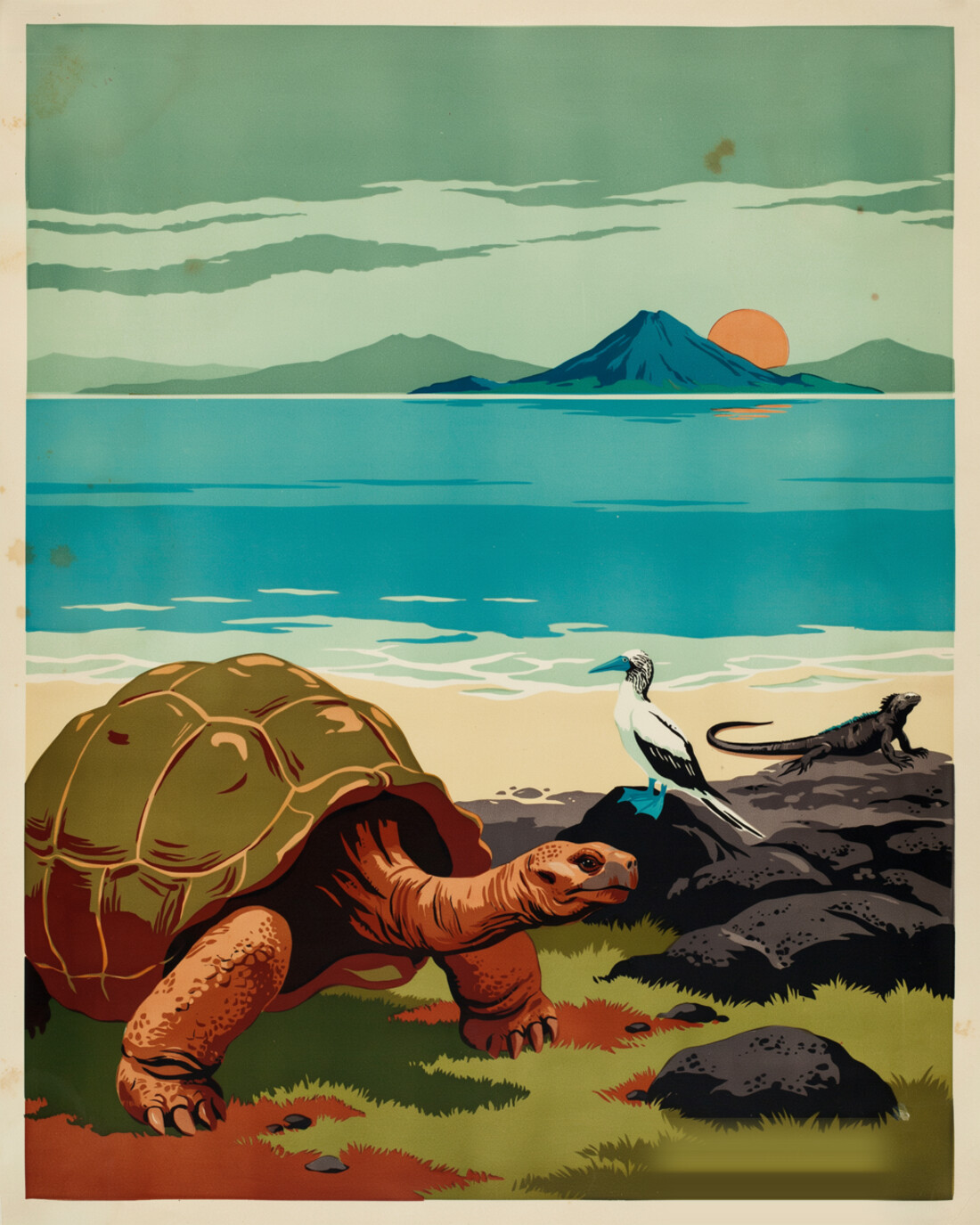
The enchanted isles
The Galapagos, six hundred miles out in the Pacific, are where Charles Darwin found the ideas behind evolution. The wildlife has no fear of people, so giant tortoises, blue-footed boobies, sea lions and marine iguanas go about their day beside you. It is one of the most protected places on Earth, which is why the fees are high and the rules strict.
Good to know: the park fee is 200 dollars, cash on arrival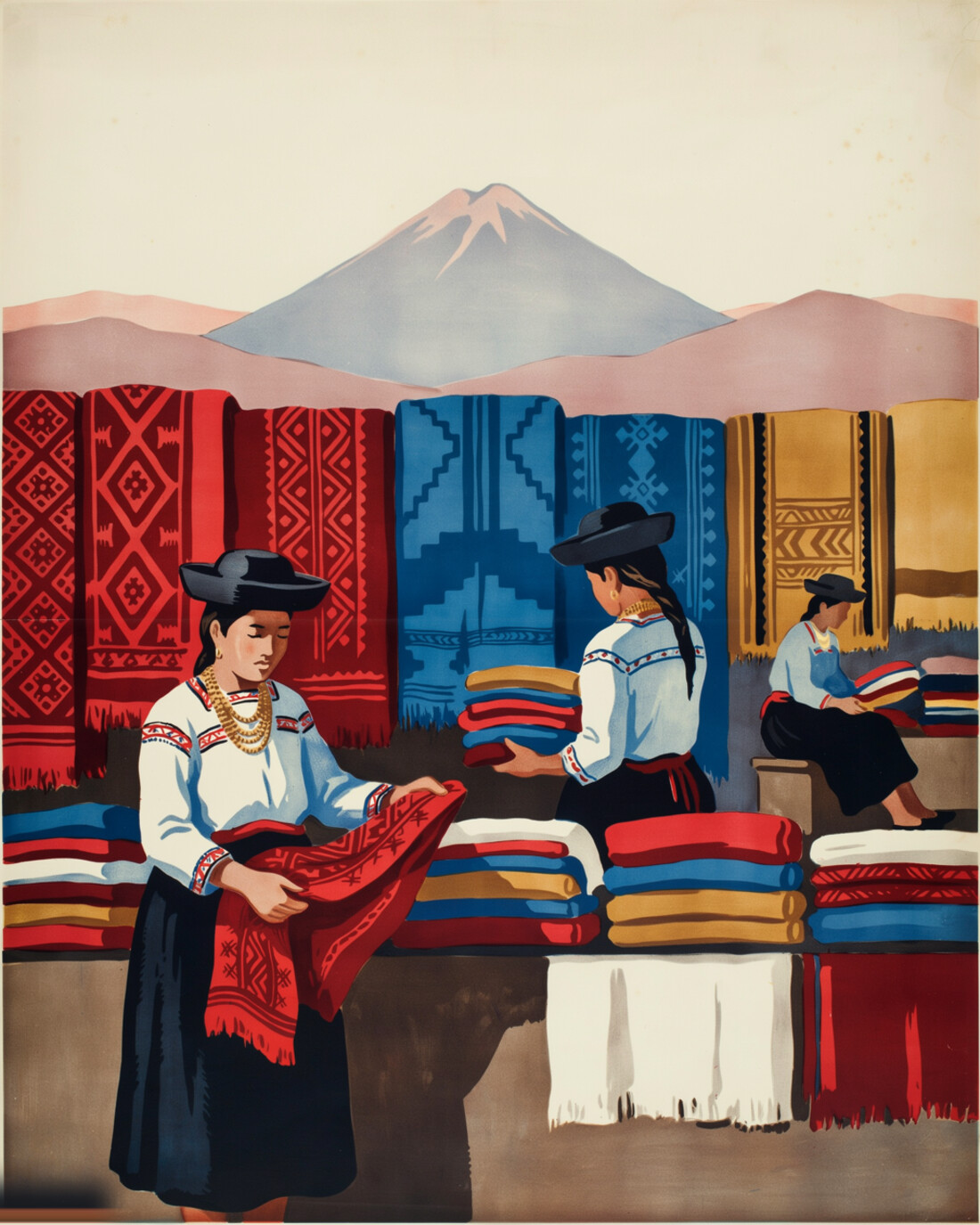
The Otavalo market
In the highlands north of Quito, the Kichwa town of Otavalo hosts one of South America's most famous markets, a riot of handwoven textiles, blankets and crafts under the Imbabura volcano. The Otavalenos are renowned weavers who have carried their traditions and dress for centuries. Saturday is the big day, though stalls run most of the week.
Good to know: the biggest market day is Saturday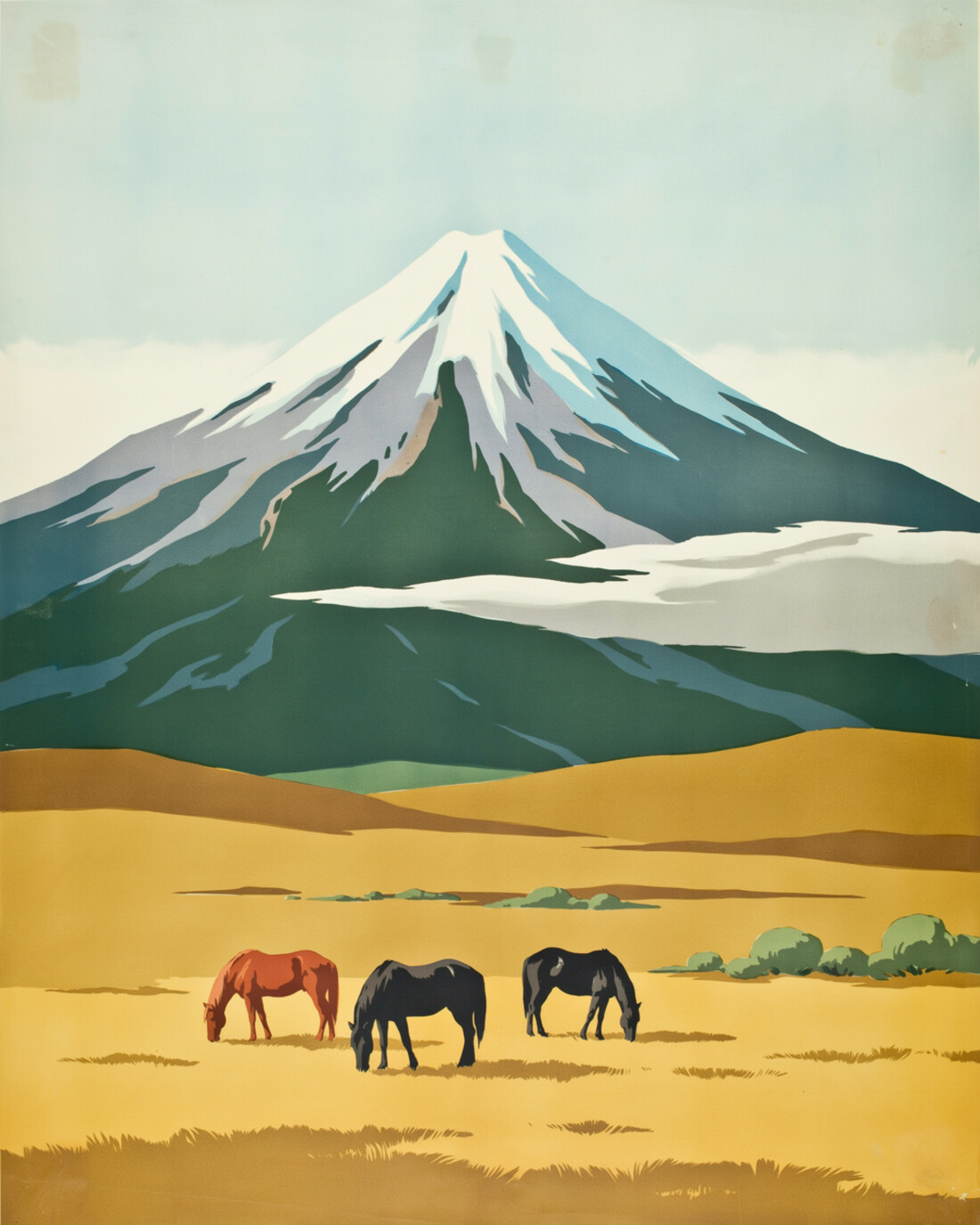
The Avenue of the Volcanoes
The Andes march down the center of Ecuador in a line of snow-capped volcanoes, and Cotopaxi, a near-perfect cone, is the icon among them. The name Ecuador comes from the equator, which runs right through the country just north of Quito, where you can stand with a foot in each hemisphere.
Good to know: Ecuador is named for the equatorEcuador is small on the map but holds four worlds at once: the Andes, the Amazon, the Pacific coast and the Galapagos, all on the equator. Ecuadorians are proud of that variety, and of a capital, Quito, whose old town was one of the first UNESCO World Heritage Sites.
No links here, nothing to buy. This part is just to help you travel well.
Sources, and how this guide was checked
Last reviewedJul 2026, 10 of 12 dated items inside their review window
What the last check foundSources added on first publish. Confirmed with Ecuador's tax authority (SRI) that the standard VAT (IVA) is 15%, raised from 12% in April 2024 and still 15% for 2026, and with the Galapagos National Park that the foreign-adult entrance fee is 200 dollars, cash on arrival, since August 2024, plus a 20 dollar transit control card. Checked the US State Department advisory, which is Level 2 with some Level 3 and 4 zones. The US dollar has been Ecuador's official currency since 2000.
- Ecuador Internal Revenue Service (SRI)the standard VAT (IVA) rate, 15% since April 2024
- Galapagos National Park Directoratethe park entrance fee and the transit control card
- US State Departmentthe Ecuador travel advisory, Level 2 with higher-risk zones
Our own judgmentThe daily cash share, tipping habits, likely ATM behavior, and the practical safety notes on where to be careful and how to carry cash are our own read from advisories and recent traveler reports, not a single official table. Treat them as a planning guide and confirm anything critical before you travel.
How we checkHow every guide is researched, checked and dated
More money guides in the Americas
If you are also weighing up nearby destinations, each guide covers cards, cash, ATMs and the fees to expect.
Going deeper on Ecuador
The money questions people ask on the ground.
Short, focused answers to the specific things that catch first-timers out in Ecuador.
- Tipping in EcuadorIn Ecuador, a 10% service charge is often already on your restaurant bill, and the whole thing is in US dollars, so there is no conversion to think about. Here is what you actually owe.
- Do US citizens need a visa for Ecuador?Short answer: no visa for a normal visit, and entry is easy. The costs that catch people are not at the border but on the way to the Galapagos. Here is what you need, and what to budget.
- Do I need cash in Ecuador, or can I use cards?Short answer: cards cover the cities, but you will want dollars in hand for the everyday and rural side, and cash is essential in the Galapagos. Here is how to pay, and how to carry money safely.
- Taxis and ride apps in Ecuador, done safelyGetting around Ecuador is cheap, but hailing a taxi off the street carries a real safety risk in the big cities. Here is which apps to use, how to handle the airport, and the habits that keep it simple.
- Common money scams in Ecuador, and what they cost youEcuador packs an extraordinary amount into a small country and most visits pass without any of this. But we are not going to tell you a few habits defuse it, because the main way money leaves a foreign visitor here is not an overcharge. It is a taxi you flagged down in the street, or a drink you did not watch being poured. That changes the advice: it is about not entering the situation, and about carrying less so there is less to take. Note that this page covers money; the US State Department has Ecuador at a raised advisory level with a kidnapping indicator, and parts of the country carry separate warnings, so read the full advisory before you plan a route.
- Staying connected in Ecuador.Mainland Ecuador is straightforward: decent coverage in the corridor where everyone travels, gaps in the Amazon. The part that catches people is the Galapagos, which for your phone is somewhere else entirely.
- What does getting sick in Ecuador cost a visitor?Ecuador's medical map is honest about itself: capable private hospitals in Quito, Guayaquil and Cuenca, and thin coverage exactly where its most famous trips happen. On the islands and in the Oriente, the serious case flies to the mainland, and that flight is the bill that matters.
This is how Ecuador stands today.
Money rules move. We can let you know for free if that changes.