True Trip Costs: Morocco
before you go
- DoPay in dirham every time
- DoKeep the exchange receipts, and convert what is left before you fly home
- WithdrawWithdraw dirham from a bank ATM on arrival
- ExpectA closed currency, get it on arrival
- ExpectPetit taxi: Has a meter, often refused
That's the short version. Below: every fee we checked, what it all adds up to, and the traps we help you dodge.
No match. See all guides.
Money in Morocco, sorted.
A calm, current plan for the money side of your trip: why Morocco runs on cash, how to get the closed dirham on arrival, where your card actually works, the small tips that are expected, and the nightly tourist tax to keep cash aside for.
What you can refuse to pay here
The room rate isn't the bill, and the sticker rate isn't the price. In Morocco, your own bank's foreign-transaction and ATM fees alone can quietly cost a typical traveler about $68, and it's one of several fees you can refuse.
Money scorecard
Morocco
- Ease of payingCash-first
- Cash dependenceCash-heavy
- Daily costModerate
- Getting aroundSome caution
- CurrencyClosed currency
Every rating is our own judgment from the Morocco guide, not a score.
See the full Morocco guideNothing has changed structurally, but two things are worth knowing before you go. Some city hotels have begun adding card surcharges of about 2 to 3% and more places are unbundling the nightly tourist tax onto the final bill, so ask for an all-in price when you book directly. The dirham remains a closed currency, so plan to get cash on arrival and convert any leftover before you fly home.
The three things people ask
Will my card work? Do I need cash? Are ATMs easy?
The quick read for a first trip.
Your card
Cities and bigger things only
Visa and Mastercard work at city hotels, large supermarkets, upscale restaurants and train stations, with Amex spotty. They are not accepted in souks, petits taxis, street stalls, small shops or rural areas, and even where a terminal exists, 'the machine is broken' is common. Treat cards as a backup, not your main way to pay.
Check yours →Cash
What Morocco runs on
Physical dirham is the main way to pay. Because it is a closed currency you cannot get abroad, withdraw it from a bank ATM on arrival, then carry small notes and coins for souks, taxis, cafes, tips and the nightly tourist tax. Bargaining is expected in the souks, and cash gives you the leverage.
How much to bring →ATMs
Your source of dirham, decline dollars
Bank ATMs are common in cities and towns and much rarer in rural areas, so stock up before heading into the mountains or desert. Many charge a per-withdrawal fee for foreign cards on top of your bank's, so withdraw a larger amount at once (odd numbers like 490 give you smaller notes), and always choose dirham, not US dollars.
See ATMs in Morocco →(opens in a new tab)Cash or card
A cash-first country, with cards for the bigger things.
A rough feel for everyday spending. Cash covers most of daily life here: souks, taxis, cafes, street food, small shops and tips. Cards are useful mainly for hotels, bigger restaurants, supermarkets and train tickets in the cities, so plan to carry more cash than you would in Europe.
See what the trip really costs →Your money plan
Four steps and you're set.
Before you go
- Bring a no-foreign-fee Visa or Mastercard, plus a backup from a different bank. Amex is spotty here.
- Do not buy dirham before you fly. It is a closed currency, hard and costly to get abroad. Bring some clean US dollar or euro notes as an emergency backup instead.
- Set up an eSIM. Coverage is good in cities and towns, thinner in the mountains and desert.
- Know the shape of it: cash-first, a small nightly tourist tax paid in cash, and tipping is normal.
At the airport
- Withdraw dirham from a bank ATM in arrivals, and decline 'convert to dollars,' always choose dirham.
- Take out enough for your first day or two (taxi, tips, a meal), since rural ATMs are scarce.
- Skip the exchange counters for large sums, their rates are weak. Change only a little cash if you must.
- Keep the ATM or exchange receipt, you may need it to convert leftover dirham back before you leave.
Day to day
- Carry small notes and coins, and pay cash in souks, taxis, cafes, street food and for tips.
- Use cards for hotels, bigger restaurants, supermarkets and train tickets in the cities.
- Bargain in the souks: the first price is often at least double, so start around 30 to 40% and work up.
- Keep a little cash aside for the nightly tourist tax at your riad, usually paid at check-in or checkout.
A golden rule
- Always pay in dirham, never in US dollars or euros. Choosing your home currency, or letting a shop set the rate, quietly costs you 5 to 15%.
- Convert leftover dirham before you leave and keep your receipt. It is a closed currency, so you cannot change it back once you are home.
Staying connected
Will my phone work here? And what will it cost?
Good across the cities, towns and main roads, and thinner in the High Atlas mountains and the desert, where you can lose signal. The carriers are Maroc Telecom (IAM), Orange and Inwi. A prepaid SIM is cheap and easy to buy (bring your passport), but for most visitors an eSIM from Airalo, Nomad or a similar provider is the simple route. You do not need mobile data to pay cash, but you will want it for maps and taxi apps in the cities. The cost is where people get caught out, and on most US plans it lands in one of two buckets.
Your plan may already include it
Often, do nothing
Some US plans include slow data abroad at no extra cost. If that is you, the honest move is to leave it alone.
we earn nothing
Or it charges quietly, after the fact
The bill lands later
On pay-per-use plans the cost runs in the background while you travel, and the charge can show up weeks after you are home. Forgetting to switch off data roaming is the classic one. For a week or more, an eSIM is usually cheaper and keeps you in control.
Check what your own carrier charges before the trip, not after.
If an eSIM is the cheaper call, Nomad covers Morocco.
Get your Nomad eSIM→(opens in a new tab)we may earn a commissionMedical cover
The one cost with no price tag.
This is the one cost with no price tag, and it can be the largest on the page. Most US health plans and Medicare cover little or nothing abroad, so a serious illness or evacuation is paid up front. How medical costs work abroad, country by country →
First, you may not need to buy anything.
A cheap trip close to home, or a premium card that already includes emergency medical and evacuation, may mean you need nothing here. Check your card first. Saying that costs us the commission, and it is still the right call.
How much cover matters here
Strong care can sit a long way from where you are traveling and an evacuation is a genuine possibility, so this is one to weigh seriously for a trip here.
If you do want cover, this is what it is for: the evacuation and the up-front hospital bill, the part no card limit is meant to absorb.
Enough for most trips
Faye, or a comparable whole-trip policy
Bundles trip protection with emergency medical, which is enough cover for most travelers on a typical trip.
The deeper end
A dedicated travel-medical plan built for serious care and evacuation abroad
Stronger on medical care and evacuation, for a remote or higher-risk trip where that is the real exposure.
If it happens
Call it first, then call your insurer's 24/7 assistance line, which is what confirms payment and arranges an evacuation. 15 (SAMU) is the ambulance and medical emergency line, 19 is the police in cities, and 177 is the Royal Gendarmerie for rural areas and highways. 112 works from any mobile, even without a local SIM. The US number 911 does not work here.
TrueTripCosts explains the gap and points to options. It does not set your coverage amounts or act as your insurance advisor, and every policy carries its own exclusions, so read them before you buy. Emergency number checked Jul 2026. Confirm the current number before you travel, as local lines can change.
Renting a car
Where the rental desk makes its money.
Renting is often the best way to see Morocco, and the cover is where the counter earns its margin. The rental comes with basic collision cover, but it leaves you owing the excess, the first slice of any damage or theft bill, often several hundred to a couple of thousand dollars, held on your card until the car is back. The desk will offer to erase that excess. It is a real product, just priced at the counter for far more than the same cover costs if you arrange it before you go.
You may not need to buy anything at all. Some US credit cards include rental collision cover when you pay with the card and decline the counter's version, so check what your own card covers on rentals before you add anything extra. We cannot read your policy for you, and flagging this can cost us the sale below, but it is the honest first step.
If your card does not cover it, or you would rather have cover built for this, a standalone policy bought ahead is the cheaper way to handle it. It covers the damage and theft the rental leaves you liable for, often including parts the counter cover leaves out like tires, glass and the underbody, and mechanical faults stay the rental company's problem. RentalCover covers rentals in Morocco. Read what the policy includes before you buy.
Cover your rental with RentalCover→(opens in a new tab)we may earn a commissionCurrency basics
The Moroccan dirham, in plain terms.
Quick conversion
Morocco uses the dirham, written DH or MAD. At about 10 to the US dollar, MAD 100 is roughly US$10 and MAD 20 about US$2. Notes come in 20, 50, 100 and 200 dirham, with coins from 1 up to 10. It is a closed currency, so you get it on arrival, not before.
Cash is king
Most of Morocco runs on cash. Cards work only at city hotels, large supermarkets, upscale restaurants and train stations, so keep a steady supply of small notes and coins for everything else, from a taxi to a glass of orange juice in the square.
Getting dirham
ATMs at banks are your source: common in cities, scarce in the countryside. Many add a per-withdrawal fee for foreign cards, so take out a larger amount at once and choose dirham, not dollars. At the end, convert any leftover before you fly, since you cannot change it back at home.
Tipping is normal
Small tips (a pourboire) are part of daily life. Round up or leave about 5 to 10% at cafes and restaurants, hand a porter 5 to 10 MAD a bag, and keep coins for the many small courtesies, from a helpful hand to a parking attendant.
Real exchange rate
What your money is really worth here.
This is the mid-market rate, the one the banks trade at and the yardstick every other rate is measured against. Your card lands a little below it, and if a screen ever offers to bill you in dollars, that is worse again. So this is the number to expect, and how you spot a bad one.
1 US dollar is about 9.33 MAD
Taxes and refunds
A nightly tourist tax, and no VAT refund on shopping.
Two things to know about tax here. First, Morocco charges a per-person, per-night tourist tax (the taxe de sejour) on hotels and riads, usually paid in cash at check-in or checkout and often not shown in the online room rate, so ask for an all-in price when you book directly. Children under 12 are exempt, and the amount rises with the property's class and city (see the estimate above). Second, unlike South Africa or the EU, Morocco has no tourist VAT refund on ordinary shopping. VAT (a reduced 10% on accommodation, 20% standard on most goods) is simply included in the price, and there is no refund desk at the airport. The way to save in Morocco is not a refund form, it is to bargain well and pay in dirham.
That covers what a government adds. What you can still change is what the room itself costs, and that comes down to the booking moment: see how to pay less on hotels.
Fees and taxes to double-check
The numbers most likely to change.
These are the fees and taxes that move on political timelines, so we track each one on its own. Every line shows the amount, whether it is in effect yet, the date we last checked it, and a primary source where a clean one exists.
Tourist tax (taxe de sejour), set by Law 47-06 on local taxation, published by the DGI (Morocco's tax authority)
About 10 to 30 MAD per person per night depending on the property class and city; children under 12 exempt; usually paid in cash at your hotel or riad. A separate municipal or tourism-promotion tax can add a little more
Closed currency
The dirham is a closed currency: you cannot buy it abroad or spend it once you leave, so withdraw it on arrival and convert any leftover before you fly home. Carrying dirhams out is tightly limited (2,000 MAD in cash), so plan to exchange the rest at the airport
Before you book: passports, the six-month rule and whether you need a visa. Not a US citizen, or connecting through Europe? The rules can differ, and even a layover can need its own visa. See our passports and visas guide →
Watch out for
The small traps that catch first-timers.
Tipping
Tipping is part of the culture here.
Unlike much of Europe, Morocco has a real tipping culture, and small gratuities (a pourboire) are woven into daily life, so it helps to keep a pocket of coins and small notes. At cafes and restaurants, round up or leave about 5 to 10%, checking first whether a service charge is already on the bill. Hand a hotel porter 5 to 10 MAD a bag and leave a little for housekeeping. A private guide might get 50 to 100 MAD for a good day, a taxi driver a rounded-up fare, and the many small courtesies of a Moroccan day, someone watching your car or pointing the way, a few dirham. None of it is huge, but it is expected and appreciated.
Common questions
Quick answers.
Should I use cash or card in Morocco?
Mostly cash. Morocco is a cash-first country: souks, taxis, street food, small shops, rural areas and tips are all cash. Cards work at city hotels, big supermarkets, upscale restaurants and train stations, so treat them as a backup for the bigger things and carry plenty of small notes and coins.
Can I get Moroccan dirham before I travel?
No, not in any real amount. The dirham is a closed currency, so you cannot buy it at your bank at home, and the limit for bringing it in is 2,000 MAD. Bring some US dollars or euros as backup and withdraw dirham from a bank ATM when you arrive.
Should I pay in dirham or US dollars?
Always dirham. If an ATM or terminal offers to charge you in US dollars, decline; that dynamic currency conversion adds a few percent. If a shop offers to take dollars or euros in cash, the rate they set is usually 5 to 15% worse than paying in dirham.
Are ATMs easy to use in Morocco, and do they charge?
In cities and towns they are common and have English menus, but they are scarce in rural areas, so withdraw before you head out. Many charge a per-withdrawal fee for foreign cards on top of your own bank's, so take out a larger amount at once, choose dirham not dollars, and try odd amounts like 490 to get smaller notes.
Do I need a visa for Morocco?
No. US citizens can enter visa-free for up to 90 days for tourism, receiving a stamp on arrival. Your passport should be valid for at least six months, and border officers may ask for a return ticket and your accommodation address.
Is there a tourist tax in Morocco?
Yes, a per-person, per-night taxe de sejour on hotels and riads, usually paid in cash at check-in or checkout and often not shown in the online rate. It rises with the property's class and city, roughly 10 to 50 MAD per person per night, and children under 12 are exempt. Ask for an all-in price when booking directly.
Do you tip in Morocco?
Yes, small tips are customary. Round up or leave about 5 to 10% at cafes and restaurants, give a porter 5 to 10 MAD a bag, and keep coins for guides, drivers and the many small courtesies of the day. Keeping a pocket of small change makes it easy.
How much cash should I bring for a week in Morocco?
More than you would in Europe, since so much is cash. A comfortable mid-range day runs roughly 600 to 1,200 MAD (about US$60 to US$120) for meals, taxis, tips and small entries, mostly in cash, topped up from bank ATMs. Bring some US dollars or euros as an emergency backup.
What will your trip really cost?
Name where you are going. We will show you what nobody quotes.
For instance, right now
 ColombiaHotels charge 19% IVA, but as a foreign tourist you are exempt, and about half try to add it anyway.
 JapanThe world's most high-tech country is still cash-first, and most bank ATMs refuse US cards.
 CzechiaCzech law gives you three hours to cancel a bad currency exchange and get your money back, on amounts up to 1,000 EUR.
 GreeceGreece's climate fee charges an Airbnb-style rental about 8 EUR a night against 2 for a budget hotel.
 El SalvadorThe country that made Bitcoin legal tender?
 CambodiaThe US dollar is Cambodia's everyday currency, and ATMs hand you crisp $100 bills nobody can break.
 TurkeyUS citizens need no visa and no e-visa for Turkey, scrapped in 2023.
 ItalyMost Italian restaurants add a coperto, a per-person cover charge of commonly 2 to 3 euros, before you have ordered anything.
The one thing most people get wrong about Morocco
Guide checked Jul 2026You order some local currency before you fly, the way you would for anywhere else.
You cannot. The dirham is a closed currency: it is not sold outside Morocco, and you cannot take more than 2,000 MAD out of the country, so the money only exists inside its own borders. Shops that quote you in euros instead are charging 5 to 15% for the privilege.
What to doWithdraw dirham from a bank ATM on arrival, pay in dirham every time, keep the exchange receipts, and convert what is left before you fly home.
Everything we checked
What Morocco actually charges you, in one place.
4 things we verified for Morocco, grouped by the kind of thing they are. The numbers are below; this is the shape of them.
fees nobody quotes
traps to dodge
timing
The number
What you'll really spend in Morocco.
Your flights if you want them counted, your room, your on-the-ground spending, the two fees most US cards add without telling you, and Morocco's tourist tax. One number, nothing waiting on the statement. No bank to pick, no sign-up, nothing saved.
Optional. Enter your round trip fare per traveler to fold flights into the total.
Total trip realistically somewhere between $0 and $0.
Getting thereflights, and what the border costs
Watch out for
Prepare ahead
These carry no dollar figure by design: each is named because it is real, and there is nothing honest to price here.
Departure tax is not a separate line here. Where a country charges one it is collected inside your airfare, so it is already in the flight figure, and adding it again would count it twice.
On the ground detailyour room, your days, and how much of it is cash
Whether at an ATM or a card terminal in a shop or restaurant, always choose to be charged in the local currency, not dollars. Paying in dollars (called dynamic currency conversion) lets the machine set its own, worse, exchange rate on top of any fee.
Fees nobody quotes youthe part that lands on the statement weeks later
What you'll pay
What you can refuse, and what the lookalike sites charge, is set out under Costs nobody tells you about below, with the two figures kept apart from these ones.
Costs nobody tells you about
Most of it you can keep. Here is every dollar of it.
Every one of them, and how to avoid it11 items
Two of these are money you hand over by default; the rest is money you keep by knowing. Each is its own line.
What you'll pay unless you act
- Your own bank's foreign feeswhat the fees above come toMost US cards add a percentage on what you buy and on the cash you pull, plus a few dollars per ATM withdrawal. Nothing about that is a cost of the trip; it is a cost of the card you happened to bring.A no-foreign-fee card takes both fee lines above to zero.The cards that do not charge it
- Paying in dollars at the terminalabout 3 to 8%on what you cardDynamic currency conversion lets the machine set its own rate on top of any fee, and it runs about 3 to 8 percent on whatever you put on the card. It is the single easiest charge on this page to refuse, and it costs nothing to say no.Choose MAD every time, at a till and at an ATM.How to decline it
- The airport or hotel exchange deskExchange counters make their money on the spread rather than on a stated fee, which is why we publish no percentage for it: it moves by counter, by hour and by note. The rule is what is reliable, not the number.Withdraw from a bank ATM instead, and never change cash at the airport.Getting cash here
What we'll help you dodge
- The petit taxi meter refusalA driver who will not switch on the compteur can quote a flat rate many times the real fare, worst at night.Ask for the meter (compteur, afak) as you get in; if the driver refuses, close the door and flag another, or use inDrive.The full scam guide
- The friendly guide who demands paymentA stranger falls into step, says they are going the same way, leads you a short distance, then demands payment.Decline all unsolicited guidance politely and firmly from the first moment, and navigate with an offline map.The full scam guide
- The "it is closed today" carpet-shop redirectA stranger tells you the sight you are heading for is shut, then offers an "alternative" that turns out to be a shop.Assume it is not true and check for yourself; there is no entrance fee for public medina streets.The full scam guide
- The tannery "free viewpoint" hard sellA free viewpoint or escort to see the dye pits becomes high-pressure leather selling.You cannot lawfully be prevented from leaving any shop, so decline firmly and go.The full scam guide
- The uninvited henna, snake or monkey photoA henna design applied uninvited, or an animal draped on you for a photo, is followed by a demand for payment.Agree a price, or decline, before anything touches your hand or your camera.The full scam guide
- The street money changerA better-than-bank rate offered on the street is a counterfeit-note risk, not a bargain.Use banks, official bureaux de change or ATMs; never a street changer offering a better rate, who deals in counterfeit notes.The full scam guide
- The souk opening priceSouk prices are aimed at tourists and are meant to be negotiated down from the opening ask.Ask your riad what things should cost, open well below the first price, and walk away freely.The full scam guide
- The diluted "pure" argan oilArgan oil sold as pure is sometimes diluted.Buy argan oil from a reputable cooperative if purity matters to you.The full scam guide
Where these numbers come fromevery assumption, and its limitssources
These are the assumptions behind the number. Change the room price, nights, travelers, or travel style above, and every line here moves with them.
- Hotel
- Daily spending
- Flights
- Cash vs card
- ATM withdrawals
- Foreign fee
- The range
- Tourist tax
Rough guide, not a quote. The percentage here is a blended stand-in for a typical US card's foreign fee, not your exact rate. The real number moves with the card you carry: one no-foreign-fee card can cover both sides, while a plain rewards credit card only removes the fee on what you buy, and cash still costs a little unless that card also waives ATM and foreign-cash fees. A debit card, or accepting the "pay in dollars" (dynamic currency conversion) offer at a till or ATM, can push it higher. Rates checked Jun 2026 and rounded.
How we check and date every figureMorocco, TTC-ed
truetripcosts.comWhat this assumes
Tips are already inside the daily spending figure, never added on top.
Not sure which card to bring? See my pick for Morocco.
Already carry a card with no foreign transaction fee? Then you are set for Morocco, and can skip this. There is nothing to buy.
If you are getting a card for Morocco, this is the pairing I would pick: a no-foreign-fee credit card for spending, and a fee-free ATM debit card for cash. We earn nothing on these today. Always confirm the current fee with the issuer before you apply. Checked Jun 2026.
Capital One charges no foreign transaction fee on any of its cards.
No foreign transaction fee
Fee-free ATM cash worldwide

Want one account that holds and spends in the local currency? A different job from the three above, and the one I reach for abroad. It is free to open; you can create a virtual card in the app and add it to your phone wallet in minutes, without waiting for the physical card; and you can convert US dollars into the local currency inside the account before you travel, then spend from that balance. Wise uses the mid-market rate plus a small conversion fee (around 0.4% and up), with no flat foreign fee.
The three picks above pay us nothing, and their tags say so. Wise is the only option here that can earn us a commission, and its tag says that too. Paid or not, the pick is still the pick.
Before you fly
At least 14 countries now make you file a form online before you fly. 13 of them are free. One really does charge, and it is not the one you would guess.
Morocco does not ask for one, so this is not a job for this trip. It is worth knowing anyway, because the list keeps growing and the pattern is always the same: the filing is new, obscure and mandatory, and the paid lookalikes outrank the government site because the real ones do not buy ads.
See every form we can source, with the official address for eachWhen to go
Cheaper and busier months in Morocco.
The month you pick moves the budget as much as the country does. Here is the shape of Morocco's year, with no price attached to it, because an honest one does not exist.
- Busy and pricey
- In between
- Cheaper and quieter
- Cheaper and quieter
- Jul to Aug inland, and Jan to Feb outside the holiday weeks
- What drives the peak
- Mild sightseeing weather in spring and autumn, European school holidays, Christmas and New Year in Marrakech, and Ramadan and Eid, whose dates shift earlier each year
Medium confidence. The seasons are well established, though the money side of them is partly our own inference.
See all 59 countries compared on the when to go pageTravelers, not touristsA warm word and a glass of tea
A warm word and a glass of tea
Morocco is warm, social and deeply hospitable, and a little effort goes a long way. Greetings matter, bargaining is a friendly exchange rather than a fight, and an offer of mint tea is an act of welcome you should rarely refuse. French and Moroccan Arabic (Darija) are widely spoken, with Amazigh (Berber) across the south, and a few words open many doors.
Say a few words
Tip: A warm salam opens almost any interaction, and accepting a glass of mint tea is part of the ritual of welcome. When a seller or would-be guide is persistent, a smiling la, shukran (no, thank you) is the polite, effective way to move on.
Know a story
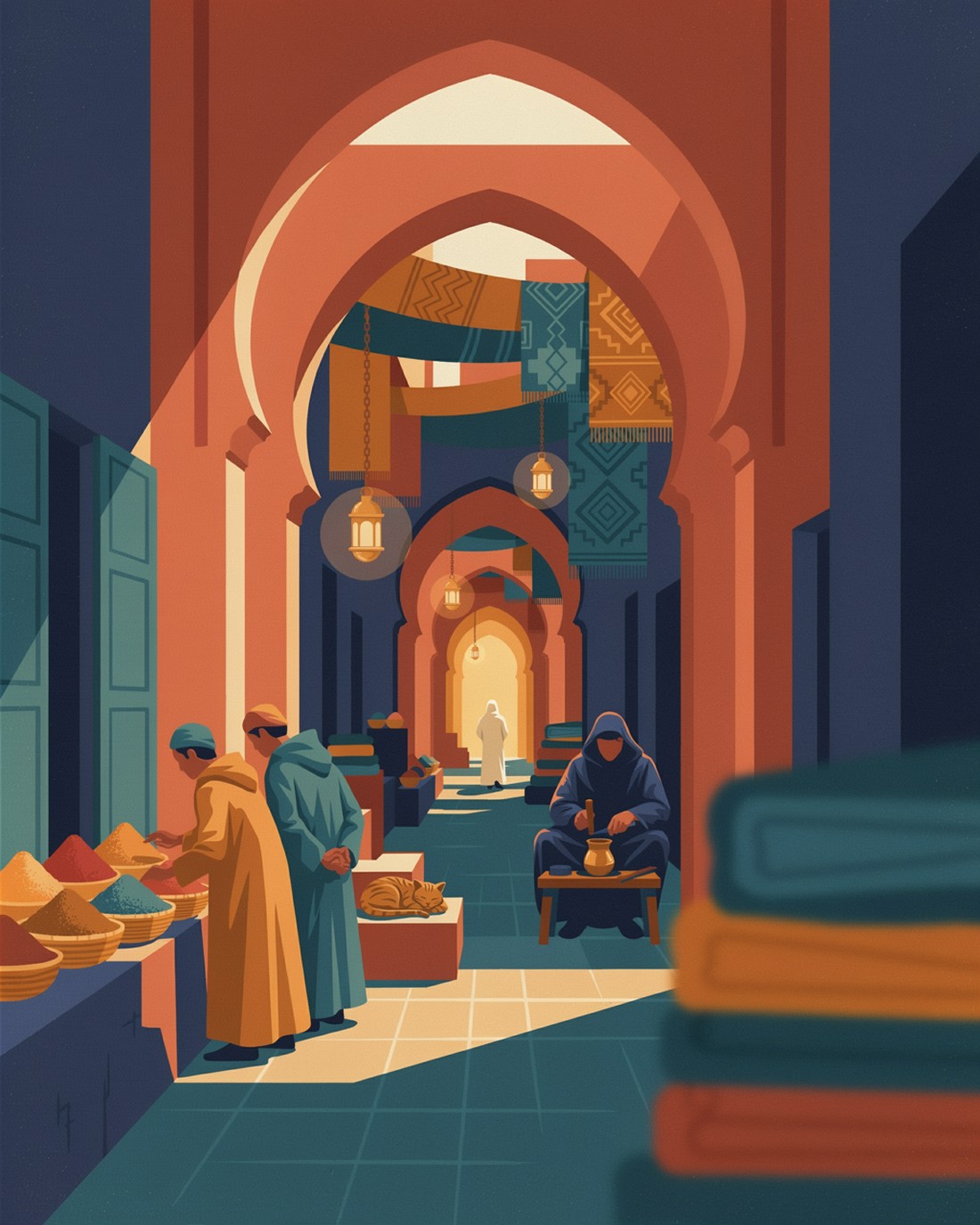
The souk and the art of the deal
The medinas are a maze of stalls where bargaining is expected and treated as a friendly ritual, not a confrontation. The first price is usually at least double, so start low, stay warm, and be ready to walk away, which often brings the price down. Bring cash and small notes, since almost no souk stall takes cards.
Say it: start around 30 to 40% of the first price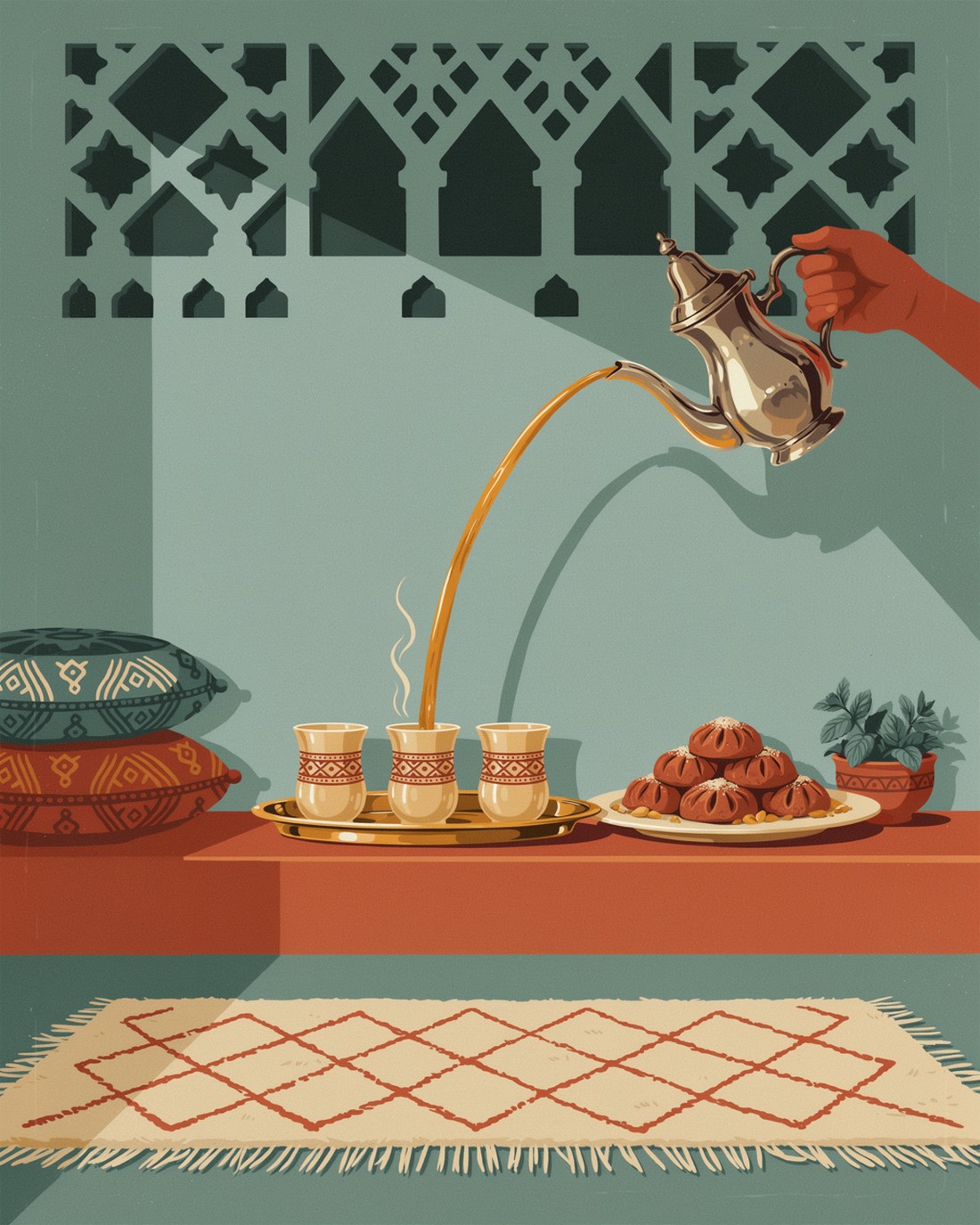
Mint tea and the rules of welcome
Sweet mint tea, poured in a long arc from high above the glass, is the heart of Moroccan hospitality, so often offered that it is nicknamed Berber whisky. Accepting a glass from a host or a shopkeeper is part of the courtesy, and refusing outright can feel abrupt. Take the tea, take your time, and the visit goes better.
Good to know: accepting tea is part of the welcome, not a sales trap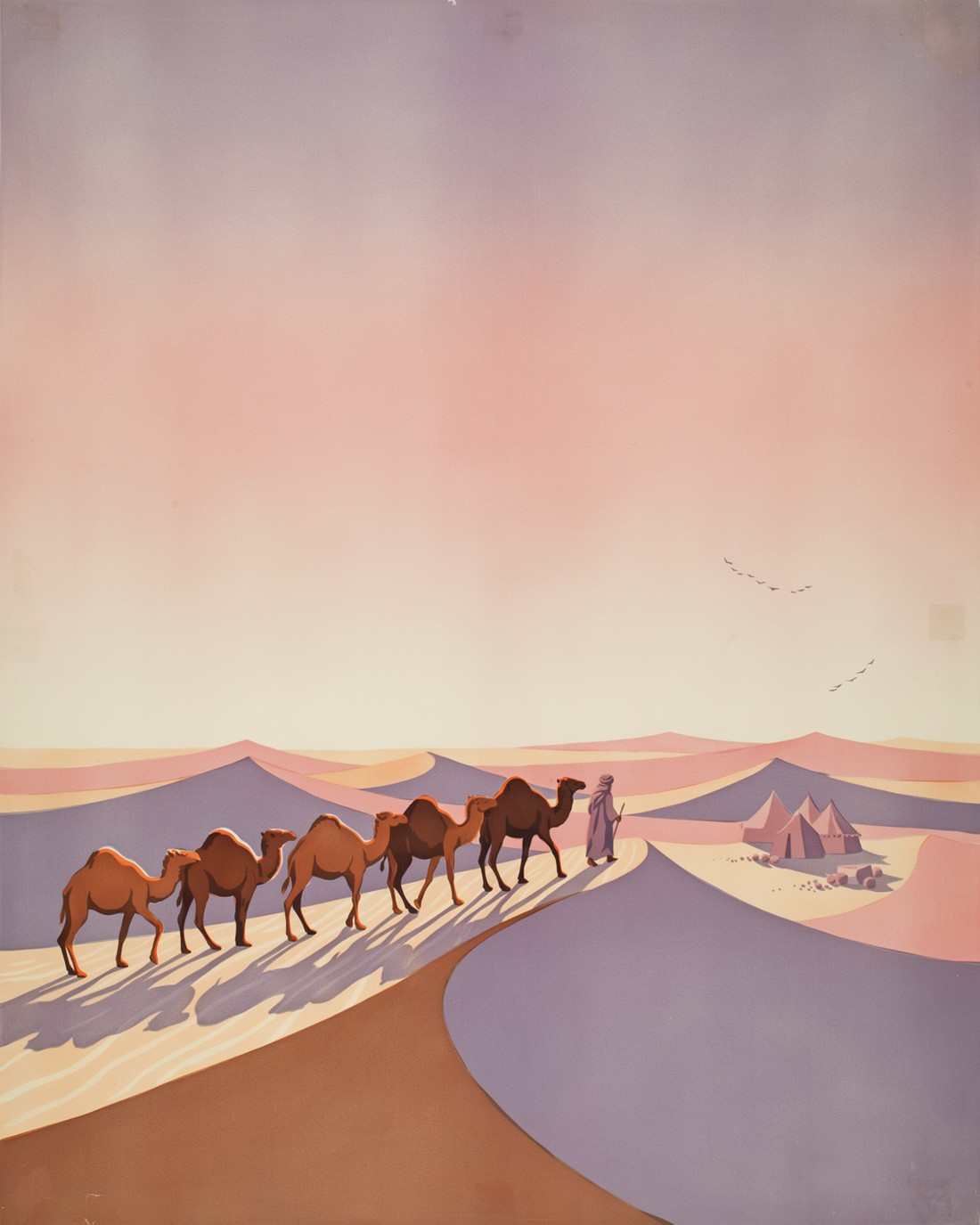
The desert and the Amazigh south
South and east of the Atlas, Morocco opens into the Sahara, where camel treks and desert camps are the classic experience and the culture is strongly Amazigh (Berber). Nights in the dunes are cold and cash is essential, since there are no ATMs out here, so carry enough dirham for guides, camps and tips before you leave the last town.
Good to know: carry cash before heading into the desert, there are no ATMsMorocco is proud of its hospitality, its craftsmanship, and the blend of Amazigh, Arab, Andalusian and Saharan cultures that shapes its cities, food and music. Meet it with warmth and patience, and it opens up quickly.
No links here, nothing to buy. This part is just to help you travel well.
Sources, and how this guide was checked
Last reviewedJul 2026, 9 of 9 dated items inside their review window
Not yet individually datedWe date this guide and the fees most likely to move, but the 3 per-place tourist tax rates on this page do not carry a check date yet. They are reviewed with the guide rather than on their own schedule, and putting each of them on one is work in progress.
What the last check foundFirst publication. Confirmed the things that catch US visitors here: the dirham is a closed currency you cannot buy abroad or take out beyond 2,000 MAD, so you withdraw it on arrival and convert any leftover before flying home. Also confirmed that Morocco is cash-first (cards mainly at city hotels, supermarkets and upscale restaurants), that a per-person nightly tourist tax (the taxe de sejour) is paid in cash at your hotel or riad, that tipping is customary, and that US citizens get 90 days visa-free.
- UK government and Moroccan customs guidance on the closed-currency ruleup to 2,000 MAD may be taken in or out, and foreign cash worth 100,000 MAD or more must be declared
- Analysis of Moroccan hotel taxation (Law 30-89, article 130)the per-person, per-night tourist and city taxes by property class, and the reduced 10% VAT on accommodation
- US visa-free entry for 90 days on arrival, passport valid at least six months, confirmed across current entry guidance
Our own judgmentThe daily cash share, the tipping norms, and the everyday tourist-tax amounts are our own estimate from experience and consistent traveler reports, not an official figure. The tax varies by property class and municipality, so treat our bands as a guide, not a guarantee.
How we checkHow every guide is researched, checked and dated
More money guides in Africa
If you are also weighing up nearby destinations, each guide covers cards, cash, ATMs and the fees to expect.
Going deeper on Morocco
The money questions people ask on the ground.
Short, focused answers to the specific things that catch first-timers out in Morocco.
- Do I need cash in Morocco, or can I use cards?Short answer: mostly cash. Cards work at hotels and upscale spots, but the souks, taxis and small vendors run on cash. And the dirham is a closed currency, so plan to get it on arrival. Here is how to handle it.
- Tipping in MoroccoMorocco runs on baksheesh: small tips for service, woven into daily life. About 10% at restaurants, plus small amounts for the many people who help you. Here is what you actually owe.
- Taxis in Morocco, and the app that actually worksMorocco runs on two kinds of taxi and a set of ride apps that sit in a legal gray area, which is not what most visitors expect. Here is how the petit and grand taxis work, how to handle the meter, and which app to actually install.
- Common money scams in Morocco, and what they cost youMorocco is a spectacular trip, and the medina hustle you have heard about is almost entirely about money, not danger: pressure, misdirection and manufactured goodwill aimed at your wallet. Once you know the pattern you see it coming, and a calm, firm no defuses nearly all of it.
- Staying connected in Morocco.Moroccan data is cheap and the airport counters are used to visitors, so the practical answer is a local SIM bought on arrival. The part that needs planning is the mountains and the desert, where no plan helps.
- What does getting sick in Morocco cost a visitor?Morocco's medical money story is two sentences long. The private clinics where a visitor is treated expect payment up front. And the country's capable medicine lives in a handful of cities, which matters enormously if your trip is the Atlas, the desert or the long road between them.
This is how Morocco stands today.
Money rules move. We can let you know for free if that changes.